Scientists uncover how Moken sea nomads see underwater like dolphins
Image: Wikipedia Why humans normally struggle to see underwater The remarkable adaptation of Moken children A skill that can be learned A unique lifestyle shaped
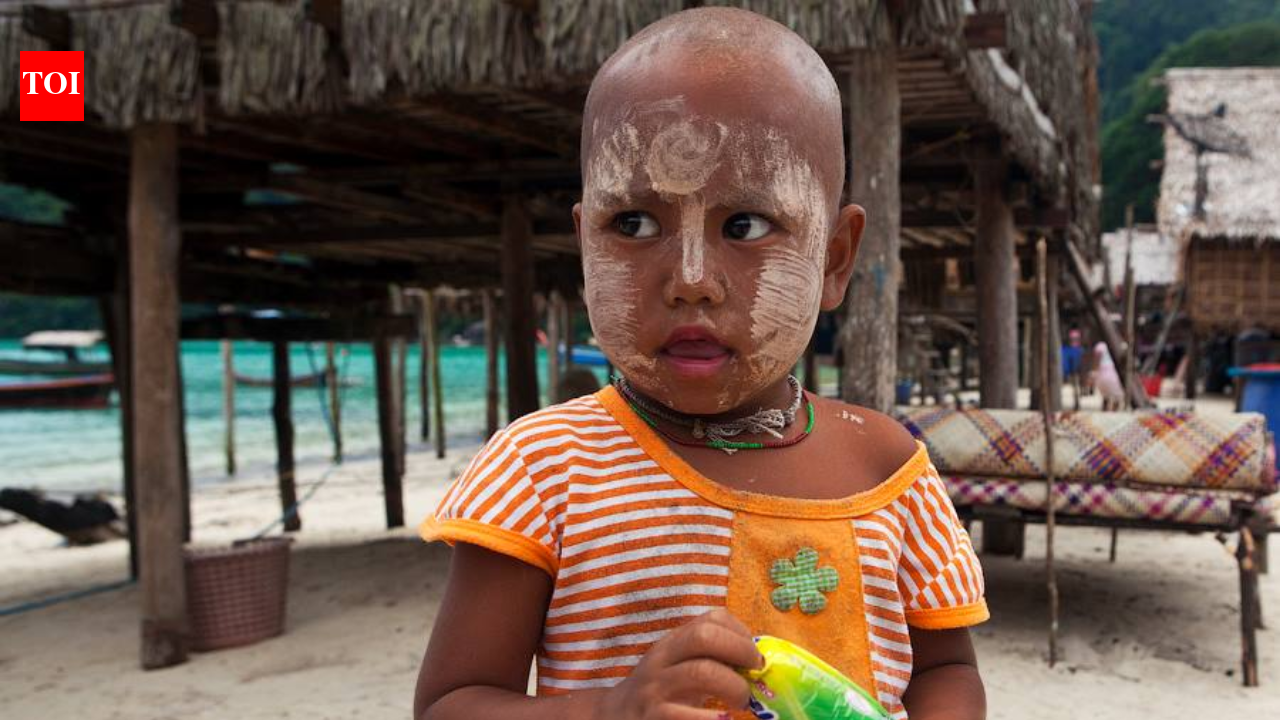
Image: Wikipedia Why humans normally struggle to see underwater The remarkable adaptation of Moken children A skill that can be learned A unique lifestyle shaped by the sea What the Mokens can teach science For most people, opening their eyes underwater turns the world into a blur. The human eye is designed to focus light passing through air, and once submerged, much of that focusing power is lost. Yet for generations, the children of the Moken, an Indigenous sea-nomad community living around the Andaman Sea between Thailand and Myanmar, have demonstrated an astonishing exception. Spending much of their childhood diving for shellfish, sea cucumbers and other marine life, they are able to see underwater with a clarity that has long fascinated scientists. Their remarkable visual ability is so effective that researchers have compared it with the underwater vision of dolphins, revealing one of the most extraordinary examples of human adaptation ever documented.Human eyes are optimised for vision in air. Normally, the curved surface of the cornea provides around two-thirds of the eye's focusing power.
Underwater, however, the refractive difference between the cornea and surrounding water almost disappears, causing incoming light to focus poorly on the retina and producing a blurred image.Marine mammals such as dolphins and seals overcome this problem through specialised eyes that evolved specifically for aquatic life.Humans lack these anatomical adaptations, which is why swimming goggles create a layer of air between the eye and water to restore clear vision.According to the BBC, Swedish vision researcher Anna Gislen first became interested in the Moken in 1999 after watching children dive beneath the waves with their eyes wide open while effortlessly collecting food from the seabed. Curious about how they managed such a feat, she later conducted experiments comparing Moken children with European children of similar ages.The results were striking. The Moken children demonstrated underwater visual acuity more than twice as sharp as that of the European participants. Rather than possessing fundamentally different eyes, they achieved this by performing two actions that most humans rarely accomplish underwater: they constricted their pupils to an unusually small size and changed the shape of their eye lenses to maximise focusing power.
Together, these adjustments allowed them to resolve fine details beneath the surface with remarkable clarity.Perhaps the most surprising discovery was that the ability does not appear to be entirely genetic.As reported by the BBC, Anna Gislen later trained groups of European children using underwater visual exercises. Within a few weeks, many of them learned to constrict their pupils and accommodate their lenses in much the same way as the Moken children, dramatically improving their underwater vision.The findings suggest that young human eyes possess an unexpected degree of flexibility. Scientists believe regular exposure to underwater foraging during childhood enables Moken children to develop and refine this visual response through repeated practice rather than through permanent anatomical differences. Adults, however, generally lose much of this ability as the eye's lens becomes less flexible with age.The Moken have been sea-nomads for centuries, spending most of their time on wooden boats, navigating from island to island within the Andaman Sea. Their culture has relied heavily on fishing and ocean gathering for many years.In addition, they came into the international spotlight following the 2004 Indian Ocean Tsunami because they managed to sense warning signs from nature in the form of the water receding back into the ocean and move away from dangerous areas.
 The BriefWire