CXMT founder took no salary for 8 years, now he is billionaire and Apple wants his help
Back in 2016, Zhu Yiming did something that struck most industry watchers as close to reckless. He founded ChangXin Memory Technologies (CXMT) with the aim
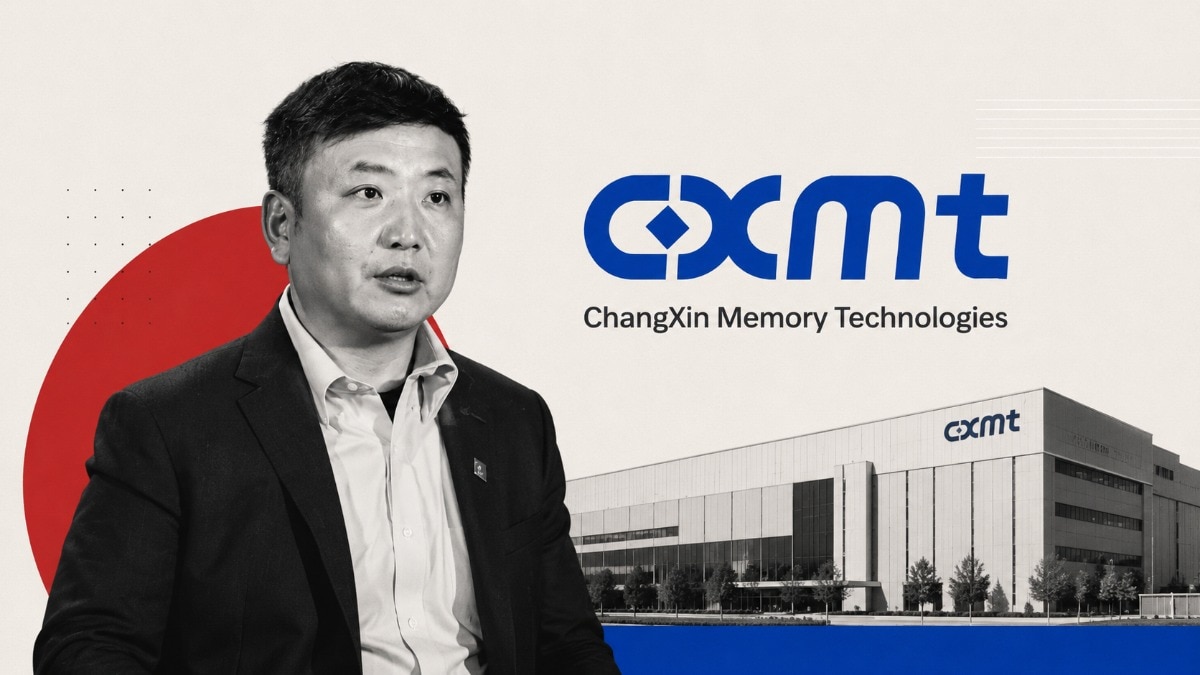
Back in 2016, Zhu Yiming did something that struck most industry watchers as close to reckless. He founded ChangXin Memory Technologies (CXMT) with the aim of building a Chinese memory-chip (DRAM) maker that could one day sit at the same table as Samsung, SK Hynix and Micron. On paper, it looked like an incredibly risky bet. One that would require years of research, enormous patience and, above all, billions of dollars. Read Full Story What followed were years of CXMT pouring money into factories, chip development and manufacturing capacity, all without turning a profit. As losses mounted and every yuan counted, Zhu reportedly made a pledge not to draw a salary or bonuses until the company finally moved into the black. Nine years later, the bet has paid off. CXMT is now China's largest DRAM maker and the fourth-largest memory-chip supplier in the world. Its recent stock market showing—after its highly anticipated IPO—has pushed the company's valuation into the trillions and turned Zhu, who went years without taking a salary, into a multi-billionaire worth over $15.9 billion. The company that once quietly built chip factories and chased profitability behind the scenes is now at the centre of the global semiconductor conversation.
So and so that global tech giants like Apple are reportedly evaluating its memory chips for future China-bound products. Zhu Yimin’s dream of building China’s chip future Before CXMT, Zhu Yiming was already a successful entrepreneur. He studied physics at Tsinghua University (referred to as the MIT of China) and later electronic engineering in the US. He started his professional career in Silicon Valley before returning to China to found flash memory chipmaker GigaDevice in 2005. But instead of settling into the comfort of that success, he chose to take on a far bigger challenge of creating a home-grown DRAM company that could help reduce China's dependence on foreign memory-chip makers and eventually compete with industry heavyweights such as Samsung, SK Hynix and Micron. Zhu laid the foundation of CXMT in 2016 with backing from the Hefei municipal government and China's broader semiconductor investment push. For years, CXMT poured money into building fabrication plants, developing memory chips and improving manufacturing yields, all while operating at a loss. During that period, Zhu reportedly pledged that he would not accept a salary or bonuses until the company finally became profitable.
It was a long wait, but one that would eventually pay off. The big stock market debut In 2026, those years of investment have turned into one of the biggest success stories in China's technology sector. On its debut on Shanghai's STAR Market, CXMT's shares surged nearly 470 per cent, giving the company a valuation of about 3.3 trillion yuan (roughly $487 billion) and briefly making it the most valuable listed company in mainland China, above Tencent. The blockbuster listing also turned Zhu's personal fortune. According to Forbes, his wealth has climbed to around $15.9 billion, placing him among China's richest technology entrepreneurs. CXMT is now challenging the memory-chip giants It's not just about the money. All these years of work has now made CXMT break into one of the world's most difficult semiconductor markets, one that has long been dominated by Samsung, SK Hynix and Micron. CXMT started its business by making DRAM chips for smartphones, computers and servers. Over the years, it improved its technology and expanded production, helping it become China's largest DRAM maker and the world's fourth-largest memory-chip supplier. CXMT manufactures DRAM (Dynamic Random Access Memory) chips, which are used in everything from smartphones and laptops to servers and AI data centres.
 The BriefWire