Starship is floating intact in Indian Ocean. Musk is sending a ship to get it
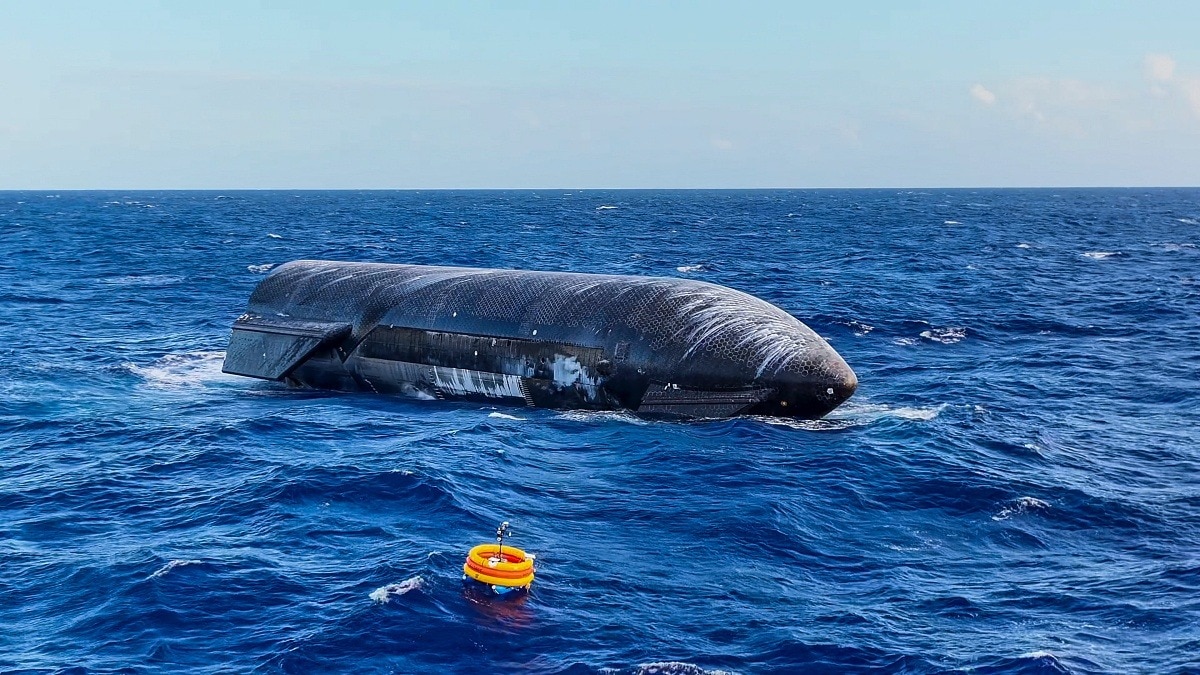
SpaceX has confirmed that its massive Starship spacecraft is still floating in the Indian Ocean days after its latest test flight, prompting the company to
SpaceX has confirmed that its massive Starship spacecraft is still floating in the Indian Ocean days after its latest test flight, prompting the company to launch a recovery mission to retrieve the vehicle for detailed analysis. The company said its Starship Recovery team has continued collecting imagery of the spacecraft, which remains remarkably intact despite making an uncontrolled splashdown after the mission. Read Full Story "The Starship Recovery team has continued gathering imagery of the vehicle, which is still afloat in the Indian Ocean," SpaceX said in an update. Landing burn and splashdown of Starship on Flight 13 pic.twitter.com/I1BWnGKpPo— SpaceX (@SpaceX) July 28, 2026 SpaceX founder Elon Musk also confirmed that a ship is being dispatched to recover the spacecraft, marking a significant milestone in the company's effort to make Starship rapidly reusable.
The recovery could provide engineers with a rare opportunity to inspect the world's largest spacecraft after an ocean landing, helping identify how its structure, heat shield and onboard systems withstood the stresses of launch, re-entry and splashdown. Starship, standing about 123 metres (403 feet) tall when stacked with its Super Heavy booster, is the rocket SpaceX is developing for missions to the Moon, Mars and beyond. It is also expected to play a central role in NASA's Artemis programme, which aims to return astronauts to the lunar surface. Although the latest flight did not achieve all of its mission objectives, the spacecraft survived long enough to remain afloat, an encouraging sign for engineers working toward full reusability.
Unlike earlier Starship prototypes that were destroyed during testing, the survival of this vehicle could allow investigators to examine real flight hardware instead of relying solely on telemetry data. The images collected by the recovery team are expected to help determine the condition of the stainless-steel structure, thermal protection tiles and other critical systems before the spacecraft is lifted from the water. Recovering the spacecraft could accelerate improvements for future Starship missions, as SpaceX continues its rapid test-and-learn development approach. The successful retrieval would represent another step toward Musk's long-term vision of a fully reusable spacecraft capable of carrying people and cargo to deep space while dramatically reducing the cost of space travel.
 The BriefWire