Pellet Guns, Non-Lethal Measures Were Authorised By Delhi Police During CJP Protest: CRPF Review
Pellet Guns, Non-Lethal Measures Were Authorised By Delhi Police During CJP Protest: CRPF Review Published By, Last Updated: July 29, 2026, 09:52 IST Violence erupted
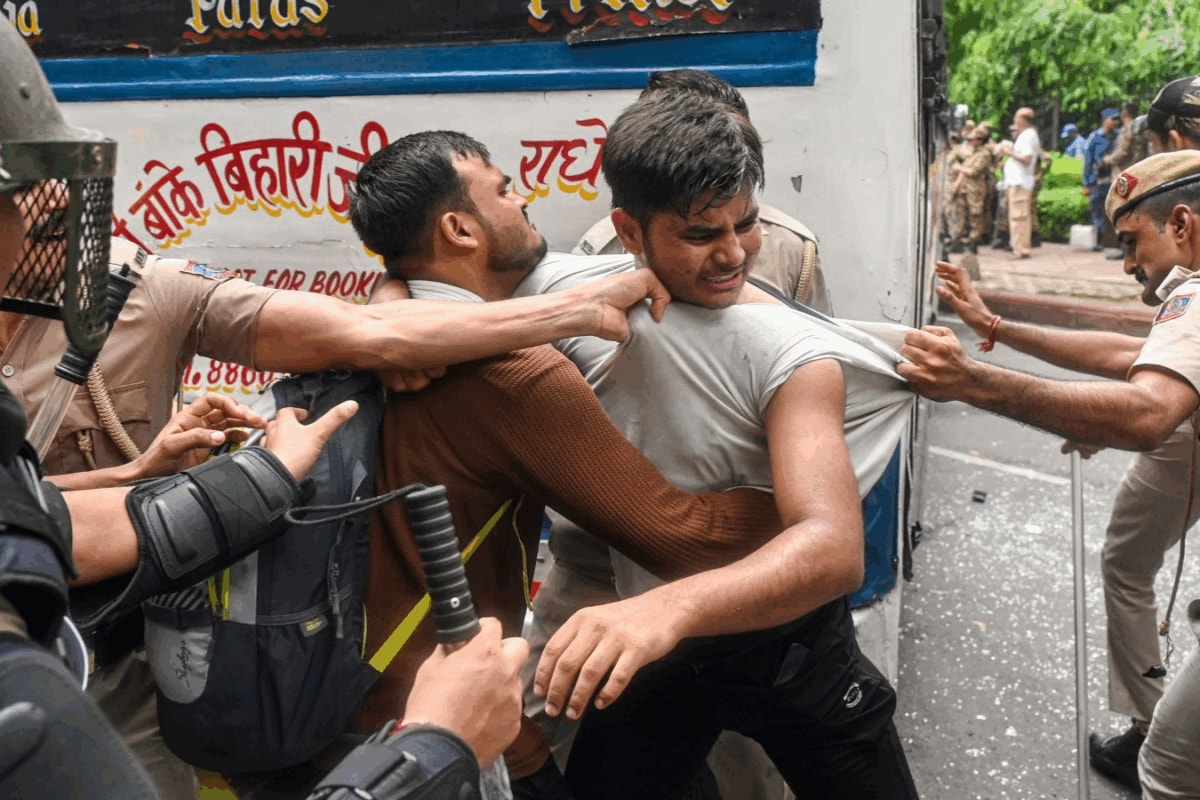
Pellet Guns, Non-Lethal Measures Were Authorised By Delhi Police During CJP Protest: CRPF Review Published By, Last Updated: July 29, 2026, 09:52 IST Violence erupted during CJP ‘Chalo Sansad’ protest on July 20, with clashes breaking out between demonstrators and security personnel at multiple locations around Jantar Mantar. Police personnel clash with protesters during CJP protests at Jantar Mantar. (Source: PTI) The use of pellet guns and other non-lethal crowd-control measures during the July 20 Cockroach Janta Party’s (CJP) ‘Chalo Sansad’ protest at Delhi’s Jantar Mantar was authorised by Delhi Police and carried out in accordance with standard operating procedures (SOPs), according to a post-event review by the Central Reserve Police Force (CRPF) accessed by The Times Of India. The CJP had organised the ‘Chalo Sansad’ march amid protests over the NEET-UG paper leak controversy, which had left lakhs of students affected nationwide. According to the review, the Rapid Action Force (RAF), the CRPF’s specialised anti-riot unit, followed the prescribed “force gradient" while responding to violence during the protest, resorting to pump action guns firing pellet rounds only after lower-intensity crowd-control measures failed to disperse the mob, the TOI reported. CRPF sources said the review concluded that public announcements, tear gas and lathi charge were used before non-lethal pellet rounds were fired. Around three to five protesters sustained injuries from metal pellets during the clashes, while 47 RAF personnel were injured, including six who suffered head injuries, the report stated.
According to the report, the CRPF said that use of force on July 20 was authorised by Delhi Police and complied with both the law and established operating procedures. Also Read: Was A Stone-Laden Truck Parked Near Jantar Mantar Before CJP’s July 20 Rally? Delhi Police Clarifies Claim Sources also alleged that some “motivated elements" in the crowd attacked Delhi Police and RAF personnel with stones and, in certain instances, iron rails during the violence. Who Can Authorise Use Of Civil Force During Protest? Under the Bharatiya Nagarik Suraksha Sanhita (BNSS), an executive magistrate may order the use of civil force to disperse an unlawful assembly after assessing the situation. In Delhi, this authority rests with the Police Commissioner and is delegated to officers up to the rank of Assistant Commissioner of Police (ACP). Explaining the authorisation process, a CRPF officer said, “RAF deployed at protest sites uses anti-riot gear only with authorisation, which in this case came from the DCP/ACP in charge of the protest site. Such authorisation is in writing and as per a format used at all sites of unlawful assembly; no order is given verbally." Officials also reiterated that pump action guns are recognised as a non-lethal crowd-control measure under established protocols. “Their use, with the force gradient being followed and under authorisation by the competent officer, is as per the SOP," another officer said, while speaking to TOI. What Happened In July 20 Protest?
 The BriefWire