Japan: Rescue 'race against time' after deadly earthquake hits Kumamoto
Dozens of people were hospitalized after the earthquake hit southern Japan. According to media reports, at least two women were killed after a shopping mall
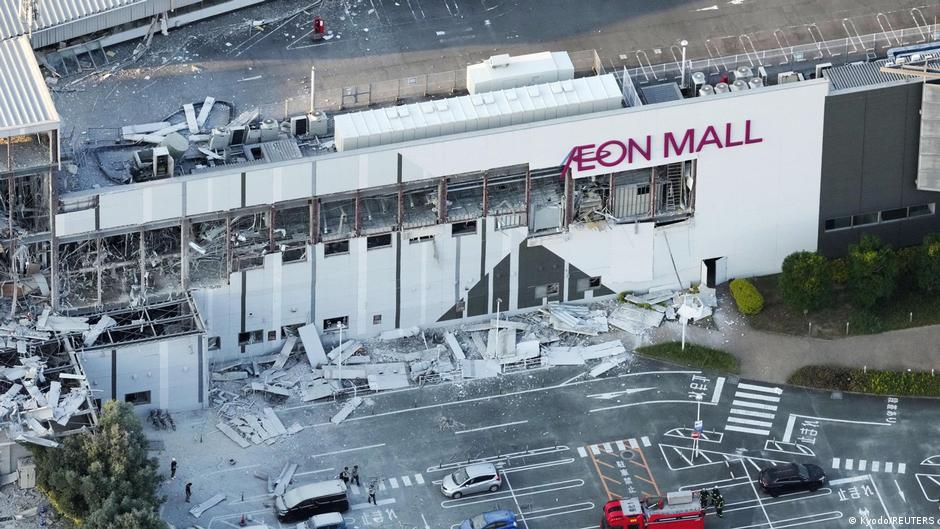
Dozens of people were hospitalized after the earthquake hit southern Japan. According to media reports, at least two women were killed after a shopping mall partially collapsed in the town of Kashima. A powerful 7.1-magnitude earthquake struck Kumamoto Prefecture on Japan's southern island of Kyushu on Tuesday afternoon, triggering emergency warnings and prompting authorities to assess the extent of the damage. On Wednesday, Japanese Prime Minister Sanae Takaichi said 13 people have been found dead since the earthquake struck. She added that many other people were still missing, suggesting the death toll was not final. What do we know about the rescue efforts? By Wednesday, over 9,000 people were in evacuation centers amid the rescue efforts. "We have received reports of seven people with serious injuries and 29 with minor injuries. Furthermore, as of 7:00 am today (2200 GMT Tuesday), 9,186 people have sought refuge in 506 evacuation centers across five prefectures, including Kumamoto and Fukuoka," government spokesman Minoru Kihara said. At least two of the victims died in a shopping mall in Kashima and the third died in a building collapse in a town near the epicenter. Japan's public broadcaster, NHK, reported that "many people" were trapped inside the shopping mall damaged by the earthquake. Several people were rescued from the mall, including a person who was reported to be in cardiopulmonary arrest. The collapse of the mall followed an explosion likely triggered by a gas leak, NHK reported.
"Even now, there are people waiting to be rescued, and this is a race against time. We will marshal all available resources on the ground to save and rescue as many people as possible," Takaichi told reporters at her office in Tokyo a day after the quake struck. Authorities assess damage as tsunami threat eases Prime Minister Takaichi also said initial reports indicated multiple injuries, damage to civilian infrastructure, and fires in several affected areas. "We are still assessing the extent of injuries and property damage, but I have been informed that there have already been several injuries," Takaichi said. "Power outages and fires are happening in some areas, and roads and bridges have been damaged and buildings collapsed," she added. Although the earthquake caused widespread disruption and temporarily raised fears of a tsunami, officials later confirmed that the threat had subsided and that Japan's coastline was no longer in danger. "This earthquake occurred inland, and no tsunami activity has been observed so far," a spokesperson for the Japan Meteorological Agency (JMA) said. "For this reason, we hope to lift the tsunami advisory at a relatively early stage, depending on future sea level conditions." The earthquake struck at 4:27 p.m. local time and registered the highest possible level of seven on Japan's Shindo intensity scale, which measures ground shaking Image: Kyodo/REUTERS Power and nuclear facilities remain safe Japan's Nuclear Regulation Authority reported that no abnormalities were detected at three nearby nuclear power plants, providing reassurance in a country still sensitive to nuclear safety concerns following the 2011 Fukushima disaster.
 The BriefWire