Nasa to chase Aug 12, 2026 total solar eclipse at 460mph with 86 balloons
A unique event to study the Sun and 86 balloons to explore Earth's atmosphere A unique event to study the Sun Why NASA is chasing
A unique event to study the Sun and 86 balloons to explore Earth's atmosphere A unique event to study the Sun Why NASA is chasing the Moon's shadow People on the ground will see a maximum of about 2 minutes and 18 seconds of total darkness. 4 cameras and thousands of pictures Building on lessons from 2024 Eclipse 86 balloons to explore Earth's atmosphere Iceland: Boundary layer observations Spain: Totality one monitoring Why Eclipse science is important For a few precious minutes the Moon can turn a bright summer afternoon into a strange twilight. Birds stop chirping, the temperature drops and the Sun’s brilliant outer atmosphere, the corona, looks like a glowing halo in the sky. Millions will be wowed by the spectacle of a total solar eclipse, but scientists see something even more amazing: a rare natural laboratory that can unlock secrets about the Sun and reveal how our own planet reacts when daylight suddenly vanishes.According to a latest report by the official NASA website, NASA-funded researchers will use this celestial event as the basis for one of the most ambitious eclipse science campaigns ever attempted on August 12, 2026. A high-altitude research jet will streak under the Moon's shadow at 460 mph, and 86 scientific balloons will fly above Iceland and Spain to probe how the brief period of darkness affects Earth's atmosphere.According to NASA's report, a total solar eclipse on 12 August will cross over Greenland, Iceland and Spain, providing scientists with a brief window to observe the sun’s corona, a superheated outer atmosphere that is obscured by the sun’s overpowering brightness.NASA says that studying the corona during totality allows researchers to better understand how the Sun influences Earth, satellites, astronauts and space weather."From our unique perspective on Earth during a total solar eclipse, scientists can study the Sun's corona in a way we can't from anywhere else in the solar system," said Kelly Korreck, NASA's Eclipse Program Manager.One of the campaign’s most exciting missions is NASA’s WB-57 high-altitude research aircraft.
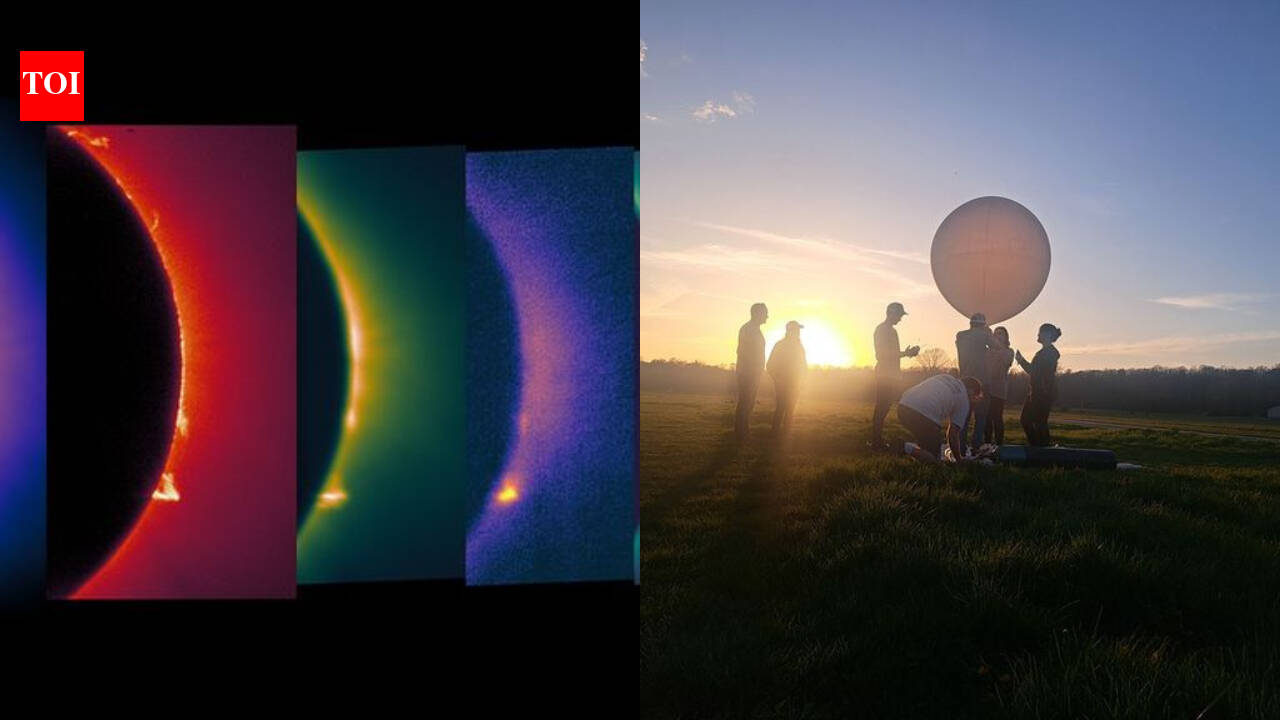
Flying at approximately 50,000 feet—well above clouds that could block the view—the article reports that the aircraft will pursue the Moon's shadow at nearly 460 mph. By matching the eclipse's path, the aircraft can extend the observation time of totality. Interestingly, people on the ground will see a maximum of about 2 minutes and 18 seconds of total darkness. The aircraft, however, will stretch that viewing window to nearly three minutes, giving scientists valuable extra time to observe the corona.Inside the aircraft will be NASA’s Scientifically Calibrated In-Flight Imagery (SCIFLI) team’s SCIFLI Multispectral Airborne Imager (SAMI). The sophisticated instrument features four cameras capable of capturing at least 20 high-resolution images per second in visible and infrared wavelengths. It is hoped that these observations will answer several long-standing questions, including the formation and evolution of solar prominences, why the Sun’s Corona gets so hot, and many more queries.The report also mentions that the same imaging system was flown by NASA during the total solar eclipse on April 8, 2024, to collect valuable data on the corona. Principal investigator Amir Caspi and his team have improved the system based on what they learned two years ago for the 2026 mission. It is mentioned that they’ve changed camera exposure settings to more accurately record extremely bright solar features, and developed better software that will enable researchers to process and analyze the images much faster.The eclipse will not only reveal secrets about the Sun but will also offer an opportunity for scientists to learn more about Earth’s atmosphere.
 The BriefWire