UN says online scam center trafficking is skyrocketing
Migration authorities have said gangs are trafficking ever more people to East Asian online scam centers. The UN says some 300,000 people from more than
Migration authorities have said gangs are trafficking ever more people to East Asian online scam centers. The UN says some 300,000 people from more than 80 countries are currently being exploited and abused. The UN's International Organization for Migration (IOM) on Tuesday said that the number of individuals being coerced into working at massive online scam centers across Asia is increasing dramatically. According to IOM Director General Amy Pope, an estimated 300,000 people are currently caught up in the illicit call center network, which is largely based in Cambodia, Laos and Myanmar. Speaking in Geneva, Switzerland, on Tuesday, Pope said, "We're seeing so many more of these cases emerge right now." "People trapped in scam compounds are victims of trafficking," said Pope, adding that unsuspecting individuals — many from Bangladesh, India, Indonesia, Sri Lanka, Ethiopia and Kenya — are targeted with fake, often on social media, promising lucrative employment opportunities for people with strong English skills and university degrees.
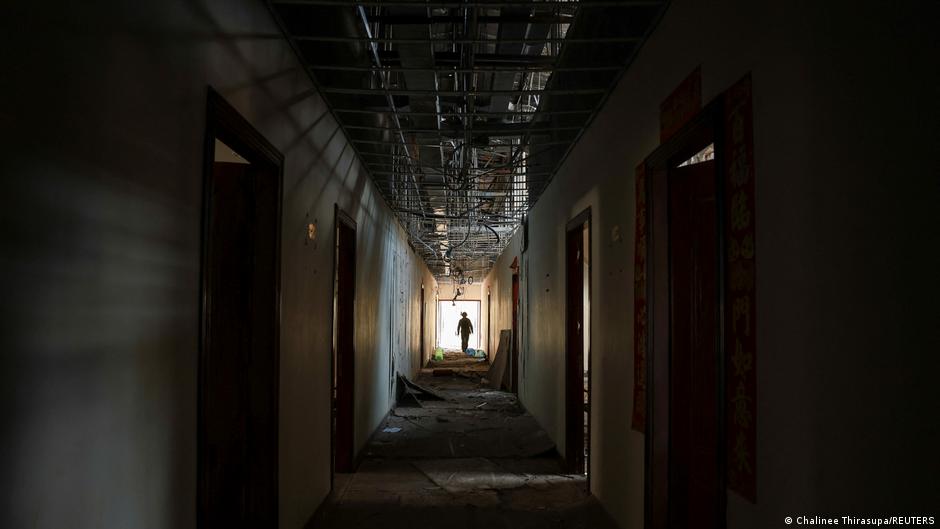
Once an individual is lured in, they are often stripped of their travel documents and forced to carry out online schemes designed to defraud often older Westerners of money. Some of those trafficked are also sexually abused. The UN estimates that some 300,000 people from more than 80 countries are kept in prison-like conditions and forced to carry out online crimes that cost unsuspecting victims billions of dollars Image: Chalinee Thirasupa/REUTERS "The significant networks are based within Asia, but because of social media… because of the ability to now reach people in many, many countries… their reach has expanded quite significantly," said Pope, who estimates that tens of thousands of people from over 80 countries have been trafficked. Pope said that even when individuals manage to escape or are freed in government raids, many still face prosecution for participating in criminal endeavors.
An IOM statement published on Tuesday read: "IOM calls for continued support to assist victims of trafficking through protection, safe return and reintegration, while scaling up efforts to raise awareness of traffickers' tactics so that people can recognize risks and know where to seek help." In Myanmar, that country's military-backed parliament approved a so-called "Anti-Online Scam Bill" on Tuesday, authorizing severe punishment and even execution for those who use, "violence, torture, unlawful arrest and detention, or cruel treatment against another person for the purpose of forcing them to commit online scams." Myanmar's civil war, which has killed more than 100,000 people and sown instability across the country, has made it easy for scammers to set up shop inside fortified compounds, say monitors. Chinese syndicates "constitute the major organizational force" behind the region's scam economy, running industrial-scale scam compounds in border areas and special economic zones in Myanmar, Cambodia and Laos, according to a recent UN Office on Drugs and Crime (UNODC) report.
 The BriefWire