American gambler spent $90 million buying 54,000 acres of logged Florida land
Why M.C. Davis decided to buy up logged Florida land How eight million trees have been planted across Nokuse What longleaf pine restoration means for
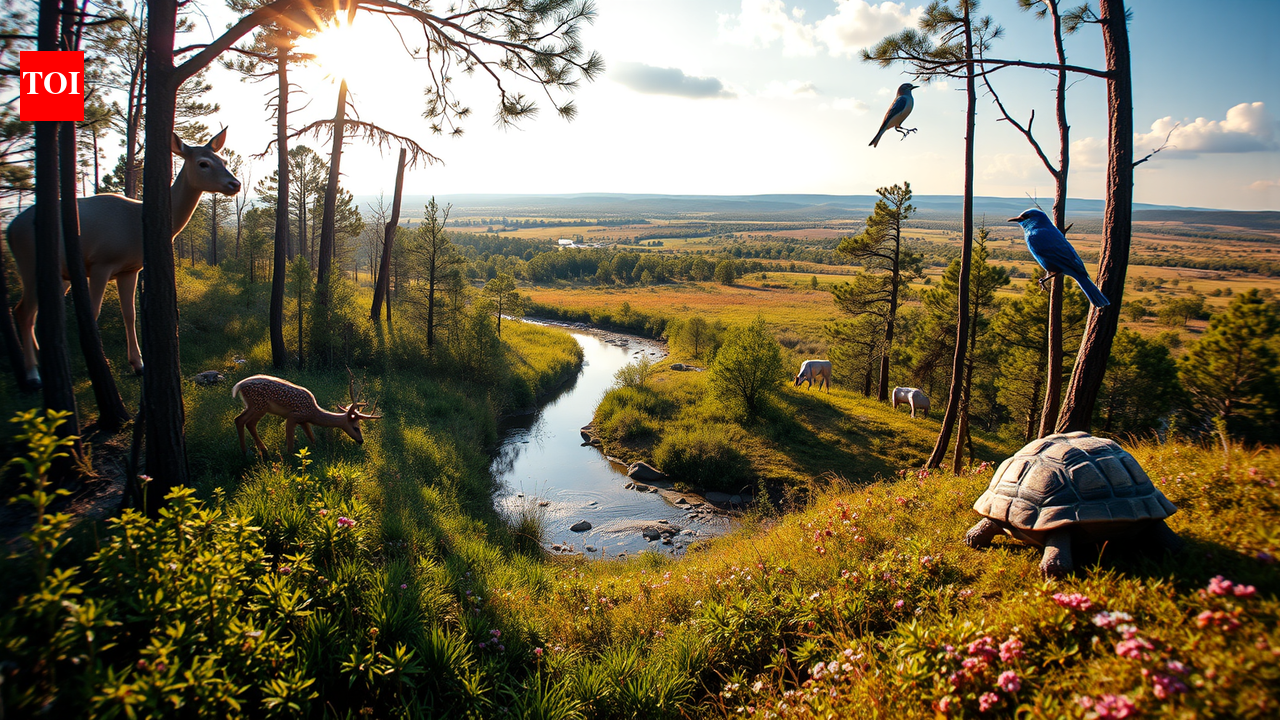
Why M.C. Davis decided to buy up logged Florida land How eight million trees have been planted across Nokuse What longleaf pine restoration means for Florida wildlife Why Davis planned for a 300-year restoration M.C. Davis spent close to 90 million dollars buying up 54,000 acres of heavily logged land in the Florida Panhandle, turning what timber companies had stripped bare into one of the largest private nature preserves in the southeastern United States. Since founding what he called Nokuse Plantation in 2000, Davis and his team have planted more than eight million longleaf pine seedlings across the property, working to bring back a forest ecosystem that once stretched across roughly 90 million acres of the American South before logging reduced it to a tiny fraction of its original size. Davis passed away in 2015, but the restoration project he built continues, guided by a plan he openly admitted would take 300 years to complete.Davis grew up in a modest home in the Florida Panhandle before making a fortune buying and trading land and mineral rights. According to a widely cited account of his story, Davis's shift toward conservation began almost by accident, when he pulled off the road during a traffic jam after spotting a sign a black bear presentation at a local high school.
He had not previously known Florida was home to black bears, and the talk set him on a path of reading extensively about ecology and native habitats, eventually convincing him to put a large share of his fortune toward restoring a piece of Florida's original landscape.Starting in 2000, Davis began purchasing land in Walton County that had previously been owned by paper and timber companies, much of which had been heavily logged and replanted with fast-growing, non native pine species for industrial use. Rather than developing the land further, Davis set out to slowly convert it back into native longleaf pine forest, a project he named Nokuse, the Muscogee word for black bear.According to Nokuse's own restoration programme, between 2004 and 2014 the team planted eight million containerised longleaf pine seedlings across 24,000 acres of the property, at an average density of 300 seedlings per acre. The seedlings were hand-planted in a random, non-row pattern to mimic how longleaf pine forests naturally regenerate, rather than being planted in the straight commercial rows typical of industrial timber plantations.Since completing that initial planting phase, restoration work at Nokuse has shifted toward rebuilding the forest's understory, the layer of native grasses and wildflowers that grow beneath a mature longleaf pine canopy.
 The BriefWire