Germany: Low Rhine River levels could push economy into stagnation
Record-low water levels on the Rhine are forcing cargo vessels to run with sharply reduced loads, driving up transport costs. Economists warn the disruption could
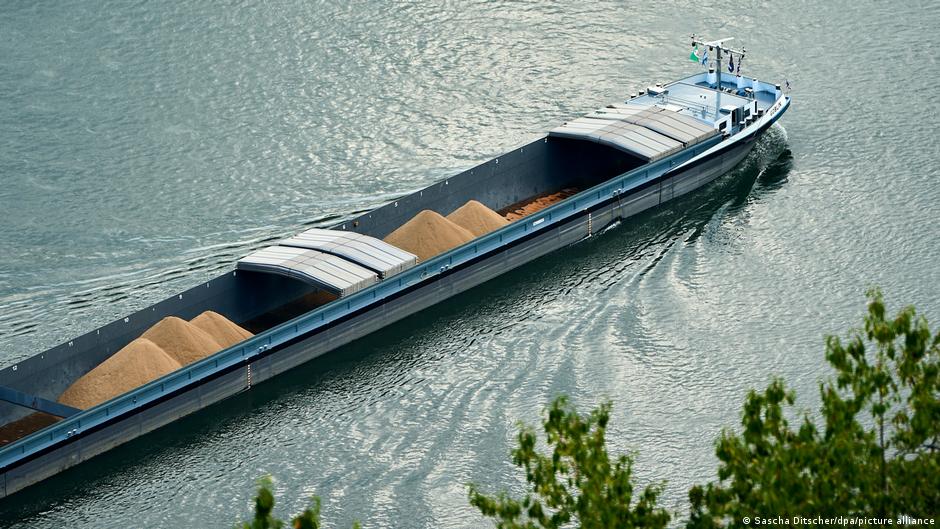
Record-low water levels on the Rhine are forcing cargo vessels to run with sharply reduced loads, driving up transport costs. Economists warn the disruption could wipe out Germany's already weak summer growth. Persistently low water levels on the Rhine River could shave as much as 0.2% off Germany's economic output in the third quarter, the Kiel Institute for the World Economy said on Tuesday. Prolonged dry weather has continued to lower levels on the busiest inland trade waterway on Europe, connecting the vast port of Rotterdam in the Netherlands with much of western Germany. Less rain fell than forecast this past weekend, and the national weather service now forecasts another incoming period of high temperatures, particularly further south along the river. How can a low Rhine affect the economy? The Rhine carries key commodities including grain, minerals, ores, coal and petroleum products such as petrol.
When the river is low, cargo vessels can no longer travel fully loaded and must spread shipments across several ships. Traders have said some inland vessels are operating at only 15% to 20% of their maximum load. That raises transport costs and places further pressure on an economy that had recently begun to show signs of a modest recovery. Water levels on the Rhine have been consistently low, even by summer standards, since late May Image: Marc John/Bonn.digital/picture alliance Many economists expect growth of no more than 0.2% during the summer months, meaning the disruption could push Europe's largest economy toward stagnation. "The effects could be strong enough to reduce gross domestic product in the third quarter by 0.1% to 0.2%," Stefan Kooths, director of the institute's business cycle and growth research group, told the Reuters news agency. At Kaub, a crucial bottleneck between the cities of Koblenz and Mainz, a benchmark measurement gauge fell to 30 centimeters (12 inches) on Tuesday.
Germany's waterways authority expects it to drop to around 25 centimeters by Friday, matching a record low reached in October 2018. Can shipping adapt as Germany's busiest river runs dry? To view this video please enable JavaScript, and consider upgrading to a web browser that supports HTML5 video "As water levels are unlikely to rise suddenly above the critical threshold at the beginning of August, transport capacity is likely to remain impaired for some time next month," Kooths said. Far less rain fell over the past weekend than forecast, meaning the relief to the water levels was less than expected, as another wave of hot weather moves in this week Image: Oliver Berg/dpa/picture alliance Poor economy could lessen impact Under normal economic conditions, the prolonged disruption would reduce industrial activity by around 0.8% in July and cut overall monthly economic output by about 0.2%, Kooths said.
 The BriefWire