Effective Coalition Or Paper Tiger? The Split Reality Of The Anti-BJP INDIA Bloc
Effective Coalition Or Paper Tiger? The Split Reality Of The Anti-BJP INDIA Bloc Written By, Last Updated: May 20, 2026, 15:20 IST The INDIA bloc’s
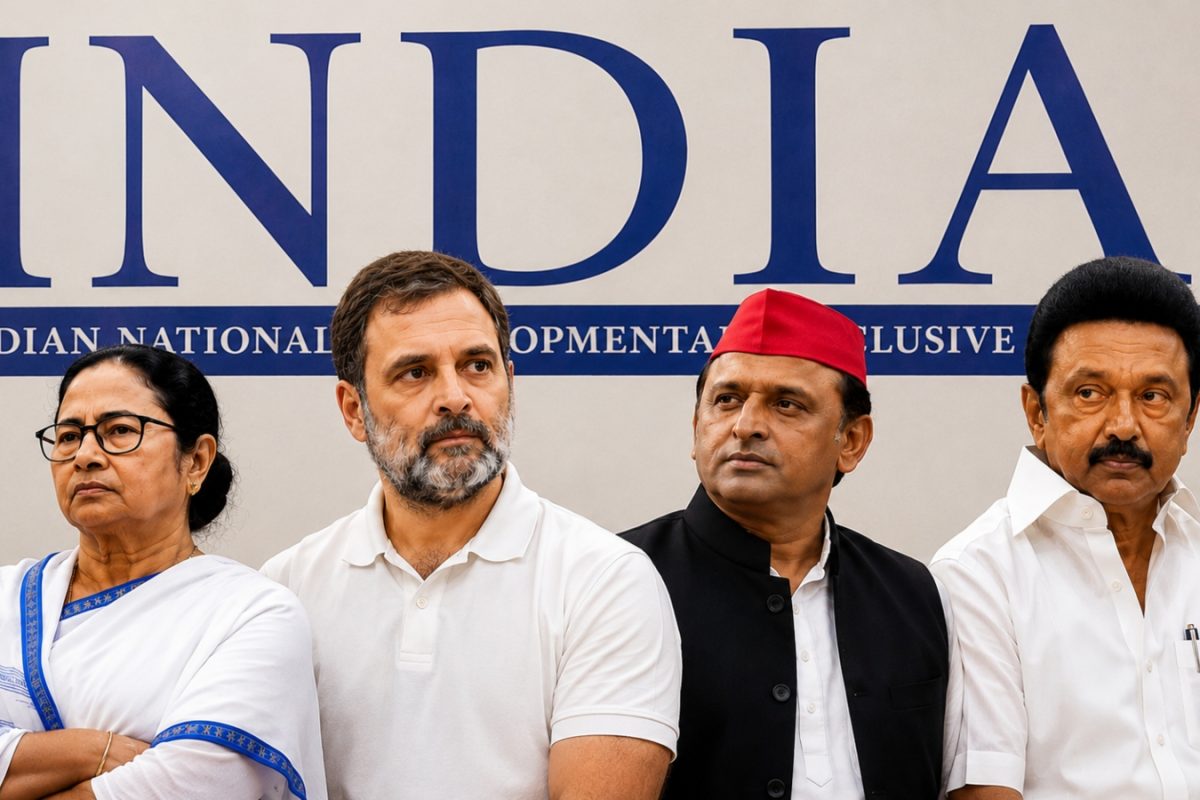
Effective Coalition Or Paper Tiger? The Split Reality Of The Anti-BJP INDIA Bloc Written By, Last Updated: May 20, 2026, 15:20 IST The INDIA bloc’s biggest challenge is that it still lacks a settled answer to a basic question: is it merely an anti-BJP platform, or a genuine long-term political coalition? Rapid Read AI generated image of Mamata Banerjee, Rahul Gandhi, Akhilesh Yadav and MK Stalin, all part of the INDIA bloc. If the INDIA bloc looks united in Parliament, it is because Delhi is the one place where its contradictions can still be temporarily managed. Outside it, the alliance often resembles less a cohesive coalition and more a ceasefire between rivals waiting for the next state election to begin fighting each other again. Nationalist Congress Party (SP) chief Sharad Pawar praising Prime Minister Narendra Modi for “upholding India’s honour abroad" has once again exposed the awkward reality at the heart of the opposition alliance: while INDIA parties unite against the Bharatiya Janata Party (BJP) and the Union government nationally, many of them remain fierce competitors regionally, with conflicting ambitions, incompatible politics and deep distrust simmering beneath the surface. Strong Inside Parliament, Fragile Outside It As a legislative bloc, INDIA has often functioned cohesively. Opposition parties have jointly cornered the government on issues ranging from Manipur violence and unemployment to electoral bonds, federalism and institutional autonomy. Coordinated walkouts, floor strategy and joint protests have given the alliance visibility as a united anti-BJP front. ALSO READ | One Alliance, Many Battles: How 2026 Poll Results Have Exposed INDIA Bloc’s Fault Lines But that unity repeatedly collapses the moment electoral politics enters the picture. The clearest examples are emerging across states where INDIA allies are effectively fighting parallel political battles against each other while trying to preserve their own regional ecosystems. West Bengal In West Bengal, the INDIA bloc barely exists on the ground. Mamata Banerjee’s All India Trinamool Congress views Congress and the Left not as partners, but as its principal rivals in the state. The TMC and the Congress did not form an alliance for the 2026 West Bengal assembly elections primarily due to deep structural disagreements over seat-sharing, distinct national versus state-level strategies, and friction caused by contemporary political developments. Despite both being member parties of the INDIA bloc, local ambitions and mutual distrust caused them to run completely independent campaigns.
The result was catastrophic. TMC lost the elections, and the BJP came to power for the first time in the state. During the 2024 Lok Sabha elections, TMC largely fought alone despite remaining formally inside the INDIA framework. TMC supremo Mamata Banerjee has openly blamed the Congress for failing to cooperate with regional allies, which fractured opposition votes and allowed the BJP to gain ground. Consequently, TMC leadership argued that they could not risk strengthening the national alliance at the cost of their own clear state-level dominance. Uttar Pradesh On Tuesday, Samajwadi Party president Akhilesh Yadav indicated that his party’s alliance with the Congress would continue in the 2027 assembly elections in Uttar Pradesh but remained evasive on who would be the opposition face. In Uttar Pradesh, the Congress and Samajwadi Party have cooperated electorally against the BJP, but tensions over seat sharing and leadership constantly surfaced beneath the surface. Yadav has carefully ensured that SP remains the dominant opposition pole in UP while limiting Congress’s revival space. Congress, meanwhile, sees UP as too politically important to permanently remain a junior ally. The contradiction is structural: Congress wants long-term revival in Hindi heartland states, while regional allies want Congress restricted to limited pockets. Maharashtra perhaps best captures the chaos inside INDIA. The Maha Vikas Aghadi experiment brought together Congress, Shiv Sena (UBT) and NCP (SP), but beneath the alliance lies constant friction over leadership, cadre conflicts and political positioning. Sharad Pawar’s remarks on PM Modi are only the latest example of divergent messaging within the bloc. But this is not the first time Pawar has supported PM Modi. After the Modi government revoked Article 370 in Jammu & Kashmir, Pawar did not aggressively oppose the move in the way many opposition parties did. Instead, he cautioned against excessive politicisation and said many people in the country supported the decision. During the pandemic, Pawar repeatedly called for political consensus and publicly backed coordination with the Centre. At several points, he praised PM Modi’s outreach efforts and stressed that national crises required cooperation instead of confrontation. One of the biggest moments came when in a departure from the Opposition’s jibes, Pawar said personal milestones should be kept above political rivalries. Pawar revealed that he had extended greetings to PM Modi on his 75th birthday and stressed that such occasions should not be weighed down by bitterness.
He added with a hint of humour that he himself had never stopped working at 75, so he had no right to ask PM Modi to stop. At multiple moments, Congress leaders privately expressed discomfort over what they saw as Pawar’s “soft signals" toward the BJP. Meanwhile, Sena (UBT) continues balancing aggressive Hindutva rhetoric with opposition politics, creating ideological contradictions within the alliance itself. Seat-sharing negotiations before elections have repeatedly dragged because every party wants to maximise its regional footprint while preventing Congress from becoming too strong. Tamil Nadu The biggest political alignment came after the 2026 assembly elections where the Congress unceremoniously dumped its long-term ally, the Dravida Munnetra Kazhagam (DMK), to extend full support to actor-politician Vijay’s newly formed party, the Tamilaga Vettri Kazhagam (TVK), which emerged as the single-largest party with 108 seats. The DMK has openly accused the Congress of betraying their 20-year-old alliance. The decision by the Congress to support the TVK was taken rapidly to secure power-sharing in the new government. The bitterness has extended to the national level. The DMK formally wrote to the Lok Sabha Speaker requesting alternative seating arrangements so their MPs no longer sit alongside Congress members. Other national entities within the INDIA bloc, like Akhilesh Yadav, have taken public swipes at Congress for its opportunism, signaling that the Tamil Nadu fallout is stressing the national alliance. While veteran leaders like P Chidambaram have publicly expressed “hope" that the DMK stays in the national alliance and the TVK eventually joins it, local political realities have rendered the original, unified structure of the INDIA bloc in Tamil Nadu completely defunct. The Core Contradiction: Congress vs Regional Aspirations At the heart of INDIA’s instability lies a structural contradiction that may never fully disappear. Congress wants to reclaim its status as a pan-India pole capable of leading the opposition nationally. To do that, it must grow in states where regional parties dominate. But those very regional parties joined the alliance precisely because they fear losing space, both to the BJP and potentially to Congress itself. As a result, INDIA often functions as a cooperative bloc in Parliament, a tactical arrangement during specific elections, but a competitive battlefield at the state level. This contradiction repeatedly surfaces in delayed seat-sharing deals, public disagreements, mixed messaging on national issues and parallel political ambitions. 2026 A Wake-Up Call?
The BJP’s dramatic breakthrough in West Bengal in the 2026 assembly elections briefly appeared to jolt the INDIA bloc back into survival mode. After months of infighting, seat-sharing bitterness and regional turf wars, opposition leaders suddenly rediscovered the language of “unity" once the scale of the BJP’s expansion became clear. In the immediate aftermath of the results, leaders across the alliance attempted to close ranks again. Akhilesh Yadav publicly backed Mamata Banerjee, while opposition leaders stressed the need for greater coordination against what they described as the BJP’s growing national dominance. The renewed outreach between INDIA constituents after the Bengal setback exposed how fragmented opposition politics had become state by state. But the regrouping itself revealed the alliance’s central paradox. The INDIA bloc often becomes most united only after a major BJP victory, not before one. The Bengal results therefore became both a symbol of INDIA’s failure to function cohesively during elections, and a trigger for temporary post-result reunification efforts. That contradiction sits at the heart of the alliance’s current crisis. INDIA repeatedly discovers unity as a reaction to BJP momentum, but struggles to sustain it when regional ambitions, leadership questions and state-level rivalries return to the foreground. Can INDIA Survive As A Alternative? The INDIA bloc’s biggest challenge is that it still lacks a settled answer to a basic question: is it merely an anti-BJP platform, or a genuine long-term political coalition? So far, it has functioned effectively when the objective is parliamentary coordination or tactical electoral arithmetic. But every major state election exposes the alliance’s deeper fault lines—ideology, leadership ambitions, regional dominance battles and the Congress revival question. That is why the INDIA bloc today exists in two parallel realities: cohesive as a voting bloc inside Parliament, but unraveling on the ground the moment real electoral stakes emerge. News18 Newsletter Handpicked stories, in your inbox A newsletter with the best of our journalism submit First Published: May 20, 2026, 15:11 IST News india Effective Coalition Or Paper Tiger? The Split Reality Of The Anti-BJP INDIA Bloc Disclaimer: Comments reflect users’ views, not News18’s. Please keep discussions respectful and constructive. Abusive, defamatory, or illegal comments will be removed. News18 may disable any comment at its discretion. By posting, you agree to our Terms of Use and Privacy Policy Loading comments...
 The BriefWire