From Norway To US: How Negative Campaigns Overshadow The Real Purpose Of PM Modi's Visits Abroad
From Norway To US: How Negative Campaigns Overshadow The Real Purpose Of PM Modi's Visits Abroad Reported By, Edited By Last Updated: May 20, 2026
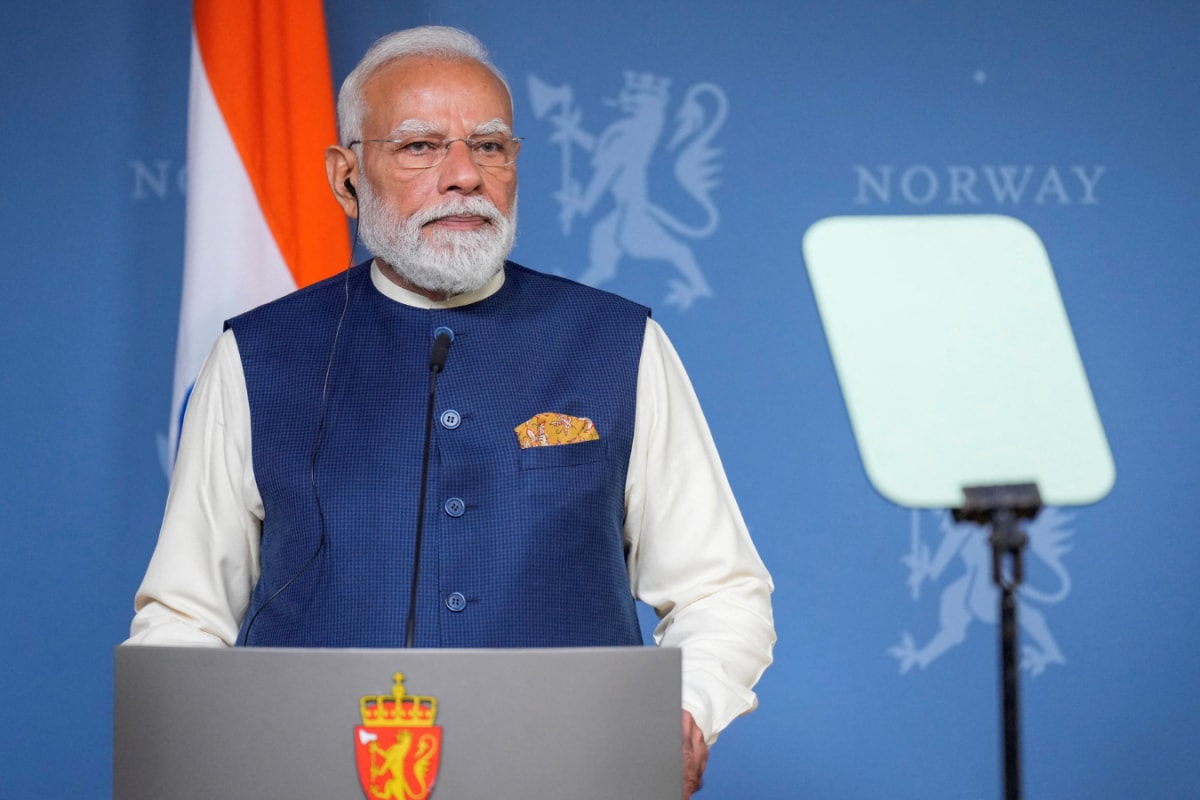
From Norway To US: How Negative Campaigns Overshadow The Real Purpose Of PM Modi's Visits Abroad Reported By, Edited By Last Updated: May 20, 2026, 15:14 IST Top Indian government sources argue that this trend has become routine whenever PM Modi travels abroad. Rapid Read Prime Minister Narendra Modi holds a press conference at the government's representative facility in Oslo, Norway. (Source: Reuters) As PM Narendra Modi wrapped up his recent visit to Norway, a trip focused on strategic cooperation, green partnerships, Arctic collaboration and technology ties, international headlines were suddenly dominated by a different moment altogether: a Norwegian journalist publicly questioning him over press freedom in India and asking why he does not “take questions from the freest press in the world." The exchange quickly went viral, triggering political reactions, media debates and renewed criticism from sections of the Western press over democracy and media freedom in India. The incident once again highlighted a pattern that has increasingly followed PM Modi during many of his major foreign visits over the last decade. Whether in the United States, the United Kingdom, France or Australia, high-profile diplomatic engagements involving PM Modi are often accompanied by protests from diaspora activists, campaigns by international NGOs, and sharply critical coverage in outlets such as Al Jazeera, The Guardian, The Washington Post, BBC and The New York Times. During the Norway visit, the controversy escalated further after sections of the Norwegian media and activist circles amplified concerns around India’s press freedom rankings and democratic climate. India’s Ministry of External Affairs responded strongly, with senior diplomat Sibi George rejecting what he described as narratives built on “ignorant NGOs" and a lack of understanding of India’s scale and diversity.
Top Indian government sources argue that this trend has become routine whenever PM Modi travels abroad. According to officials familiar with India’s diplomatic outreach, criticism is frequently timed around state visits, international honours or strategic announcements, often overshadowing the actual purpose of the visit itself — defence cooperation, trade deals, counter-China strategy, technology partnerships and economic investments. Ironically, the Norway visit itself was diplomatically significant. Modi became the first Indian Prime Minister to visit Norway in over four decades, with both countries elevating ties through agreements spanning outer space, green energy, research and healthcare cooperation. Norway also awarded Modi its highest civilian honour, the Grand Cross of the Royal Norwegian Order of Merit. Yet much of the international discussion shifted toward press freedom and human rights concerns instead. A Familiar Pattern During PM Modi’s Overseas Visits This is not the first time such controversies have emerged around PM Modi’s foreign tours. During his first major visit to the United States in 2014, international attention revisited the legacy of the 2002 Gujarat riots despite Washington having restored full diplomatic engagement with him. In the UK in 2015, protests outside Downing Street involved Sikh groups, Muslim organisations and human rights activists. British media heavily focused on divisions within the Indian diaspora and allegations surrounding Modi’s governance record. The 2019 “Howdy Modi" event in Houston with US President Donald Trump saw massive demonstrations linked to Kashmir and Article 370. Coverage in several global publications highlighted minority concerns and anti-government protests alongside the mega diaspora rally. Similarly, Modi’s 2023 state visit to the United States under President Joe Biden generated editorials in major Western publications focused on democracy, minority rights and press freedom, even as the visit delivered key agreements on semiconductors, defence manufacturing and critical technologies.
France’s Bastille Day invitation in 2023 also drew backlash from sections of the French Left and rights groups, which criticised Paris for hosting Modi as Guest of Honour. International coverage again focused extensively on allegations concerning anti-Muslim policies rather than the broader India-France strategic partnership. In Australia, Khalistan-linked protests and anti-Modi graffiti accompanied his 2023 visit, while UK visits over the years have similarly seen demonstrations and confrontations involving separatist activists. Government’s Counter: Welfare Schemes Reach All Communities Indian government sources strongly push back against the international portrayal of India as systematically hostile towards minorities. Officials say global narratives often ignore the scale of welfare delivery under PM Modi’s government, including benefits reaching economically weaker Muslim communities. According to government data repeatedly cited by officials Pradhan Mantri Awas Yojana has sanctioned over 14 lakh houses to Muslims under its urban component, alongside large-scale rural housing support. Pradhan Mantri Ujjwala Yojana has provided free LPG connections to poor households across communities, with Muslims reportedly accounting for a significant share of beneficiaries. Pradhan Mantri Jan Dhan Yojana enabled millions of poor families, including minority households, to enter the formal banking system and receive direct benefit transfers. Under Pradhan Mantri Mudra Yojana, collateral-free loans have supported millions of small entrepreneurs, including large numbers from minority communities. Ayushman Bharat provides healthcare coverage to economically vulnerable citizens irrespective of religion or caste. Officials argue that while these schemes impact millions of Indians across communities, they rarely receive the same international attention as protests, NGO campaigns or critical editorials. Strategic Interests Continue To Trump Criticism Despite recurring criticism abroad, India’s strategic relevance continues to grow rapidly.
India-US defence cooperation has expanded through agreements involving drones, jet engine technology and Indo-Pacific security coordination. European countries are deepening economic engagement with India through trade, green transition and technology partnerships. Nordic nations are increasingly viewing India as a major innovation and investment partner. Government insiders believe this reflects a broader geopolitical reality: while criticism from activists and sections of the international media remains persistent, global powers increasingly see India as central to supply chains, economic growth and balancing China’s rise. At the same time, critics maintain that scrutiny of democratic institutions and media freedom is a legitimate part of international diplomacy, especially for countries positioning themselves as global democratic leaders. For PM Modi and his government, however, the argument remains that foreign visits meant to strengthen India’s global standing are repeatedly overshadowed by coordinated narratives that focus disproportionately on controversy while ignoring the scale of India’s economic and social transformation. News18 Newsletter Handpicked stories, in your inbox A newsletter with the best of our journalism submit First Published: May 20, 2026, 15:14 IST News india From Norway To US: How Negative Campaigns Overshadow The Real Purpose Of PM Modi's Visits Abroad Disclaimer: Comments reflect users’ views, not News18’s. Please keep discussions respectful and constructive. Abusive, defamatory, or illegal comments will be removed. News18 may disable any comment at its discretion. By posting, you agree to our Terms of Use and Privacy Policy Loading comments...
 The BriefWire