Why Does Balochistan Want Independence From Pakistan? A Look At The Long-Running Conflict
Why Does Balochistan Want Independence From Pakistan? A Look At The Long-Running Conflict Written By, Last Updated: July 28, 2026, 20:24 IST Historical disputes, resource
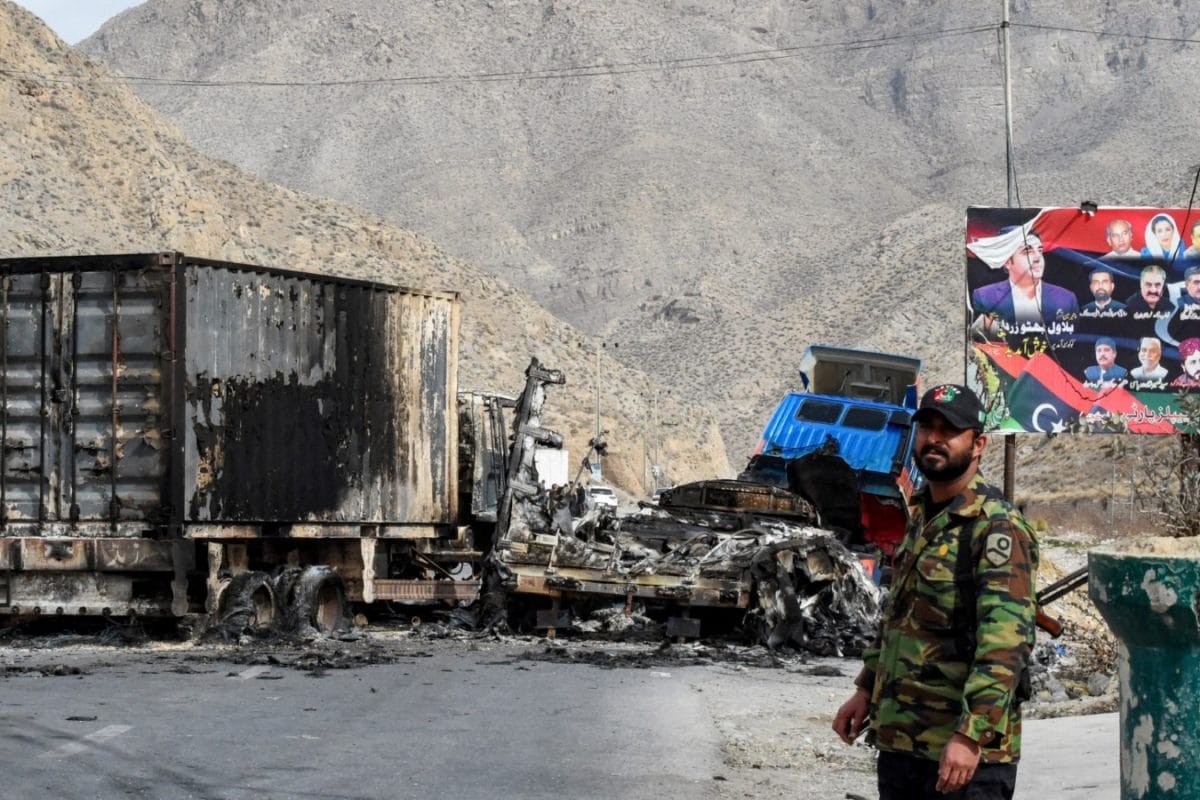
Why Does Balochistan Want Independence From Pakistan? A Look At The Long-Running Conflict Written By, Last Updated: July 28, 2026, 20:24 IST Historical disputes, resource grievances, human rights concerns and demands for greater autonomy lie at the heart of Balochistan's conflict with Pakistan. A security personnel stands guard near charred truck containers torched by armed separatist group Balochistan Liberation Army (BLA) at central Bolan district. (AFP photo) For decades, Pakistan’s southwestern province of Balochistan has been at the centre of a conflict between Baloch nationalist groups and the federal government in Islamabad. What began as opposition to the region’s incorporation into Pakistan in 1948 has evolved into a complex struggle shaped by historical grievances, economic disparities, human rights concerns and demands for greater political autonomy. The 1948 Accession & Historical Grievances The roots of the Baloch nationalist movement date back to the partition of British India in 1947. Before Pakistan’s creation, the region’s largest princely state, the Khanate of Kalat, declared independence. However, in March 1948, the Khan of Kalat signed an instrument of accession to Pakistan after negotiations and military pressure from Islamabad. Baloch nationalist groups maintain that the accession was not voluntary and regard it as an annexation of their territory. This dispute over Balochistan’s political status remains a central issue in the independence movement and has fuelled several insurgencies over the past seven decades.
Also Read | Balochistan ‘Declares Independence’ From Pakistan: What It Means And Why China Is Watching Closely Resource-Rich But Underdeveloped Although Balochistan accounts for nearly 44 per cent of Pakistan’s land area, it remains the country’s least developed province by many socio-economic indicators. Nationalist leaders argue that the province’s vast natural resources have largely benefited other parts of Pakistan while local communities continue to face poverty, unemployment and inadequate infrastructure. One of the most frequently cited examples is the Sui gas field, discovered in 1952. The gas has supplied homes and industries across Pakistan for decades, but many areas of Balochistan still lack reliable access to gas, electricity and basic public services. Concerns Over CPEC & Gwadar The development of the China-Pakistan Economic Corridor (CPEC) and the strategic Gwadar Port has further intensified tensions. The Pakistani government views CPEC as a transformative economic initiative that will boost connectivity, investment and employment. However, many Baloch groups argue that local communities have not benefited proportionately from the project. Critics claim that large-scale infrastructure development has led to concerns over land rights, resource control and demographic changes, while employment opportunities have largely gone to workers from outside the province. Allegations of Human Rights Violations Human rights concerns have become another major flashpoint in the conflict. International organisations, including Amnesty International, have repeatedly raised concerns over alleged enforced disappearances, arbitrary detentions and restrictions on freedom of expression in Balochistan.
 The BriefWire