Elon Musk takes shot at Anthropic, says SpaceXAI will not destroy books for AI training
What happens when an AI company needs millions of books to train its model? In Anthropic’s case, some of those books were bought, stripped of
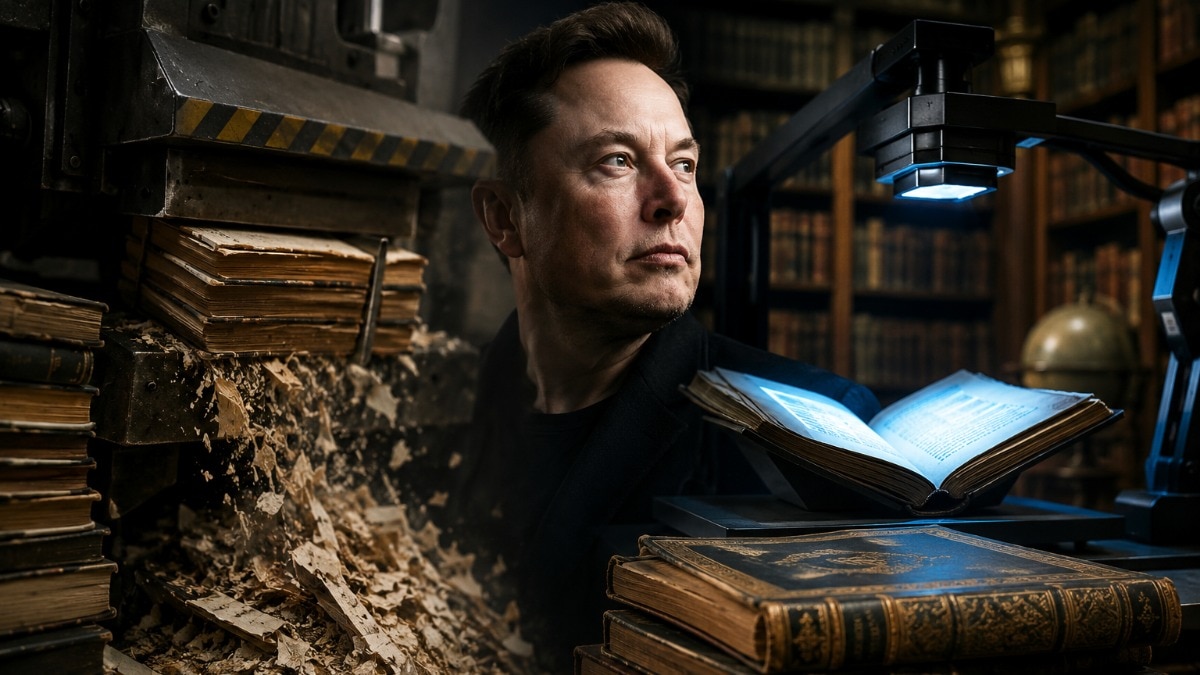
What happens when an AI company needs millions of books to train its model? In Anthropic’s case, some of those books were bought, stripped of their bindings, scanned page by page and then discarded. Elon Musk clearly does not seem impressed. After an X post touched on concerns over AI companies physically destroying books to build training datasets, Musk said SpaceXAI would take a different route, particularly when it comes to rare books. Read Full Story “I’ve asked the SpaceXAI team to preserve any rare books in a library and scan them the hard way vs just cutting off the spine and scanning” A look at the tweet, in which Elon Musk says SpaceXAI will preserve rare books instead of destroying them for AI training. It is a short response, but it lands differently in light of what has emerged from Anthropic’s copyright fight. The AI company’s book-scanning operation has already become one of the stranger chapters in the race to build increasingly powerful models. Anthropic wanted “all the books in the world” The story goes back to Anthropic’s efforts to gather enormous amounts of high-quality text for Claude, its AI assistant.
Court documents revealed that the company bought millions of physical books and digitised them for AI training. To speed things up, it used a destructive scanning process: the bindings were removed, the pages were scanned in bulk and the physical copies were then discarded. Anthropic had even hired Tom Turvey, a former Google Books partnerships executive, in 2024. His job was to help the company acquire “all the books in the world.” Why go to such lengths? AI models need huge volumes of text during training, and books are particularly valuable because they contain professionally edited and structured writing. Buying physical copies also offered Anthropic a way to obtain the material without negotiating a licence for every book. But there was a major catch: the books did not always survive the process. That is where the controversy gets uncomfortable. The court documents do not establish that Anthropic destroyed rare books specifically. Its physical-book operation involved bulk purchases, including books sourced from major retailers. But a recent discussion on X has raised concerns about what could happen if the same destructive approach expands to rare or out-of-print titles with very few surviving copies.
The legal twist makes it even more complicated Anthropic's book saga was also tangled up in a much bigger copyright battle. According to Business Standard, the company had separately obtained more than seven million books from piracy sources, including Library Genesis and the Pirate Library Mirror. US District Judge William Alsup drew a line between those books and the physical copies Anthropic had legally purchased. The judge found that digitising legally purchased books and using them internally to train AI qualified as fair use. But the pirated collection was different: acquiring and maintaining those books constituted copyright infringement. Anthropic ultimately agreed to a $1.5 billion settlement with authors and publishers over the piracy claims. A federal judge gave the settlement final approval in July 2026, with Anthropic saying more than 91 per cent of eligible authors and publishers had claimed their share. And that brings the story back to Musk. Musk's clever answer is essentially - why destroy the book when you can simply scan it SpaceXAI's proposed approach would keep rare books in a library and use a slower, non-destructive scanning method.
 The BriefWire