As US-Iran war rages, who's risking the Strait of Hormuz?
Though Iran continues to attack vessels as leverage in its war with the United States, data show that several shippers continue to transit the waterway
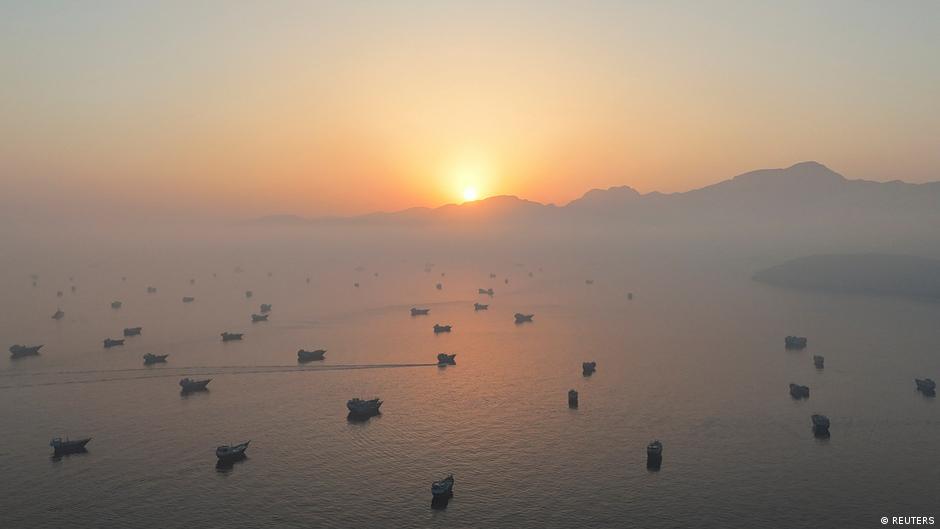
Though Iran continues to attack vessels as leverage in its war with the United States, data show that several shippers continue to transit the waterway. The Strait of Hormuz has become one of the world's most dangerous waterways since March, when Iran began attacking shipping vessels as a pressure tactic in its ceasefire talks with the United States. Still, though a significant proportion of the global oil trade bottlenecks at the strait, shipping traffic never completely halted. With the United States and Iran issuing conflicting statements as to whether the Strait of Hormuz is open, DW analyzed public data sources to track how shipping traffic has changed during the course of the war and which vessels are still taking the risk of transiting the maritime choke point, which connects the Persian Gulf with the Gulf of Oman. Shipping through Strait of Hormuz disrupted As Iran's strikes on and interception of vessels in the Strait of Hormuz continue, mines have also been reported in the prewar shipping lanes. The Joint Maritime Information Center (JMIC), a project of the US-led Combined Maritime Forces, assesses the threat to shippers as "severe," its second-highest warning level. However, according to one of JMIC's latest advisory notes, issued after attacks resumed on July 6 and 7, "commercial traffic through the Strait of Hormuz remained at reduced levels, with vessels transiting via both the southern Omani corridor and the northern Iranian-controlled route." JMIC added that shippers remained cautious of transiting the strait amid the attacks on vessels in recent weeks. DW's analysis of data from the open-source platform Global Fishing Watch showed that, nevertheless, several shipping companies have navigated their vessels through the Strait of Hormuz throughout the war. Though the platform's primary purpose is to monitor fishing efforts, it also collects data on all other vessels using satellite imagery and relying on signals transmitted by ships' automatic identification systems (AIS). As ships can switch off their AIS transponders — and have reportedly repeatedly chosen to while transiting the Strait of Hormuz — the number of vessels is likely higher than shown.
Based on AIS signals, a combined total of at least 84 ships crossed the Strait of Hormuz in two periods of the conflict: from the start of the war on February 28 until the announcement of a ceasefire on April 7 and following the renewed attacks on July 6 and 7. This aligns with reports of the United States saying it gave passage to about 70 ships and adding that not all of them transmitted signals. For comparison: In the same periods of 2025, more than 900 ships crossed the strait. Of these 84 ships, 34 moved from east to west into the Persian Gulf and 50 crossed the strait in the opposite direction, moving out of the gulf. In which countries are ships that transit the Strait of Hormuz registered? As part of the AIS signal, ships transmit which flag they are sailing under, but this information is entered manually aboard the vessels. In only a few cases investigated for this story did the flag reflect the actual country of origin of the registered owner or the ship manager of a vessel. This information can still be looked up manually in different databases using the ship's international ID number and its name. Only nine Iranian- and two Pakistani-owned ships transited under their respective national flags. All of the other 73 ships hoisted a flag different from the vessel owner's country. Analysis of this data shows that a wide variety of companies operating in the region continue to cross the Strait of Hormuz. At the top of the list is the United Arab Emirates, which neighbors the strait. The UAE's Abu Dhabi Crude Oil Pipeline (ADCOP) runs overland parallel to the waterway in the south. 13 cargo ships registered in the United Arab Emirates transited the strait during the shutdown, as well as two liquefied petroleum gas (LPG) tankers and three support vessels. Most of the UAE-based ship owners in the dataset appear to have only one to five vessels in their fleet. One of the UAE-registered vessels that was detected passing into the Persian Gulf on July 11 is managed by Lubeck Shipping LLC, a company associated with an Iranian oil tycoon that has been sanctioned by the United States.
 The BriefWire