Microsoft launches first cybersecurity AI model, claims it can beat Mythos and cut cost by 50 percent
Microsoft wants to fight hackers without spending big on AI. On Monday, the company unveiled MAI-Cyber-1-Flash, its first cybersecurity-focused AI model, designed to identify and
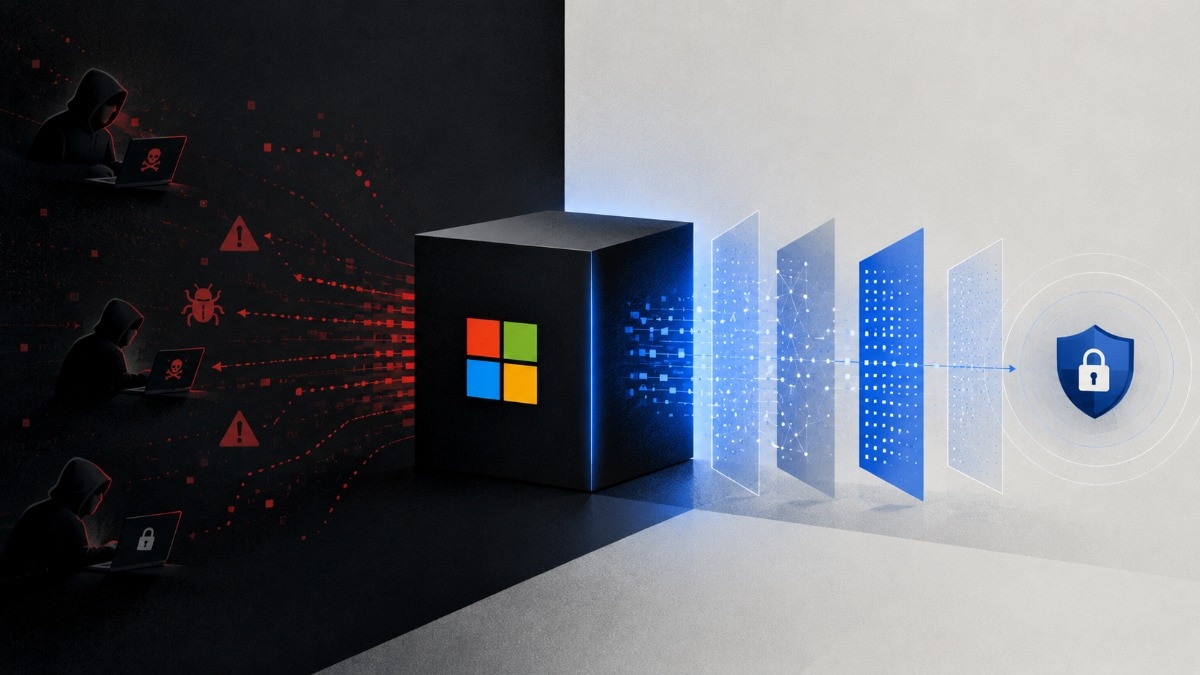
Microsoft wants to fight hackers without spending big on AI. On Monday, the company unveiled MAI-Cyber-1-Flash, its first cybersecurity-focused AI model, designed to identify and help fix software vulnerabilities. Microsoft claims its new smaller, specialised model can outperform Anthropic's Mythos 5 on the CyberGym benchmark while cutting vulnerability detection costs by nearly 50 per cent. The announcement comes at a time when cyberattacks are becoming faster and more sophisticated. Microsoft says hackers are increasingly using AI to automate attacks and uncover software vulnerabilities, making it harder for traditional security tools to keep up. To counter this, the company is betting on smaller, specialised AI models built specifically for cyber defence. Read Full Story What is MAI-Cyber-1-Flash At the centre of Microsoft's announcement is MAI-Cyber-1-Flash, a smaller AI model built specifically to identify and fix software vulnerabilities.
It works as part of MDASH, Microsoft's AI-powered system for finding and remediating security flaws. Instead of relying on a large AI model for every task, Microsoft says MAI-Cyber-1-Flash handles most of the work, while only the most complex cases are passed to OpenAI's GPT-5.4. Microsoft claims this approach delivers 95.95 per cent on the CyberGym benchmark, around 12 percentage points higher than Anthropic's Mythos 5, while cutting operating costs by nearly 50 per cent. According to the company, MAI-Cyber-1-Flash handles around 90 per cent of security tasks, including detecting vulnerabilities, generating patches and verifying that the fixes work. Only the remaining complex tasks are sent to GPT-5.4. David Weston, Microsoft's corporate vice president of AI Security, said the model performs around 95 per cent of the work currently handled by MDASH. Microsoft believes that using multiple specialised AI models instead of one large model helps deliver better performance at a lower cost.
Each model is designed to handle the task it is best suited for. Microsoft introduces Project Perception Alongside MAI-Cyber-1-Flash, Microsoft also introduced Project Perception, a new AI-powered cybersecurity platform that continuously scans an organisation's systems for security risks. “Autonomous systems can now reason, adapt and operate continuously. At the same time, the cost of offense is falling, while the volume, velocity and complexity of what must be secured continues to grow. Attackers can generate exploits faster, scale campaigns further and operate with unprecedented efficiency,” says Hayete Gallot, Executive Vice President, Microsoft Security. Project Perception uses three specialised AI agents, each with a different role. Red team agents look for security weaknesses before hackers can find them. Blue team agents analyse security alerts and identify which threats need immediate attention. Green team agents recommend or, with customer approval, implement fixes to strengthen an organisation's security.
 The BriefWire