Did you know our body has its own GPS? Astro Shux explains how it works
How do astronauts know which way is up when there is no up or down in space? According to Indian astronaut Shubhanshu Shukla, the answer
How do astronauts know which way is up when there is no up or down in space? According to Indian astronaut Shubhanshu Shukla, the answer lies in a remarkable built-in navigation system inside the human body, one that works like an internal GPS but becomes confused in the weightless environment of space. Sharing insights from his training for the Axiom-4 mission, Shukla explained why neurovestibular fitness is a critical part of preparing astronauts for life in orbit. Read Full Story "Your body has its own navigation system. And in space, it gets a little confused," he wrote on social media. On Earth, the brain determines orientation by combining information from three different systems: vision, the vestibular system in the inner ear, and proprioception, special sensors in muscles and joints that constantly tell the brain where different parts of the body are located.
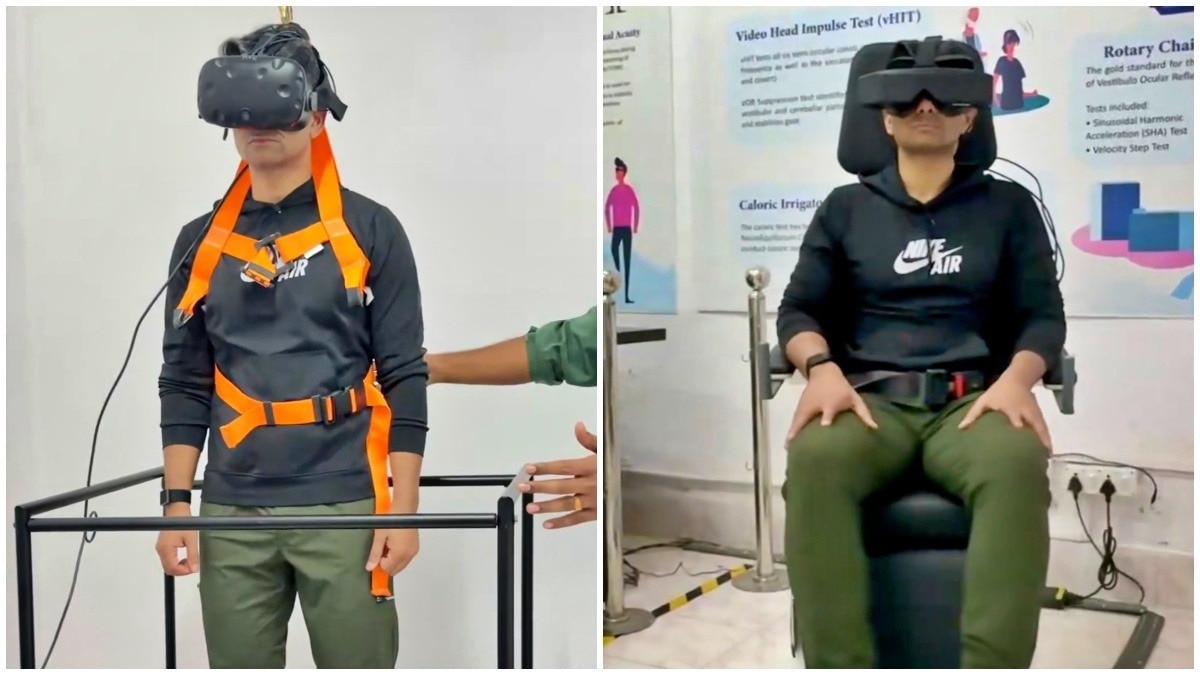
Together, these systems help people balance, walk, turn and instinctively know which way is up. However, space changes everything. Without Earth's gravity acting as a constant reference, the brain suddenly loses one of its most trusted signals. To prepare astronauts for this challenge, trainers deliberately confuse these sensory systems. In one exercise, astronauts perform balance tests while vision is removed, forcing the brain to rely entirely on signals from the inner ear and body. Another test uses virtual reality (VR) to create conflicting information, where the eyes see one thing while the body and inner ear sense something completely different. Moving platforms further increase the challenge by unexpectedly shifting beneath the astronaut, testing how quickly the brain can adapt. One of the most unusual exercises involves a revolving chair.
Your body has its own navigation system. And in space, it gets a little confused. Neurovestibular fitness is an important part of human spaceflight because once you leave Earth, one of the most fundamental things your body loses is a reliable sense of “which way is up.” Our pic.twitter.com/20NNBOXPg9— Shubhanshu Shukla (@gagan_shux) July 27, 2026 Inside the inner ear are tiny semicircular canals filled with fluid that detect rotation. When a person spins, the fluid moves more slowly because of inertia. Even after the chair stops, the fluid continues moving for a few moments, making the brain think the body is still rotating. "Your eyes may say, 'We've stopped.' Your inner ear may respond, 'Are you sure?'" Shukla explained. Eventually, the brain recalibrates and resolves the conflicting signals, a process that becomes even more important aboard spacecraft, where astronauts must function without a permanent sense of up or down.
 The BriefWire