3 Reasons Why Iran's Bab al-Mandab Threat Matters Even More Than Hormuz
3 Reasons Why Iran's Bab al-Mandab Threat Matters Even More Than Hormuz Published By, Last Updated: June 02, 2026, 04:46 IST Although the Bab al-Mandab
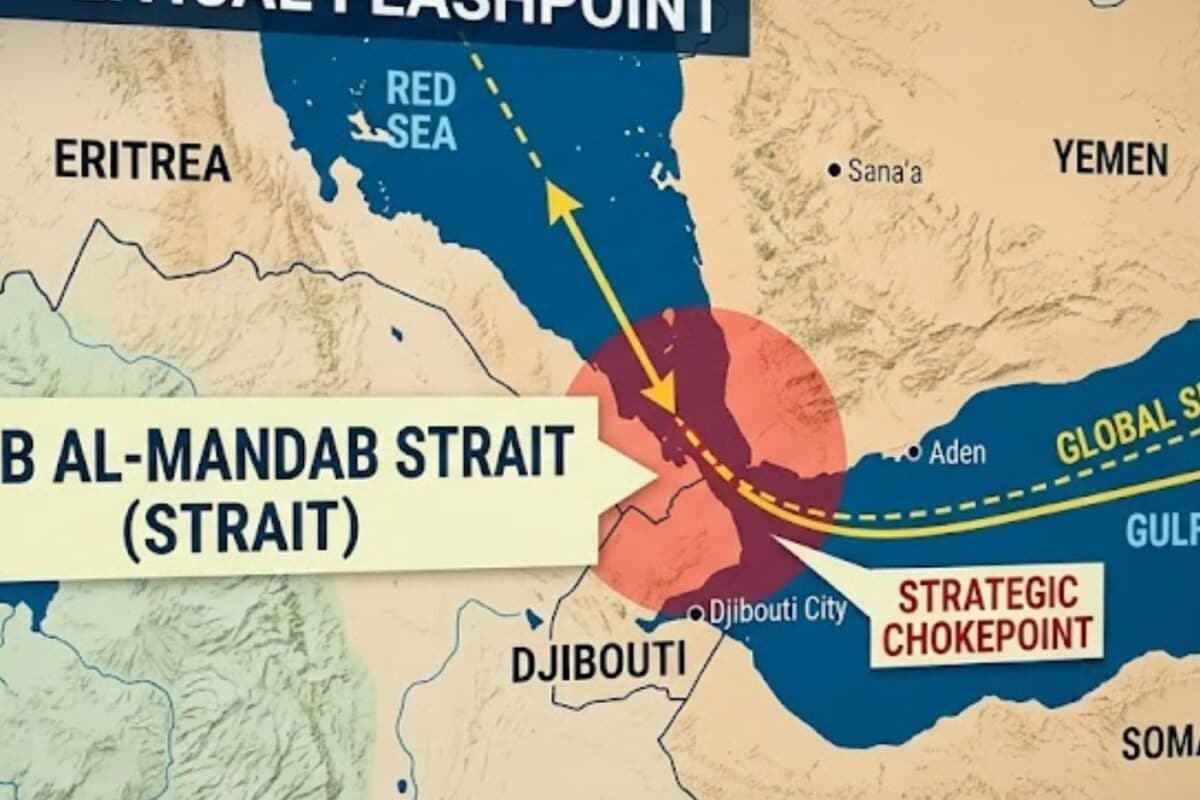
3 Reasons Why Iran's Bab al-Mandab Threat Matters Even More Than Hormuz Published By, Last Updated: June 02, 2026, 04:46 IST Although the Bab al-Mandab Strait lies thousands of kilometres from Iran's borders, Tehran could potentially leverage its regional allies to disrupt maritime traffic there. Rapid Read The opposite shore of the strait is dominated by Djibouti, which has emerged as one of the world's most heavily militarised locations. (AI-generated photo) Even as the Strait of Hormuz remains closed, Iran has signalled that another critical maritime chokepoint could come under threat. Esmail Qaani, commander of the Islamic Revolutionary Guard Corps’ (IRGC) Quds Force, warned that if Israel continues its military operations in Lebanon and Gaza, the “Resistance Axis" could expand the conflict and align shipping conditions in the Bab al-Mandab Strait with those currently prevailing in the Strait of Hormuz. Qaani said continued Israeli action would strengthen the resolve of Iran-backed groups to open new fronts and increase pressure on regional and global shipping routes. While the immediate threat may have eased after US President Donald Trump announced a ceasefire between Israel and Hezbollah, the situation remains fragile and could deteriorate quickly if hostilities resume. Why Bab al-Mandab Strait Is So Important Although the Bab al-Mandab Strait lies thousands of kilometres from Iran’s borders, Tehran could potentially leverage its regional allies to disrupt maritime traffic there. The strait, whose Arabic name translates to “Gate of Tears" or “Gate of Grief," is one of the world’s most strategically important maritime chokepoints.
It forms the critical link between the Red Sea and the Gulf of Aden, connecting the Suez Canal to the Indian Ocean. Located between Yemen on the Arabian Peninsula and Djibouti and Eritrea in the Horn of Africa, the strait narrows to just 26-29 kilometres (16-18 miles) at its tightest point. At the centre of the waterway sits Perim Island, a volcanic island controlled by Yemen, which divides the strait into two channels. The eastern Alexander Channel, only about 3.2 kilometres wide, serves as the primary route for international commercial shipping. The Lifeline Of Europe-Asia Trade The Bab al-Mandab functions as the southern gateway of the Europe-Asia maritime trade route. Virtually all vessels travelling between Europe and Asia via the Suez Canal must pass through this narrow corridor. As a result, an estimated 10-12 per cent of global maritime trade transits the strait every year. The route carries thousands of container ships transporting electronics, machinery, consumer goods, automobiles and industrial products between Asian manufacturing hubs and European markets. A Critical Energy Chokepoint The Strait is equally vital for global energy supplies. Between six and eight million barrels of crude oil and refined petroleum products pass through the Bab al-Mandab daily, primarily destined for Europe and North America. Large volumes of liquefied natural gas (LNG), particularly from Qatar, also transit the waterway. Any disruption could have immediate consequences for global energy prices and supply chains. If shipping companies are forced to avoid the strait, vessels must reroute around Africa’s Cape of Good Hope.
Such diversions add up to two weeks to voyage times, increase fuel costs, raise insurance premiums and create significant delays in global trade. The Houthi Factor The greatest immediate threat to shipping in the Bab al-Mandab comes from the Houthi movement. The Houthis, which are backed logistically and strategically by Iran, control large stretches of Yemen’s western coastline overlooking the Red Sea and have repeatedly demonstrated their ability to target commercial vessels and naval ships using anti-ship missiles, drones, sea mines and explosive-laden boats. Their strategic position enables them to exert pressure on one of the world’s most important shipping corridors, making the strait a powerful geopolitical tool in regional conflicts. Why Closing The Strait Won’t Be Easy Despite the threat, completely shutting down the Bab al-Mandab would be far more difficult than issuing warnings. The opposite shore of the strait is dominated by Djibouti, which has emerged as one of the world’s most heavily militarised locations. The country hosts Camp Lemonnier, the only permanent US military base in Africa, along with major military installations operated by China, France, Japan and Italy. These countries maintain a substantial naval presence in the region specifically to secure maritime trade routes and counter threats ranging from piracy to state-backed attacks. However, the narrow geography of the waterway means even limited attacks can significantly disrupt shipping traffic. Relatively inexpensive weapons launched from land can threaten commercial vessels and warships alike, giving regional actors a potent means of influencing global trade and energy markets.
A Chokepoint The World Cannot Ignore With the Strait of Hormuz already under pressure, any instability in the Bab al-Mandab would create a second major shock to global shipping. Together, the two waterways handle a substantial share of the world’s energy exports and maritime trade, making them among the most strategically important chokepoints on the planet. Any sustained disruption could reverberate across global supply chains, energy markets and international security. News18 Newsletter Handpicked stories, in your inbox A newsletter with the best of our journalism submit About the Author Saurabh Verma Saurabh Verma covers a wide range of beats for News18.com, including national, international and day-to-day news, with a particular focus on politics. He brings a fresh and analytical lens to his stor... Read More Location: Tehran, Iran First Published: June 02, 2026, 04:44 IST News world 3 Reasons Why Iran's Bab al-Mandab Threat Matters Even More Than Hormuz Disclaimer: Comments reflect users’ views, not News18’s. Please keep discussions respectful and constructive. Abusive, defamatory, or illegal comments will be removed. News18 may disable any comment at its discretion. By posting, you agree to our Terms of Use and Privacy Policy Loading comments...
 The BriefWire