Jantar Mantar To Siwan: Can Police Use Force Without Permission? What Law Says
Jantar Mantar To Siwan: Can Police Use Force Without Permission? What Law Says Published By, Last Updated: July 28, 2026, 11:01 IST As Delhi Police
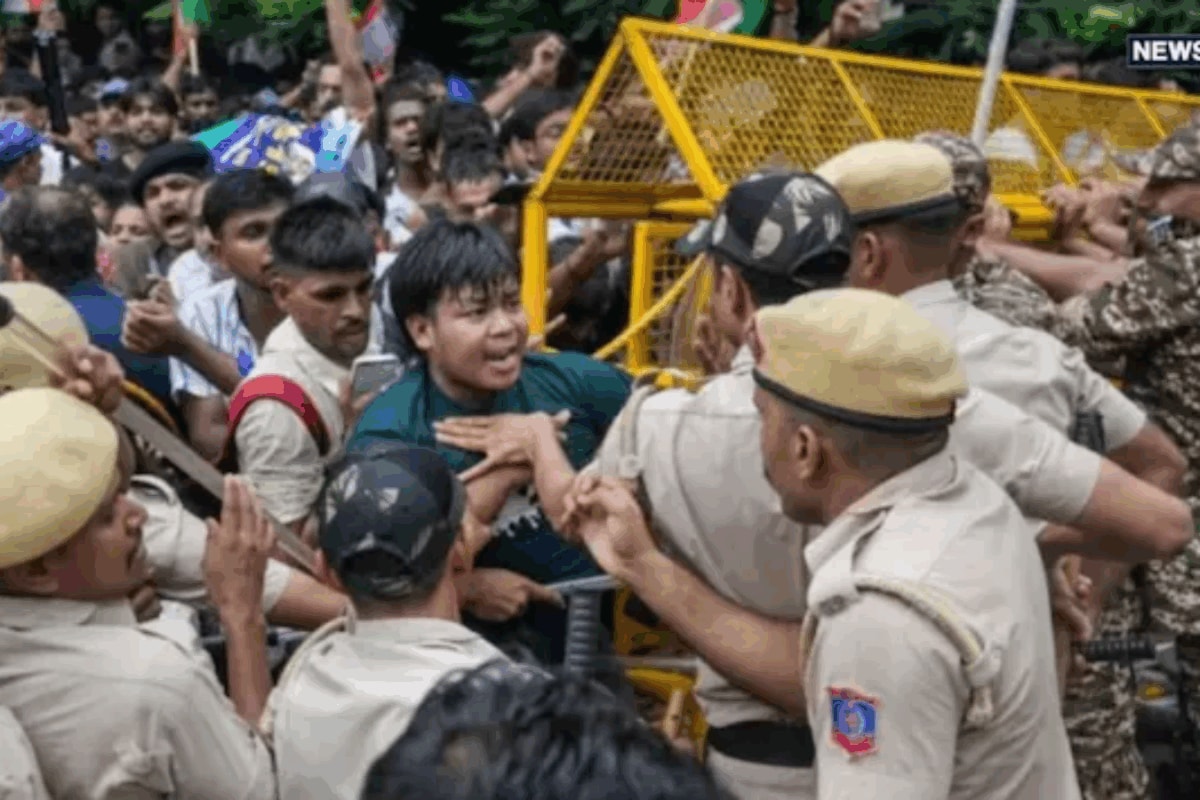
Jantar Mantar To Siwan: Can Police Use Force Without Permission? What Law Says Published By, Last Updated: July 28, 2026, 11:01 IST As Delhi Police defends its Jantar Mantar crackdown and Bihar suspends a constable over AK-47 use in Siwan, here's what Indian law says about lathicharge without permission. Retired Delhi Police personnel have now sought permission for their own dharna at Jantar Mantar. Delhi Police is defending its handling of the Jantar Mantar protests, even as Bihar suspends a constable for using an AK-47 during clashes in Siwan and withdraws all FIRs linked to the July 25 agitation. Both incidents have reignited a familiar legal question: can police lathicharge a crowd without seeking permission first? The short answer, according to legal provisions and past Supreme Court rulings, is that no separate permission is required before each lathicharge — but officers must be able to prove the force used was necessary and proportionate to the situation. A bench led by Chief Justice Surya Kant has reportedly said in ongoing proceedings that a lathicharge cannot be justified on the grounds of a protest alone, and has pushed for a uniform police protocol for handling public demonstrations nationwide. The fallout continues to widen: retired Delhi Police personnel have now sought permission for their own dharna at Jantar Mantar, citing injuries their former colleagues sustained during the same protests. Can Police Use Force To Control A Protest At All? Yes — Indian law allows police to use force to control a crowd if a protest threatens to turn violent, damage government property, or endanger public safety, as was cited in the case of the NEET paper leak protests at Jantar Mantar.
However, this does not permit arbitrary or unlimited lathicharge. Officers can be held legally responsible for excessive or unlawful force, even when acting on orders from superiors — Indian law does not treat “orders from above" as a complete defence if the force used violates the constitutional principles of necessity and proportionality. What Steps Must Police Follow Before A Lathicharge? Under Sections 129 and 130 of the Bharatiya Nagarik Suraksha Sanhita (BNSS), police must follow a strict sequence before resorting to physical force BNSS-Mandated Step What Delhi Police Says It Did at Jantar Mantar Declaration: Inform the crowd it is being treated as an unlawful assembly Public announcements under BNSS Section 163 asked protesters to stay within the sanctioned area Warning: Issue clear verbal orders and adequate warnings to disperse Repeated warnings issued; multiple barricade layers maintained without force Graduated force: Use less coercive options first, such as water cannons or tear gas Mild pushing and water cannons used after protesters allegedly pushed or dismantled barricades Lathicharge as last resort: Blows must target only the lower body (waist and below) Targeted lathi-charge and controlled tear gas used only against identified aggressors, after final warnings; force stopped once the threat ended Striking vital organs, the head or the collarbone is a violation of standard police manuals, regardless of the circumstances. What Punishment Can Officers Face For Misusing Force? If an inquiry finds that an officer misused their authority, acted unlawfully, or caused serious injury, they can face departmental action alongside criminal prosecution under relevant sections of the Bharatiya Nyaya Sanhita (BNS). Depending on the severity, this can range from fines and service penalties to imprisonment.
 The BriefWire