Inside July 20: Why Delhi Police Fired The First Tear Gas Shell At CJP's 'Sansad Chalo' March
Inside July 20: Why Delhi Police Fired The First Tear Gas Shell At CJP's 'Sansad Chalo' March Reported By, Edited By Last Updated: July 28
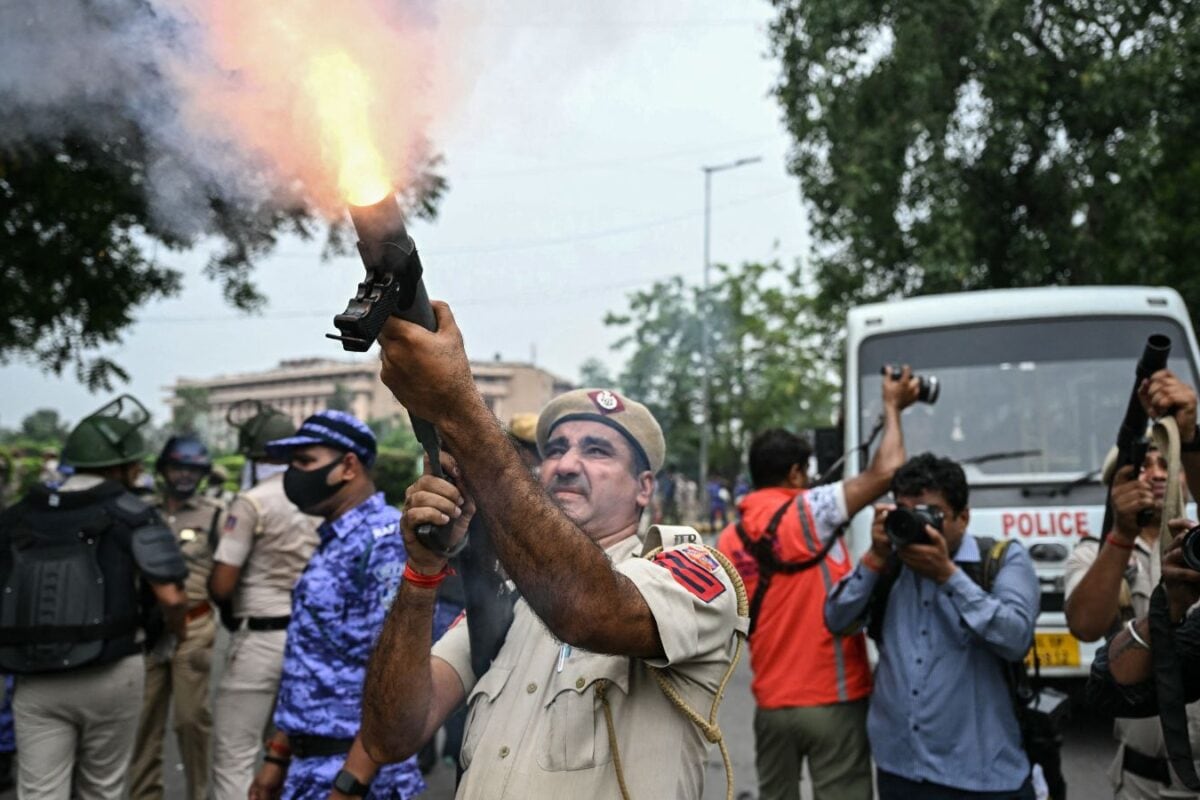
Inside July 20: Why Delhi Police Fired The First Tear Gas Shell At CJP's 'Sansad Chalo' March Reported By, Edited By Last Updated: July 28, 2026, 11:16 IST Cockroach Janta Party had given a call for ‘Sansad Chalo’ for July 20, demanding the resignation of then education minister Dharmendra Pradhan Rapid Read A police personnel fires tear gas shells to disperse activists and supporters of the Cockroach Janta Party on July 20. (AFP) One of the very first anti-riot measures executed on the ground by Delhi Police on July 20 was when protesters led by the Cockroach Janta Party (CJP) broke the barricades and marched towards Parliament from Dak Bhawan at Patel Chowk. Senior officials have confirmed to News18 that this was the moment when the initial tear gas shells were fired towards the “raging mob". At least two senior officials who were present on the ground for crowd control measures between Jantar Mantar Road and Sansad Marg have confirmed that the orders to fire a tear gas shell were received from an officer of above the additional commissioner or joint commissioner of police level.
This was reportedly one of the initial instances of any coercive anti-riot measure used against the protestors. ALSO READ | RAF Personnel Fired 7 Pellet Gun Rounds During CJP’s Parliament March, 5 Struck Protesters: Report A senior Delhi Police officer, who was also on the ground on July 20, said, “Since Parliament was in session and there was no permission for the march, some restrictive measures were taken to ensure the safety of the public and public property after repeated warnings and announcements." The circumstances that led to these decisions will be looked into, the officer added, requesting anonymity. Cockroach Janta Party had given a call for ‘Sansad Chalo’ for July 20, demanding the resignation of then education minister Dharmendra Pradhan. A day before the march, Delhi Police had said in a statement that the CJP had sought no permission. Police had also made it clear that prohibitory orders are in place from June 24 and will continue till August 22 because of the ongoing Monsoon Session of Parliament.
ALSO READ | From Boat Club To Jantar Mantar: How Delhi’s Protest Map Changed Over The Decades However, the protestors, on July 20, started marching from Jantar Mantar towards Parliament. They took two routes—one from the Kerala Bhawan side, reaching Patel Chowk, and the other from Sansad Marg police station, converging with the others at Patel Chowk. “This was the reason Patel Chowk witnessed a huge number of people marching towards Parliament. Given the vicinity with Parliament and other public areas like the metro station and government installations, action was taken to disperse the crowd," said another officer, requesting not to be named. Delhi Police had also upped the security ahead of the march significantly, but officials confirm that the crowd that turned up for the protest was almost double of what had been anticipated. News18 Newsletter Handpicked stories, in your inbox A newsletter with the best of our journalism submit About the Author Anvit Srivastava Anvit Srivastava, Principal Correspondent at CNN-News18, covers crime, security, policing and society in Delhi.
 The BriefWire