A diamond mining operation uncovered a 500-year-old Portuguese shipwreck filled with gold and ancient secrets
PC: AI Generated Namibia’s desert sands preserved a lost Portuguese ship for nearly 500 years A lost voyage from the age of exploration Gold, copper
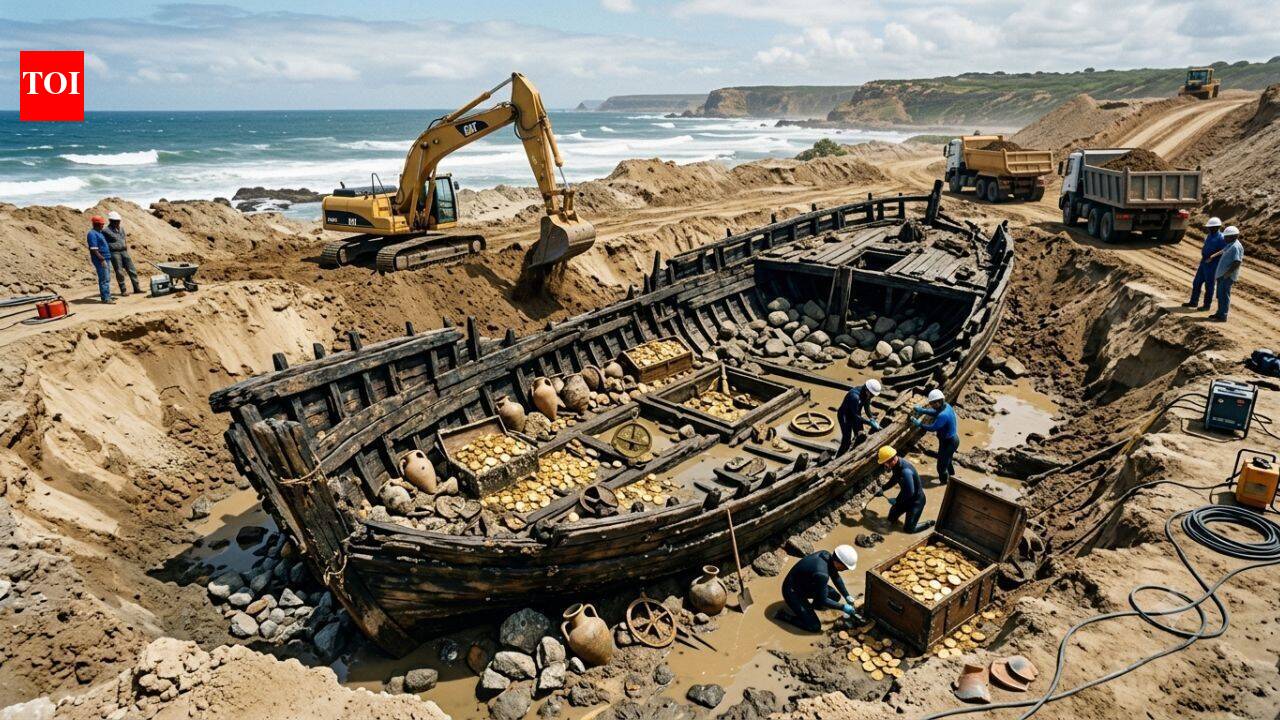
PC: AI Generated Namibia’s desert sands preserved a lost Portuguese ship for nearly 500 years A lost voyage from the age of exploration Gold, copper and a cargo frozen in time The mystery of the missing sailors Along Namibia’s remote Atlantic coastline, where endless desert meets one of the world’s most dangerous seas, a forgotten piece of history lay buried beneath the sand for nearly 500 years. What began as a routine diamond mining operation near Oranjemund turned into one of Africa’s most remarkable archaeological discoveries when workers uncovered the remains of a Portuguese ship lost in the 16th century. The wreck, later identified as the Bom Jesus, carried a valuable cargo of gold, copper, ivory and thousands of coins from Europe’s age of exploration.Preserved by the harsh desert conditions, the ship offered researchers an extraordinary glimpse into ancient trade routes, maritime dangers and the ambitions of Portuguese explorers. Hidden for centuries, the wreck revealed the story of a lost voyage that ended not beneath the waves, but within the sands of Namibia’s Skeleton Coast.The wreck came to light during diamond mining operations near Namibia’s southern coast.
As workers altered the shoreline and removed water from an area close to the Atlantic, pieces of an old wooden vessel began emerging from the sand.What first appeared to be an unusual archaeological find soon became one of the most significant shipwreck discoveries in Africa.The location, near Oranjemund, gave the wreck its early name; the Oranjemund wreck before experts identified it as the Portuguese ship Bom Jesus.The discovery was unusual not only because of the ship’s age, but because the desert had preserved much of what would normally have disappeared after centuries underwater. The dry conditions and shifting sands had protected sections of the vessel and many of the objects trapped inside.The Bom Jesus was a Portuguese carrack, a large sailing vessel designed for long-distance ocean journeys. During the 1500s, ships of this type carried goods, supplies and valuable cargo between Europe, Africa and Asia as Portugal expanded its trading routes.The ship sailed from Lisbon on 7th March 1533, and the voyage was one of the many which took place to India. The ventures were some of the daring ones of the time, but at the same time, they posed serious risks to the sailors in terms of storms, navigation difficulties, illnesses, and danger of losing the ships far from land.The Bom Jesus never returned.
 The BriefWire