Can Police Officers Be Punished For Excessive Lathi Charge Even If They Didn’t Order It? Explained
Can Police Officers Be Punished For Excessive Lathi Charge Even If They Didn’t Order It? Explained Published By, Last Updated: July 27, 2026, 17:09 IST
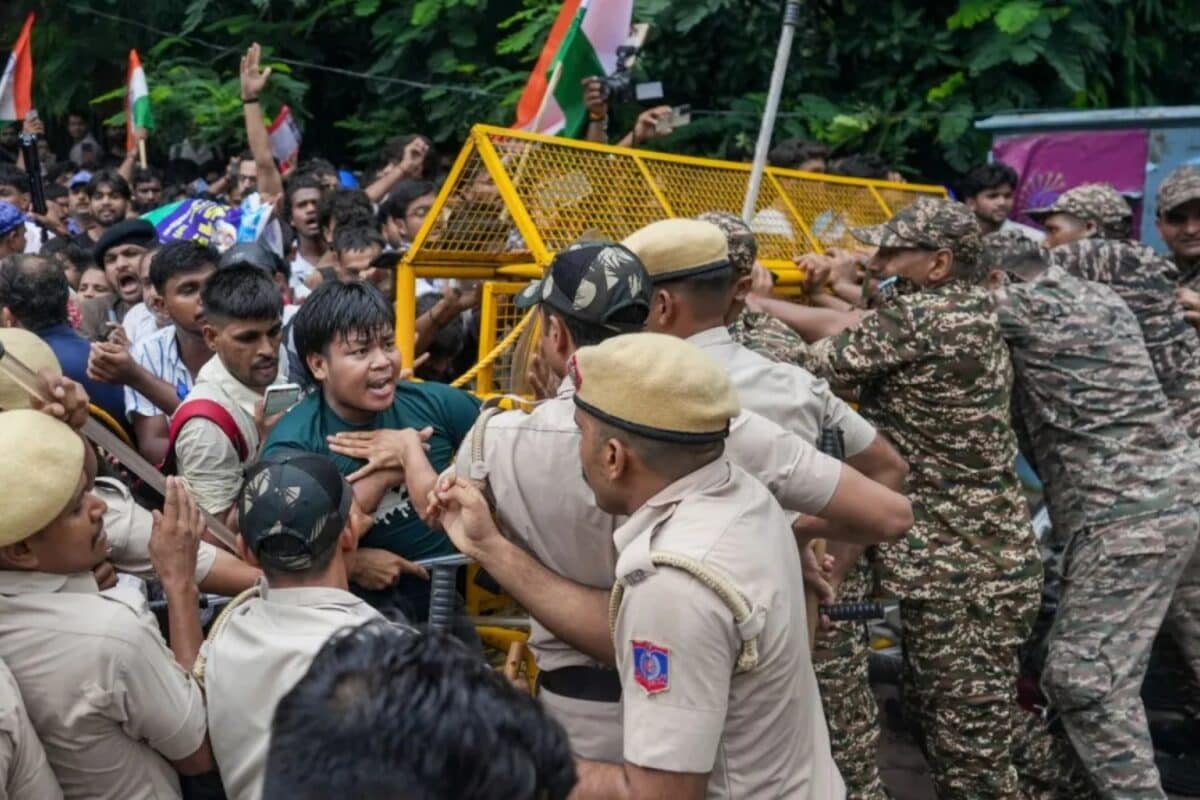
Can Police Officers Be Punished For Excessive Lathi Charge Even If They Didn’t Order It? Explained Published By, Last Updated: July 27, 2026, 17:09 IST Under the Indian law, the defence of "superior orders" does not grant absolute immunity if the resulting force violates the constitutional principles of necessity & proportionality Rapid Read Over 900 Booked in Mumbai As Police Crack Down On CJP Protest; Multiple FIRs Registered In Delhi Police officers can be held legally accountable and punished for executing an illegal or excessive lathi charge, even if they did not personally order the action. Under the Indian law, the defence of “superior orders" does not grant absolute immunity if the resulting force violates the constitutional principles of necessity and proportionality. News18 explains. THE LEGAL FRAMEWORK FOR ACCOUNTABILITY Senior and subordinate police officers alike can face departmental inquiry or criminal prosecution if the force applied amounts to an “abuse of power" or an “invasion of liberties" under Article 21 of the Constitution.
In landmark rulings like Ramlila Maidan Incident vs. Home Secretary (2012), the Supreme Court of India ruled that any police force must strictly be preventive, minimal, and proportional. It cannot be punitive or used as retailatory violence. Subordinate officers have a legal duty to refuse orders that are manifestly illegal, such as an instruction to brutally attack a completely non-violent, peaceful assembly. REQUIRED PROTOCOL FOR CROWD DISPERSAL Under Sections 129 and 130 of the Bharatiya Nagarik Suraksha Sanhita (BNSS), the police must follow a strict hierarchy of steps before physical force is used Declaration: Inform the crowd they are deemed an unlawful assembly. Warning: Issue clear verbal commands and suitable warnings to disperse. Graduated Force: Employ less coercive alternatives first, such as water cannons or tear gas.
Targeting Restrictions: If a lathi charge becomes a last resort, blows must strictly target the lower limbs (waistline and below) to avoid lethal injury. Striking vital organs, heads, or collarbones is a violation of standard police manuals. CURRENT JUDICIAL CONTEXT In ongoing legal developments, a Supreme Court bench led by Chief Justice Surya Kant observed that mere agitation cannot justify a lathi charge. The apex court has emphasized the need for a uniform police protocol across the country to handle public demonstrations while protecting the fundamental right to peaceful protest News18 Newsletter Handpicked stories, in your inbox A newsletter with the best of our journalism submit About the Author Manjiri Joshi At the news desk for 20 years, the story of her life has revolved around finding pun, facts while reporting, on radio, heading a daily newspaper desk, teaching mass media students to now editing speci...
 The BriefWire