SC status ends on conversion from Hinduism: Supreme Court upholds order
The Supreme Court has dismissed a review petition against its March 24 ruling that a person from a Scheduled Caste community loses SC status from
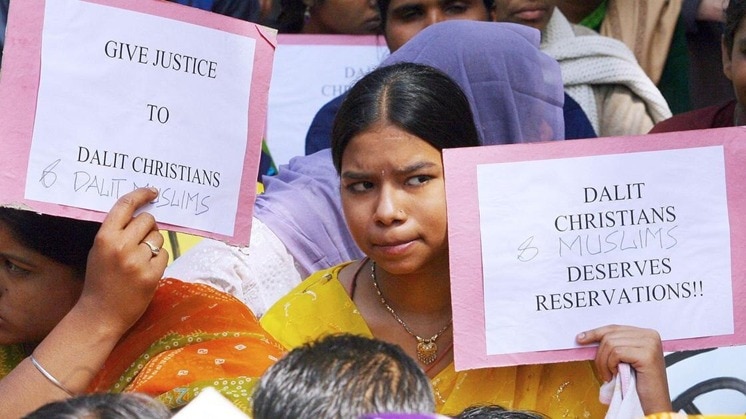
The Supreme Court has dismissed a review petition against its March 24 ruling that a person from a Scheduled Caste community loses SC status from the moment of conversion if they adopt a religion other than Hinduism, Sikhism or Buddhism. A bench of Justices Prashant Kumar Mishra and Manmohan said there was no reason to revisit the earlier verdict. In its July 15 order, the court said: "Application seeking oral hearing of the review petition is rejected. We have gone through the review petition and perused the judgment dated March 24, 2026, which has been sought to be reviewed. There is no error apparent on the record. The Review Petition is, accordingly, dismissed." Read Full Story In its March 24 judgment, the top court had upheld an Andhra Pradesh High Court order which said that a person belonging to a Scheduled Caste community loses Scheduled Caste status "immediately and completely" on converting to Christianity. The Supreme Court had held that the loss of SC status takes effect at once, regardless of birth.
The court had said, "No person who professes a religion other than Hindu, Sikh or Buddhist shall be deemed to be a member of a Scheduled Caste. This bar under Clause 3 of the Constitution (Scheduled Castes) Order, 1950 is categorical and absolute. Conversion to any religion not specified in Clause 3 results in immediate and complete loss of Scheduled Caste status from the moment of conversion regardless of birth." It had also said that once a person ceases to be a member of a Scheduled Caste under the 1950 Order, the loss of status leads to the "automatic and immediate termination" of eligibility for benefits, protections, reservations, preferences and entitlements linked to that status. Referring to the legislative history of Clause 3 of the Constitution (Scheduled Castes) Order, 1950, the court had said the provision originally applied only to Hindus. It was amended in 1956 to include Sikhs and in 1990 to include Buddhists. "It is important to note that Christianity has not been included under this Order by any of these amendments," the court had said, while also observing that Christianity, by its theological foundation, does not recognise or incorporate the institution of caste.
The judgment had also discussed Scheduled Tribe status. It said a person can claim benefits under the Constitution (Scheduled Tribes) Order, 1950 only if they continue to belong to the particular tribe in substance. If, because of conversion or long-term abandonment of tribal customs, that identity comes into doubt, the issue becomes a question of fact to be decided at trial. The court had said that if it is proved that a person has completely renounced the customs, rituals and other traits of the tribe and assimilated into the converted religion, "a reasonable inference can be drawn that such a person shall not be considered a part of the tribe". The Supreme Court had further said that anyone claiming Scheduled Caste or Scheduled Tribe status must show by clear and unimpeachable evidence that they belong to a caste or tribe specifically notified under the 1950 Orders. It had added, "A person cannot simultaneously profess and practice a religion other than the ones specified in Clause 3 of the Constitution (Scheduled Castes) Order, 1950 and claim membership of a Scheduled Caste at the same time." At the same time, the court said that a person claiming reconversion to Hinduism, Sikhism or Buddhism must prove original membership of a notified caste, bona fide reconversion, and acceptance and assimilation by the original caste and community.
 The BriefWire