Ever Wondered Why Traffic Lights Are Red, Yellow And Green? It All Traces Back To A Fatal 1914 Train Crash
Ever Wondered Why Traffic Lights Are Red, Yellow And Green? It All Traces Back To A Fatal 1914 Train Crash Published By, Last Updated: July
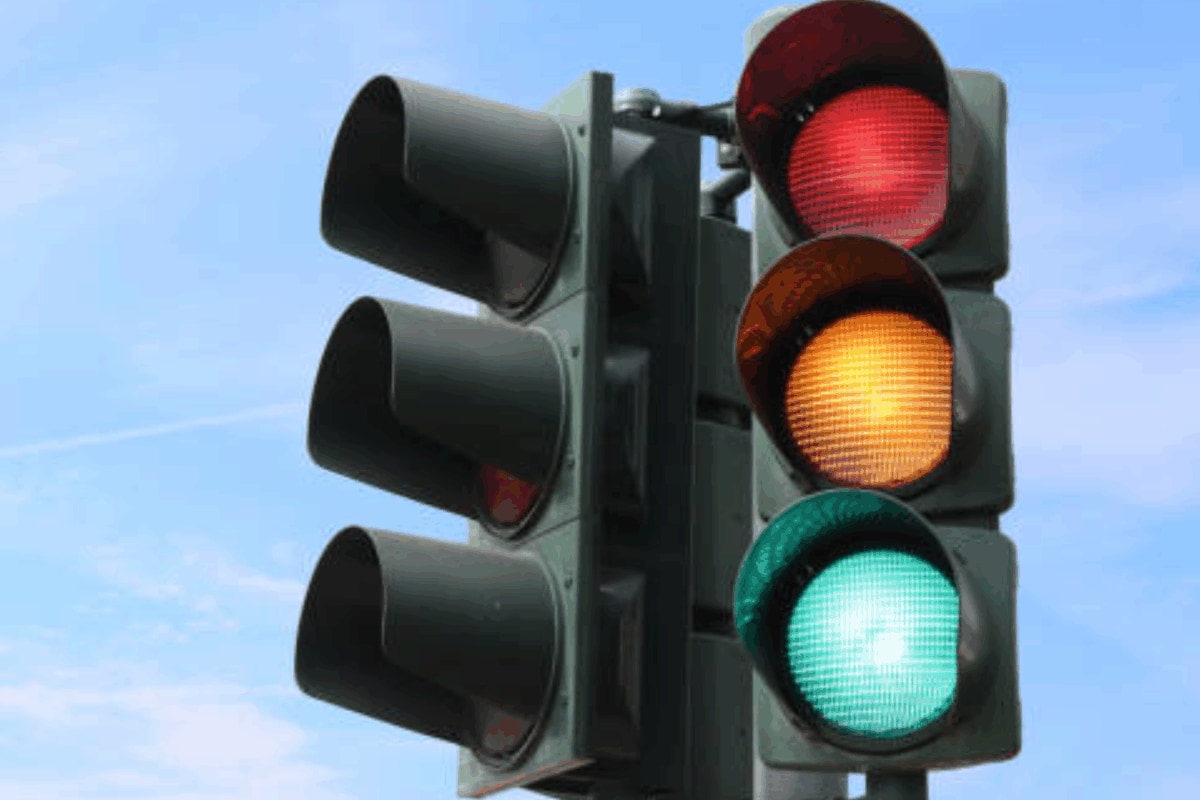
Ever Wondered Why Traffic Lights Are Red, Yellow And Green? It All Traces Back To A Fatal 1914 Train Crash Published By, Last Updated: July 27, 2026, 12:08 IST By 1935, the United States formally standardized the Red-Yellow-Green traffic sequence and municipalities worldwide rapidly adopted the standard. Rapid Read The universal three-color code wasn't created by city planners or automotive engineers. Every day, millions of drivers automatically stop at red lights, prepare to brake at yellow, and proceed on green without a second thought. But the universal three-color code wasn’t created by city planners or automotive engineers. It was forged in the 19th-century railway industry and rewritten after a fatal 1914 train collision revealed a lethal flaw in the original design. The Story Behind Traffic Lights In the early 1800s, British railway networks operated on a simple three-color lantern system to guide train conductors through the night Red: Stop (Danger) Green: Caution White: Go (Clear) The system functioned reliably until 1914, when a red glass lens dropped out of its signal housing along a dark stretch of track.
With the colored lens missing, the bare white bulb behind it shone directly into the night. An oncoming train engineer saw the clear white light, assumed the track ahead was clear, and powered full speed into an occupied section of track- resulting in a devastating crash. Rail companies quickly realized white was a dangerous choice for “Go" because any broken colored filter, street lamp or star could easily be mistaken for a clear signal. To eliminate the life-threatening confusion, railway engineers overhauled the signaling standard. Green was moved from “Caution" to become the new “Go" signal. Human eyes have the highest concentration of light receptors for green wavelengths, making it remarkably easy to spot against dark or foggy horizons. Red remained as “Stop" because red light has the longest wavelength in the visible spectrum. It scatters the least when passing through air molecules, allowing it to penetrate heavy fog, rain, and dust over long distances.
Yellow was introduced to fill the empty “Caution" slot. It was chosen because its distinct wavelength sat directly between red and green on the visible spectrum, ensuring drivers could instantly distinguish it from the other two colors. Detroit, 1920: Adapting Signal to City Streets When automobiles flooded municipal roads in the early 1900s, early street signals used only two colors: Red and Green. Without a transition warning before a light turned red, drivers braked abruptly, causing frequent rear-end collisions at busy intersections. In 1920, Detroit police officer William Potts adapted the railway industry’s three-color framework for road traffic. He wired red, yellow and green lights together into a custom wooden signal box hung over the corner of Michigan and Woodward Avenues in Detroit. The added yellow light gave drivers a crucial three-second warning to slow down safely. By 1935, the United States formally standardized the Red-Yellow-Green traffic sequence and municipalities worldwide rapidly adopted the standard.
 The BriefWire