PoK Heads To Polls Amid Protests, Claims Of Pakistan Military's 'Election Engineering'
PoK Heads To Polls Amid Protests, Claims Of Pakistan Military's 'Election Engineering' Reported By, Edited By Last Updated: July 27, 2026, 10:07 IST The Awami
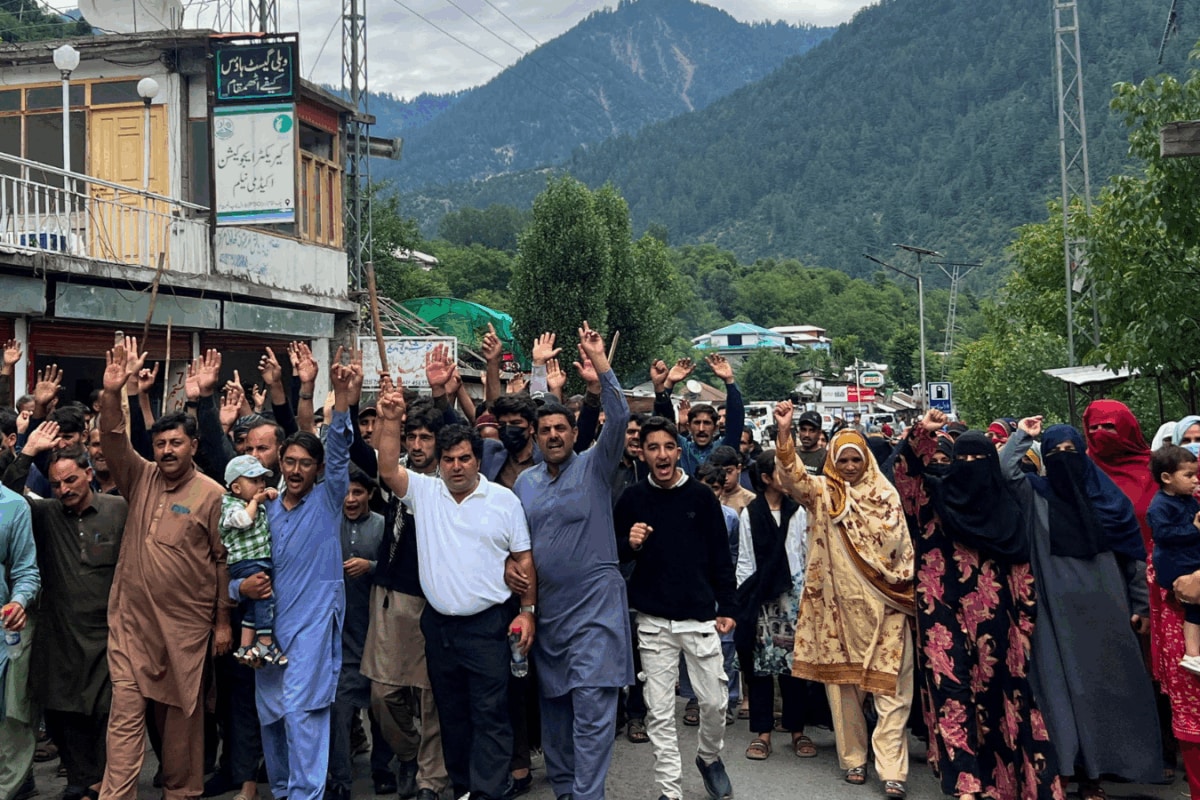
PoK Heads To Polls Amid Protests, Claims Of Pakistan Military's 'Election Engineering' Reported By, Edited By Last Updated: July 27, 2026, 10:07 IST The Awami Action Committee has called for a boycott of the elections, describing the exercise as fraudulent and arguing it does not reflect the democratic aspirations of the people Rapid Read People chant slogans as they walk during a protest and shutter-down strike called by JAAC in PoK. (Source: Reuters) Pakistan-occupied Kashmir (PoK) votes today in the first phase of its Legislative Assembly elections, with more than 1.4 million registered voters expected to cast their ballots across the Mirpur Division. The polling is taking place amid heightened security, allegations of military interference and calls for a boycott by sections of the political opposition. Voting is being held in 13 assembly constituencies spread across the districts of Mirpur, Bhimber and Kotli. According to election authorities, more than 2,500 polling stations have been established for the exercise, while election material was dispatched to all districts ahead of polling day.
The PoK government has also declared July 27 a public holiday in the Mirpur Division to facilitate voter participation. The contest is expected to be dominated by Pakistan’s major political parties, including the Pakistan Muslim League-Nawaz (PML-N), the Pakistan Peoples Party (PPP) and the Istehkam-e-Pakistan Party (IPP). Nearly 300 candidates are in the fray for the 13 seats being contested in this phase. Kotli district alone is witnessing a contest involving 135 candidates for six assembly constituencies, while more than 750,000 voters in Mirpur and Bhimber districts will decide the outcome in seven seats. However, the electoral process has once again come under scrutiny over allegations of “election engineering" by Pakistan’s military establishment. Critics have long accused the powerful military of influencing political outcomes in Pakistan as well as in Pakistan-occupied Kashmir through its control over security and administrative institutions. While Pakistani authorities maintain that the elections are being conducted in accordance with the law, opposition voices have questioned the independence of the process.
Adding to the controversy, the Awami Action Committee has called for a boycott of the elections, describing the exercise as fraudulent and arguing that it does not reflect the democratic aspirations of the people of the region. The group has urged residents to stay away from polling stations in protest against what it claims is a predetermined electoral outcome. Authorities have also imposed a strict ban on political rallies and public gatherings ahead of polling, citing security concerns and the need to ensure peaceful voting. Security personnel have been deployed in large numbers across sensitive constituencies as polling gets underway. The first phase of the PoK elections is being closely watched for both voter turnout and the performance of Pakistan’s mainstream political parties, with the results expected to shape the political landscape of the region amid continuing debates over governance, representation and the role of Pakistan’s military in electoral politics.
 The BriefWire