Can a protest FIR stop your passport, foreign degree or career?
"I have no fear of police cases. What wrong are we doing? We are asking the government to meet our demands. We have no ill
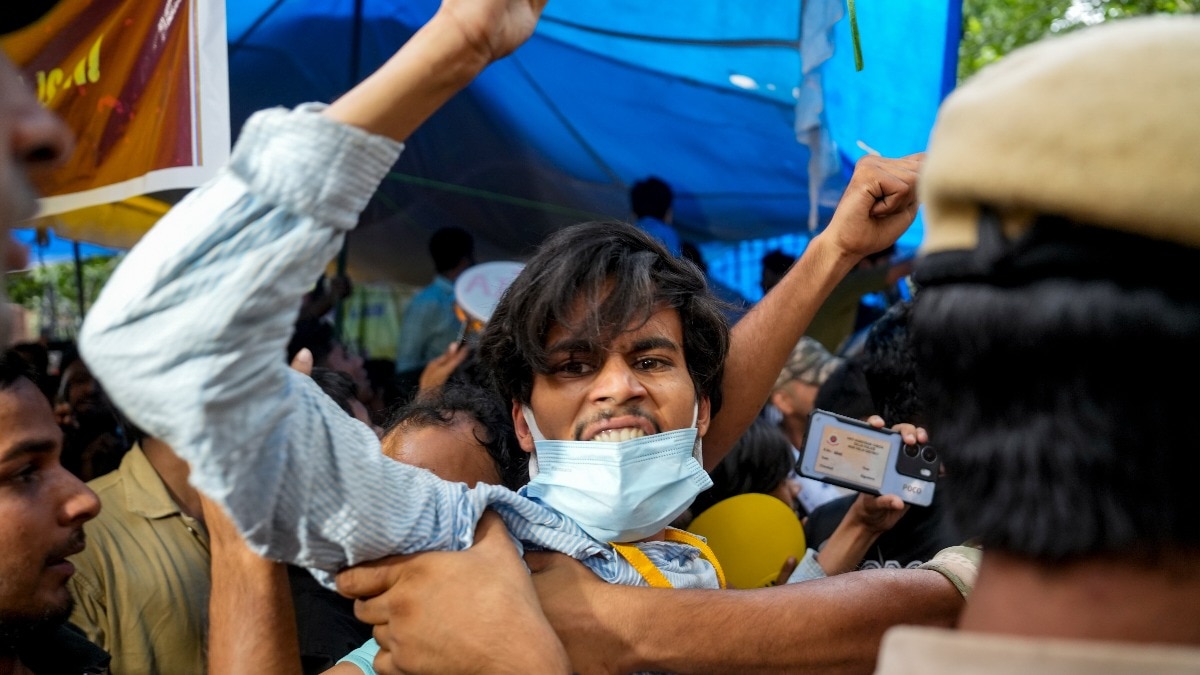
"I have no fear of police cases. What wrong are we doing? We are asking the government to meet our demands. We have no ill intentions, so why fear? We need a better education system." Ravi, 22, a Delhi resident at Jantar Mantar, spoke these words while standing among students, many of whom had covered their faces with masks and glasses, a day before Union Education Minister Dharmendra Pradhan resigned on Saturday (July 25). Ravi is young and full of energy. He appears not to realise that even a complaint against him can later create problems in securing a job, obtaining a passport, or gaining admission abroad. Read Full Story The students at the protest site told India Today Digital they were not trying to attack anyone. They had hidden their faces to protect their identities from Artificial Intelligence (AI)-powered facial recognition cameras deployed by the Delhi Police at Jantar Mantar. Exactly a week ago, on July 20, thousands marched under the banner of the Cockroach Janta Party (CJP) in the Chalo Sansad protest. The agitation grew out of the NEET-UG paper leak. The protest turned into a confrontation with police last Monday. Delhi Police's facial recognition system units and mobile surveillance vans at Jantar Mantar were looking at every face walking into the protest site. India Today TV later reported that the system flagged more than 2,500 people with existing criminal records. Fifteen FIRs have been registered against protesters so far in the clashes that took place in and around the protest site. However, the CJP demanded that the FIRs against students be dropped, and the Centre agreed to the demands of the outfit. Police maintained the cameras were meant to identify criminals who might infiltrate the crowd and to protect both officers and peaceful demonstrators. Activists, however, called the same cameras an attack on privacy. Students who turned up on July 20 and in the days that followed now face a question that goes beyond the protest. If an FIR is registered against them, or if they have a court date, what happens to their jobs, their passports, and their chances of studying or working abroad? THE FEAR ON THE GROUND Ashwini Verma, 28, from Azamgarh in Uttar Pradesh, spoke to India Today Digital a day before Education Minister Dharmendra Pradhan resigned. He had covered his face as he spoke to us. The June 20 lathi-charge on students made him decide to come to Delhi. A neighbour from his village had earlier travelled to the capital with just Rs 20 to protest against the education system. That story stayed with him. The July 20 action became the final trigger. "I am preparing for the Provincial Civil Service (PCS) exam. I have a fear of a case being lodged against me, but there is an independent judiciary in this country. I believe in it. If a false case is filed against me, I will get acquitted.
 The BriefWire