The next big flashpoint? What demands at CJP's Jantar Mantar protest reveal
"My school tortures me a lot to study," a Class 8 student from Delhi's Patparganj told India Today Digital when asked why he had come
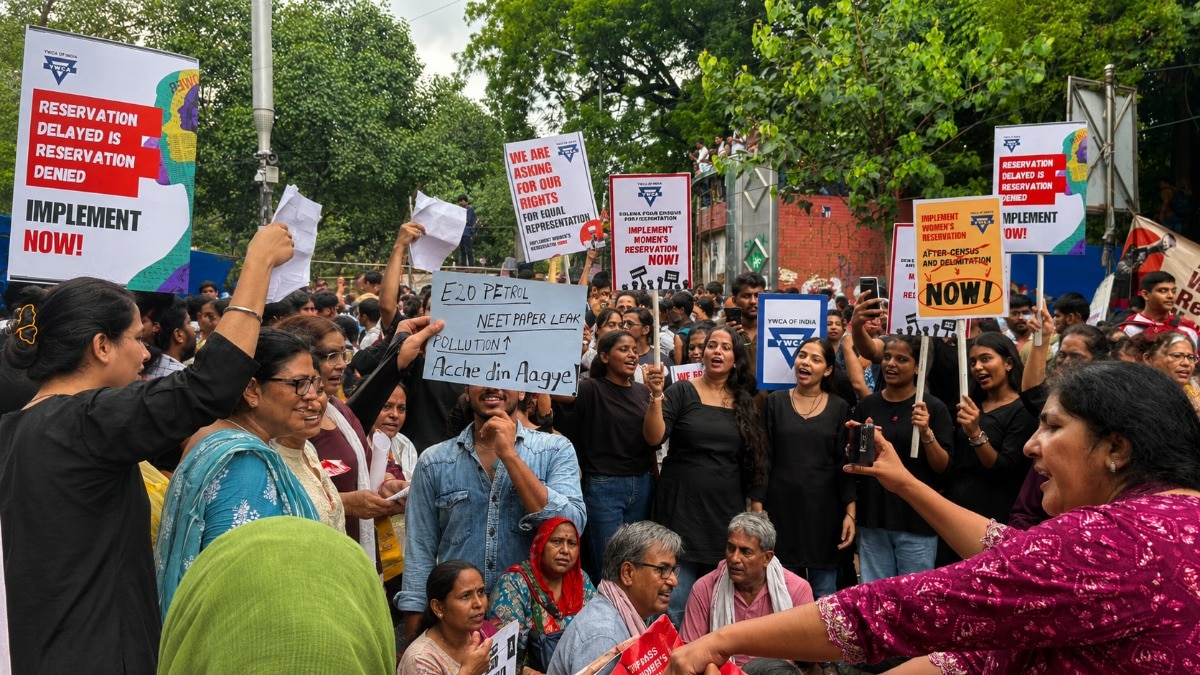
"My school tortures me a lot to study," a Class 8 student from Delhi's Patparganj told India Today Digital when asked why he had come to Jantar Mantar. Accompanied by a group of friends, the 14-year-old had little to do with the Cockroach Janta Party's (CJP) demand for Union Education Minister Dharmendra Pradhan's resignation over the NEET-UG 2026 paper leak and irregularities in the education system. Read Full Story Though the 14-year-old's demand was unique, there were different issues that had been highlighted by protesters at the CJP's protest site at New Delhi's Jantar Mantar. By the final days of the month-long agitation, Jantar Mantar was no longer just the epicentre of the CJP protest or social activist Sonam Wangchuk's indefinite hunger strike. It had evolved into something much larger. It became a magnet for people carrying grievances of every kind, many only loosely connected to the education movement that had first drawn national attention. Walking through the protest site, the demands changed every few metres. One group sought women's reservation in Parliament. Another protested about the lack of job opportunities. Some campaigned against the rushed implementation of the ethanol-blending programme, claiming it was damaging their vehicles. Opposition party workers joined students, sensing an opportunity to sharpen their attack on the Union government. Alongside them stood first-time protesters, curious visitors and ordinary citizens who believed Jantar Mantar had become the place where the government might finally hear them. In many ways, the designated protest site had begun to outgrow the movement that revived it. What started as a campaign against the education system had gradually become a platform for every unresolved frustration looking for an audience. By the time Dharmendra Pradhan resigned on Saturday (July 25), and the CJP called off its agitation, Jantar Mantar had become more than the venue of a student protest. It had briefly transformed into the country's loudest marketplace of dissent. With Dharmendra Pradhan resigning as the education minister, the protests have been called off, and now at Jantar Mantar no protests are being held. But what might be the next big issue that brings protesters to Jantar Mantar?
Does the list of demands at the CJP protest give us a glimpse? CONGRESS AND SAMAJWADI PARTY WORKERS AT JANTAR MANTAR Among the CJP volunteers serving food, collecting garbage and helping manage the month-long protest were workers from the Indian Congress's Seva Dal, the party's volunteer wing, who had joined the agitation in solidarity. "I came from Kochi to take part in the protest," a Congress worker told India Today Digital. "The Congress's youth and student wings were the first to raise their voice against irregularities in the education system," he said, highlighting his party's role in the issue. When asked why the Congress's top leadership had not formally joined the CJP protest, he defended the party's stand. "Rahul Gandhi ji came out on the streets and condemned the police brutality against students on July 20," he told India Today Digital. "We are here because of the support and direction of the national leadership," he added. A little behind the CJP's main stage, another group caught attention. Dozens of people wearing the Samajwadi Party's signature red caps had gathered together. "We are from Kannauj, the constituency of our leader Akhilesh Yadav," an elderly SP worker told India Today Digital. "This government must go. Around 200 of us have come to Jantar Mantar," he said, making it clear that for many political workers, the student-led agitation had also become an opportunity to amplify the Opposition's campaign against the Union government. 'WE NEED 33% WOMEN'S RESERVATION IN THE PARLIAMENT' Just outside Jantar Mantar, near Tolstoy Marg, two elderly women stood holding placards that had little to do with students' rights or the NEET controversy. Their demand was different. They sought 33% reservation for women in Parliament. "We support the students, but it is equally important to raise the issue of women's equality in this country. Equality begins in politics," a 54-year-old member of the Federation of Indian Women (NFIW), the women's wing of the Communist Party of India (CPI), told India Today Digital. "Our organisation has mobilised nearly 500 people for this protest. It is high time the government heard our demand and fulfilled it," another NFIW member said.
 The BriefWire