From Dadar to Shivaji Park: Mumbai's creative Gen Z rewrote the protest playbook
What began in Maharashtra as scattered gatherings of young people demanding Education Minister Dharmendra Pradhan's resignation soon turned into a daily show of protest in
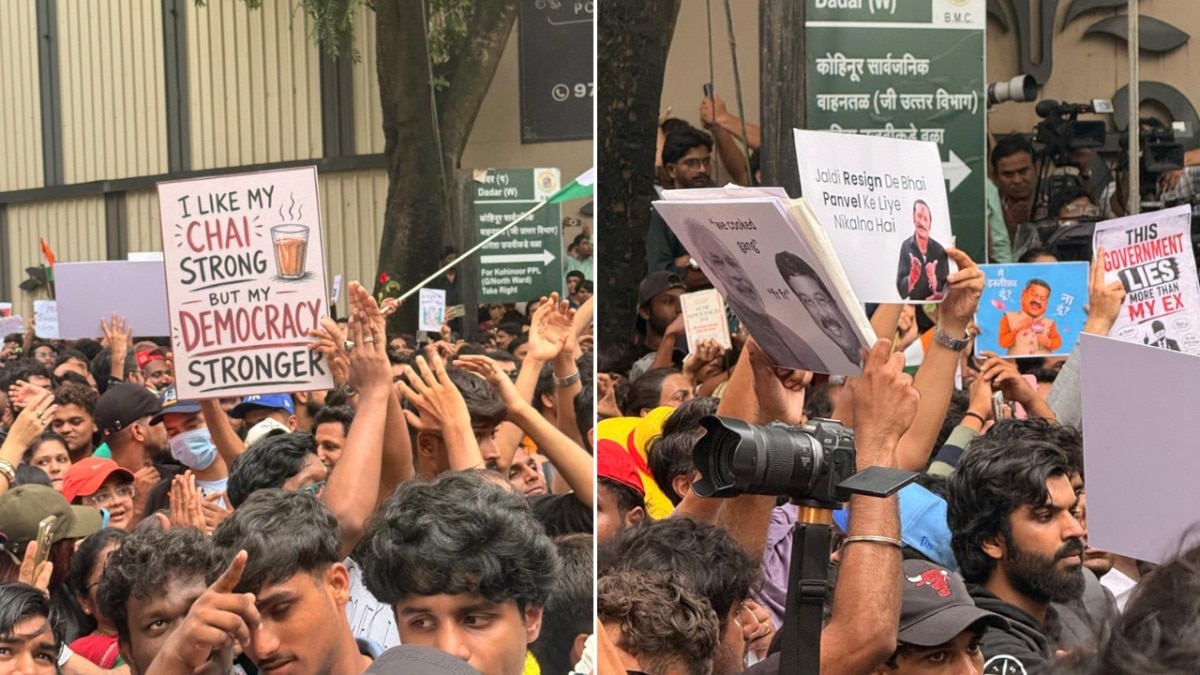
What began in Maharashtra as scattered gatherings of young people demanding Education Minister Dharmendra Pradhan's resignation soon turned into a daily show of protest in the heart of Mumbai, with Dadar becoming the city's own version of Jantar Mantar — only without a permanent dharna. The script was simple: come every evening, pick up a placard, raise slogans and let creativity do the talking. Read Full Story The movement began gathering momentum after Maharashtra's Abhijit Dipke set up camp at Jantar Mantar in Delhi. Within days, young people in different parts of the state began coming together without an invitation, a political party or the backing of any organisation. The atmosphere at Dadar and near Azad Maidan began to echo the mood at Jantar Mantar. Soon, Gen Z had made Dadar its own protest hub. POLICE ACTION BRINGS POLITICAL PARTIES INTO THE PICTURE The turning point came after police action at Chaityabhoomi. Dipke had appealed to people on July 20 to hold protests in their respective cities. By afternoon, a large number of young people had gathered at Chaityabhoomi. Police began detaining some of them and taking them to police stations. The visuals that emerged on television caused anger among parents and protesters. According to the account shared by those involved, the phones of some detained youngsters were taken away, preventing them from recording the events or contacting others. The reports of detentions and possible cases against protesters brought Shiv Sena and Maharashtra Navnirman Sena leaders to the police stations. They helped secure the release of some of the youngsters. Shiv Sena also issued an email address for legal assistance to the protesters.
The police action also brought political parties into an agitation that had initially been driven largely by young people who said they were not there to support any political organisation. VIRAL POLICE VIDEO PUT CRACKDOWN UNDER SPOTLIGHT On July 23, a video surfaced showing three young people being detained and put into a police van. In the video, a police constable is heard allegedly threatening them, saying that if they joined the protest again, a 50-gram packet of powder would be planted in their pockets and a case would be registered against them. The video spread widely on social media and triggered questions over the police's handling of the protests. Yet, the controversy did not stop the young protesters from returning to Dadar every day. RAJ THACKERAY'S HOME BECOMES A SAFE SPACE Shivaji Park, where MNS chief Raj Thackeray lives, soon became another important gathering point. The area has a large open space where children and young people gather, and it soon became a natural meeting point for protesters. Every afternoon, the crowd began swelling. On the first day, police began detaining youngsters who were raising slogans outside Raj Thackeray's residence and putting them into vehicles. That was when Raj Thackeray's wife Sharmila and son Amit intervened and confronted the police, helping get the protesters out of the police vehicle. The next day, Raj Thackeray held a press conference and warned that if anyone troubled the youngsters, the MNS would stand with them in front of the police. THE NATIONAL ANTHEM THAT CHANGED THE MOOD On July 24, the Thackeray brothers announced that they would join the protest by organising a national anthem event at Shivaji Park.
 The BriefWire