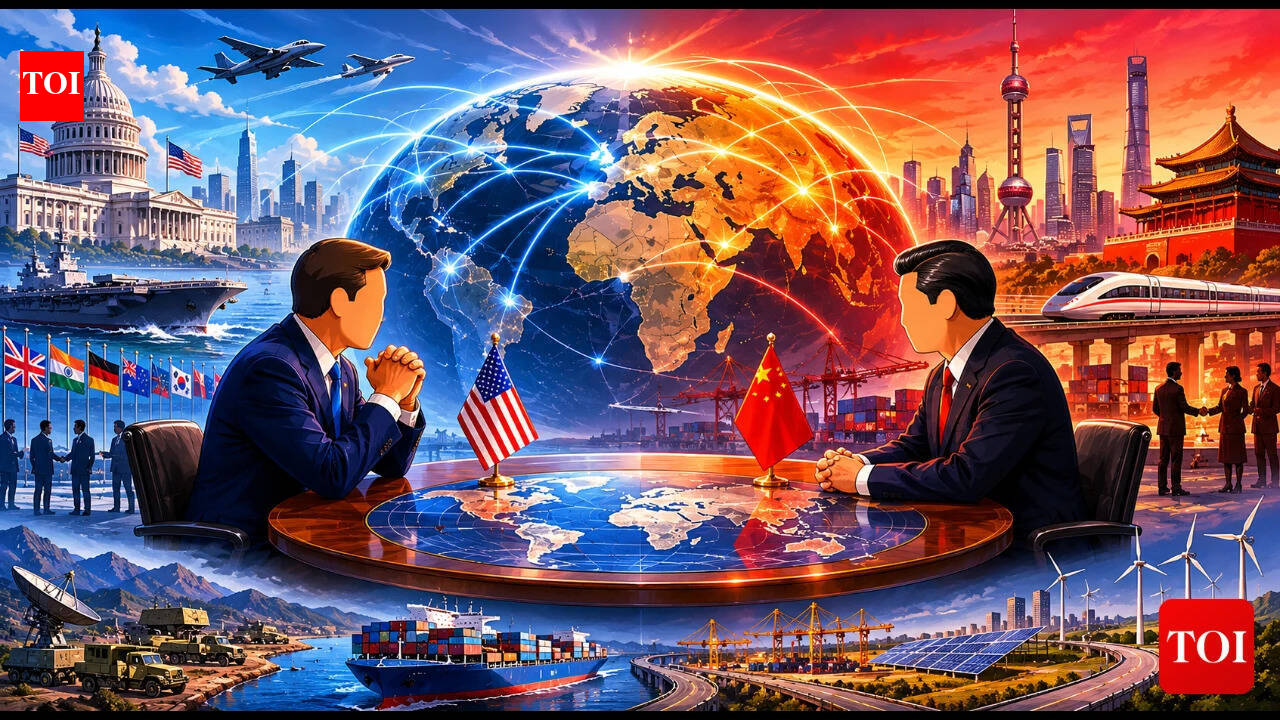
Where are Xi, Trump going? Travel map reveals scale of changing world order
Outbound diplomacy: US presidents travel more; Xi travels wider Inbound diplomacy: More world leaders go to China than US Regional shifts & post-pandemic competition Policy
Outbound diplomacy: US presidents travel more; Xi travels wider Inbound diplomacy: More world leaders go to China than US Regional shifts & post-pandemic competition Policy implications: What these patterns mean Beijing’s strategy China’s diplomatic machine is designed to broaden leader-level engagement across emerging economies where alignments are fluid. It combines leader travel, high-profile summits (BRI forums, China International Import Expo), economic cooperation, party-to-party channels, and institutional outreach.
This creates frequent, direct access to policymakers across Africa, Southeast Asia, Central Asia, South Asia, and Latin America — regions that will matter for future economic growth, infrastructure demand, and geopolitics. Strengths: Convening power, targeted economic ties, use of incentives and development finance, and a political apparatus oriented to sustained relationship-building. Convening power, targeted economic ties, use of incentives and development finance, and a political apparatus oriented to sustained relationship-building.
Vulnerabilities: Dependence on economic leverage that can provoke pushback, limits when China’s positions clash with regional political norms or security concerns, and risks that high-level visits may not translate into durable trust or diversified cooperation. Washington’s strategy The United States has concentrated leader-level contact where alliance and institutional ties are deep — Nato Europe, key Middle Eastern security partners, and major Indo-Pacific allies. US diplomacy emphasizes security alliances, military partnerships, and institutional frameworks that China cannot easily match.
Strengths: Dense alliance networks, interoperability, security guarantees, and deep institutional ties. Dense alliance networks, interoperability, security guarantees, and deep institutional ties. Gaps: Less consistent attention to many countries in the Global South where China is actively building ties; missing leader-level presence can be interpreted as reduced priority. Lessons for policy India’s vantage point
 The BriefWire