How a CJP protest changed the room at Constitution Club
It was a small detail. Almost easy to miss in the photographs. At the first meeting between the Modi government and the CJP delegation at
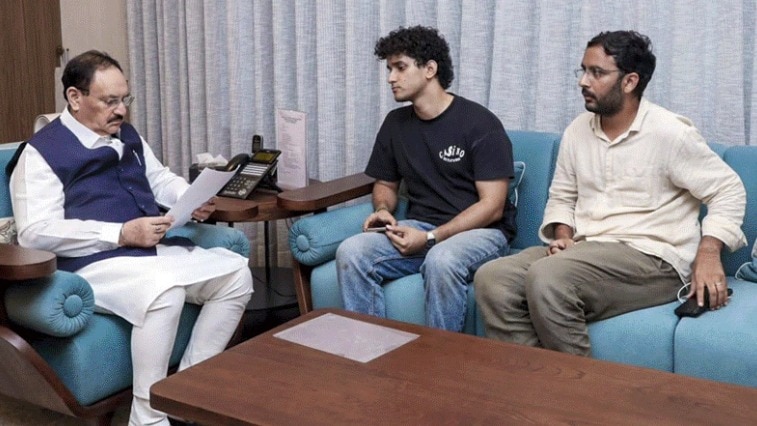
It was a small detail. Almost easy to miss in the photographs. At the first meeting between the Modi government and the CJP delegation at Constitution Club, Union ministers J P Nadda and Jitendra Singh were seated on comfortable sofas. Across from them, CJP representatives Saurabh Das and Ashutosh Ranka sat on straight-backed chairs — the kind one might find in a classroom. Read Full Story Both young men had their arms crossed over their chests. The photographs travelled quickly across social media. The symbolism was difficult to ignore. Two senior ministers were seated comfortably. Two young protesters, who had come to demand answers from the government, sat opposite them on rigid chairs. The room appeared to have already decided who held the power. Then came the second meeting. It took place after Education Minister Dharmendra Pradhan’s resignation. The ministers still had their sofas. But this time, the CJP delegation did too. Das and Ranka looked more relaxed. The body language was different. The room, at least in the photographs, no longer looked like a government receiving petitioners. It looked like two sides sitting across from each other. As equals. So what changed between those two meetings? The answer began at Jantar Mantar. THE PROTEST THAT REFUSED TO CHANGE THE SUBJECT Most protests have to fight two battles. The first is the issue they came to raise. The second is the attempt to shift the conversation away from it. The CJP agitation managed to hold on to its original question. Paper leaks. Cancelled examinations. The future of students. The resignation of the Education Minister. The movement did not allow the conversation to drift too far from the issue that had brought students to the streets. That was important. Political movements in India have often seen the original issue get buried under a new argument, a new controversy or a new political talking point. The CJP agitation, however, remained focused. The message was simple enough to fit into a slogan and sharp enough to fit into a reel.
The paper leak issue could not be made to disappear simply by changing the subject. That may be the first lesson the agitation leaves behind. The next generation of protests may not arrive with a long list of demands. It may arrive with one demand - and refuse to let anyone change the conversation. WHEN THE LEADER STEPPED BACK, THE ISSUE DID NOT There was another assumption that the agitation challenged. That every movement has a single point of failure. Every major protest eventually gets a face. A leader becomes the symbol. The cameras follow them. The government speaks to them. The media begins to describe the movement through them. The CJP agitation had its own central figure. Sonam Wangchuk’s hunger strike made him one of its most recognisable faces. So, when Wangchuk broke his fast without the original demand for the Education Minister’s resignation being fully met, there was a possibility that the movement would lose momentum. It did not. Because the anger had already travelled beyond the person leading the protest. A student who had spent two years preparing for an examination did not suddenly stop being affected by a paper leak because one leader had stepped away. A family that had watched a child’s career plans collapse did not suddenly stop asking questions. The issue had become larger than the face attached to it. And eventually, the minister resigned. That is the second shift the agitation exposed. Sometimes, the most important thing about a protest is not who is standing at the microphone. It is how many people recognise themselves in the reason for the protest. THE PROTEST DID NOT NEED A TELEVISION STUDIO There was a time when a movement needed television. The India Against Corruption movement of 2011-2013 understood that world perfectly. Anna Hazare was on television. Arvind Kejriwal was on television. The speeches were long. The debates were louder. The movement became a 24-hour news event.
 The BriefWire