US Or Iran, Who Violated The Washington-Tehran Ceasefire MoU? E Israeli Negotiator's Big Claim
US Or Iran, Who Violated The Washington-Tehran Ceasefire MoU? E Israeli Negotiator's Big Claim Published By, Last Updated: July 26, 2026, 15:11 IST Israeli negotiator
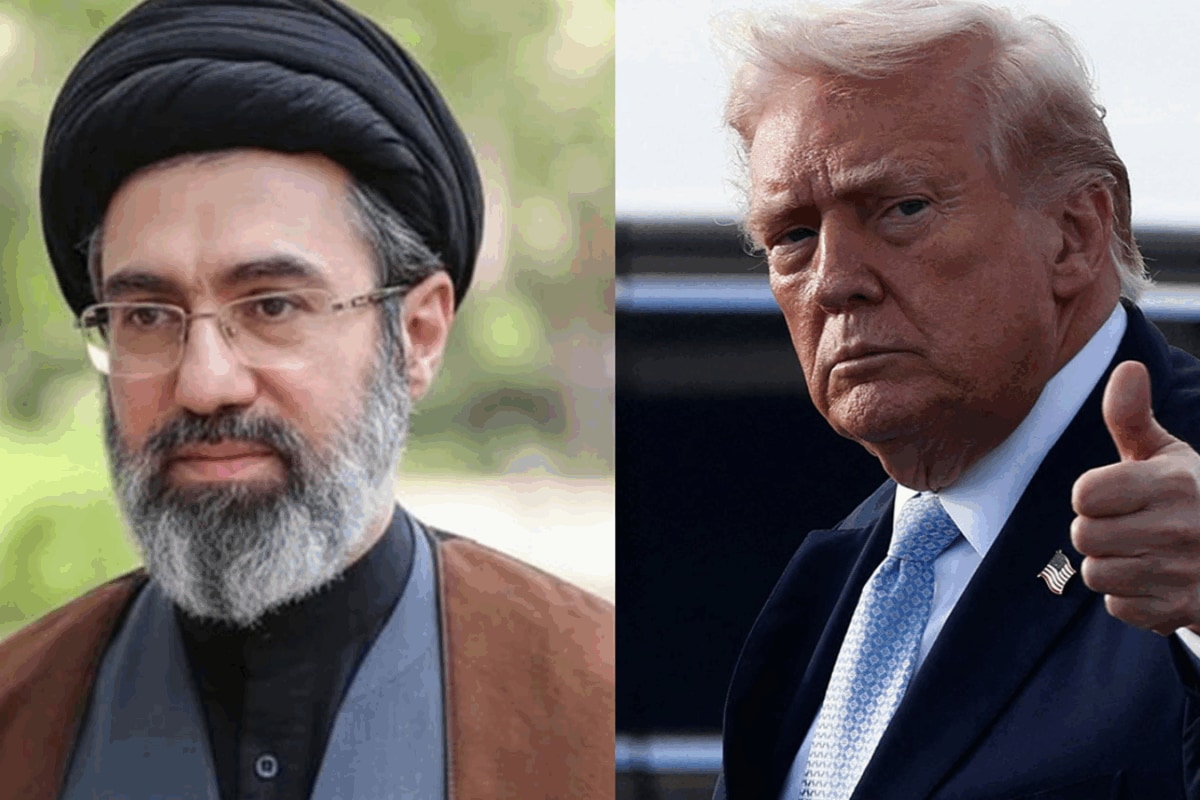
US Or Iran, Who Violated The Washington-Tehran Ceasefire MoU? E Israeli Negotiator's Big Claim Published By, Last Updated: July 26, 2026, 15:11 IST Israeli negotiator Daniel Levy argued that the United States was unwilling to implement what it had agreed with Iran in the MoU. Iran's Supreme Leader Mojtaba Khamenei and US President Donald Trump (R). (Photos: Reuters/X) US-Iran War: The US-Iran ceasefire memorandum of understanding (MoU) has come under fresh scrutiny as both the United States and Iran accuse each other of violating its terms. US President Donald Trump first alleged that Iran had breached the agreement. Tehran later responded by accusing Washington of breaking the MoU through continued military action and renewed pressure measures. Israeli negotiator Daniel Levy has now argued that the United States failed to honour several commitments under the agreement, saying this convinced Iran that Washington was not serious about implementing the deal. Ceasefire began unravelling The interim US-Iran memorandum signed in June began to fall apart after hostilities resumed, with both countries blaming the other for the first breach. Iran’s foreign ministry said Washington had driven the MoU “into crisis". US officials, however, argued that Iranian attacks on shipping and other targets amounted to the first violation of the agreement. The reported disagreement has centred on continued military strikes, renewed sanctions and disputed incidents in the Strait of Hormuz.
What each side said about MoU violation? Iran has accused the United States of violating the MoU by continuing military strikes and reintroducing sanctions and pressure measures that it says contradicted the ceasefire agreement. Tehran has also argued that Washington abandoned its commitments while negotiations were still underway. As a result, Iran says it has suspended its own obligations under the memorandum. The United States, meanwhile, maintains that Iran violated the agreement first through attacks on commercial shipping and other targets. Strait of Hormuz crisis A major point of dispute has been the Strait of Hormuz, where the memorandum included arrangements for safe passage and non-interference. After attacks on commercial vessels resumed, both Washington and Tehran pointed to those incidents as evidence that the other side had broken the agreement first. The competing claims further weakened confidence in the ceasefire. In practical terms, the memorandum is now being viewed as badly damaged and possibly no longer functioning, with both governments blaming each other for triggering its collapse. Daniel Levy questions US actions Speaking on the latest episode of RT’s Going Underground, former Israeli negotiator Daniel Levy argued that the United States was unwilling to implement what it had agreed with Iran in the MoU. “I don’t think the Americans were willing to follow through what they had agreed with Iran. They couldn’t impose it on Iran because there is a different power equation there," he said.
 The BriefWire