Love, laughter and relief filled Jantar Mantar after a rare protest victory
Most protests don't really end. Some simply run out of people. Others run out of time. A few end in compromise. Many fade so gradually
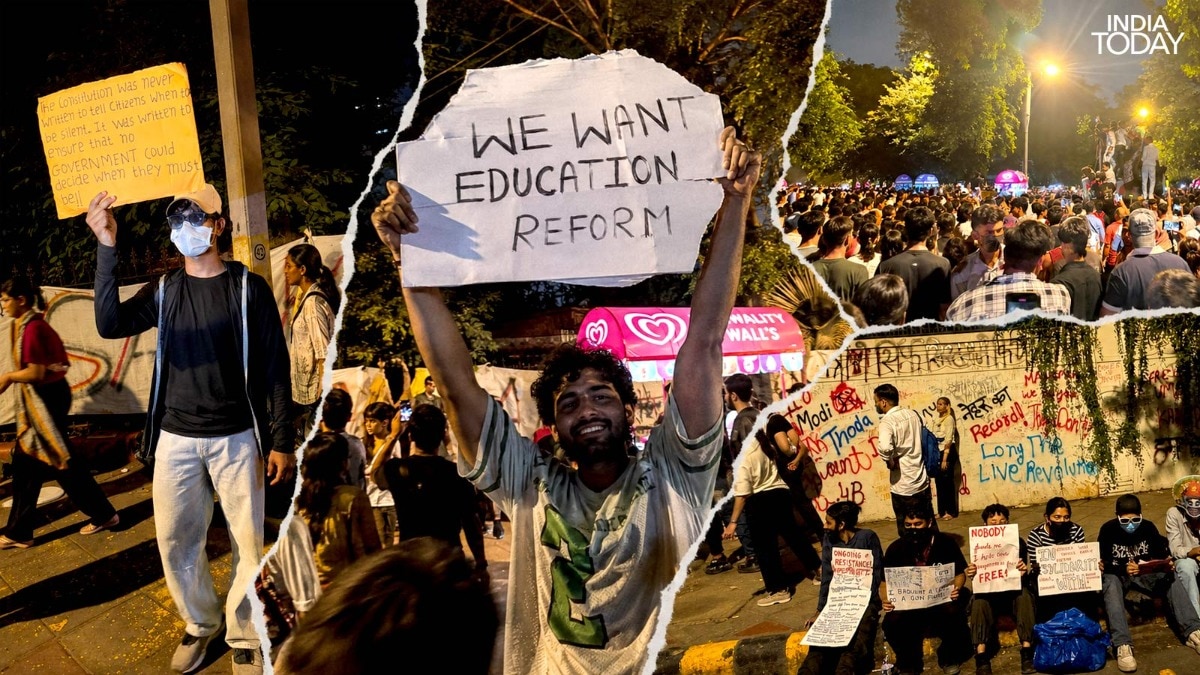
Most protests don't really end. Some simply run out of people. Others run out of time. A few end in compromise. Many fade so gradually that nobody can quite say when they were over. Very rarely, they end in celebration. I arrived just in time to witness one. By the time I reached Jantar Mantar on Saturday evening, volunteers were already dismantling the protest site. The podium from which speeches had echoed for weeks had disappeared. Tarpaulin sheets that had sheltered protesters through relentless rain, Delhi's unforgiving summer heat and the suffocating humidity of this year's monsoon were being rolled up and folded away. Read Full Story Yet with every step I took towards Jantar Mantar, the celebrations grew louder. Jantar Mantar buzzes with people on Saturday evening following the protest's victory. (Photo: Koustav Das) Chants of "Bharat Mata Ki Jai" and "Inquilab Zindabad" drifted along the approach roads, blending with music, cheers and the constant buzz of conversation. It felt less like I was walking towards the end of a protest than into the middle of a festival. Every road leading to the protest site was overflowing. Young people kept pouring in from every direction, many of them arriving hours after Union Education Minister Dharmendra Pradhan's resignation had already made headlines. Some had flags wrapped around their shoulders. Others carried portable speakers, selfie sticks and phones that had begun recording long before they reached the crowd. Many had spent weeks following the movement online and simply wanted to witness its final chapter in person. A protester stands with the Indian flag at Jantar Mantar. (Photo: Koustav Das) The infrastructure of protest was disappearing. The people weren't. If anything, there was more laughter than there had been slogans. For over a month, Jantar Mantar had been defined by uncertainty. Nobody knew whether the movement would force a political response or slowly lose momentum like so many protests before it. Saturday evening felt different. The waiting was over. Relief had replaced anxiety, and the place no longer felt like the site of an anxious, uncertain protest. It felt like a celebration—not the kind marked by food stalls or Ferris wheels, but a celebration of persistence. Of young people who had endured arrests, police lathi charges, rain, blistering heat and weeks of emotional exhaustion without knowing whether any of it would matter. They weren't merely celebrating the resignation of a Union minister. They were celebrating the feeling that showing up, day after day, had finally achieved something tangible. The Cockroach Janta Party, or CJP, had won. The movement had begun with what many dismissed as another fleeting internet trend. It took its name from a remark by Chief Justice of India Surya Kant, who likened unemployed youth and activists to "cockroaches" during a Supreme Court hearing. Though he later clarified his comments, by then the label had already been embraced online. Rather than reject the insult, young Indians adopted it. What started as satire online quickly spread to the streets with students and young professionals gathering at Jantar Mantar to demand accountability over the NEET paper leak and broader examination reforms. Weeks of relentless protests followed, enduring police lathi charges, detentions, heavy rain, blistering heat and emotional exhaustion before culminating in the resignation of the Union education minister.
 The BriefWire