Memes, music, midnight football: What a millennial saw at Gen Z protest
As a Delhi-centric reporter, I have covered several protests over the years, from the land acquisition protests in Noida in 2008 to the emotional outpouring
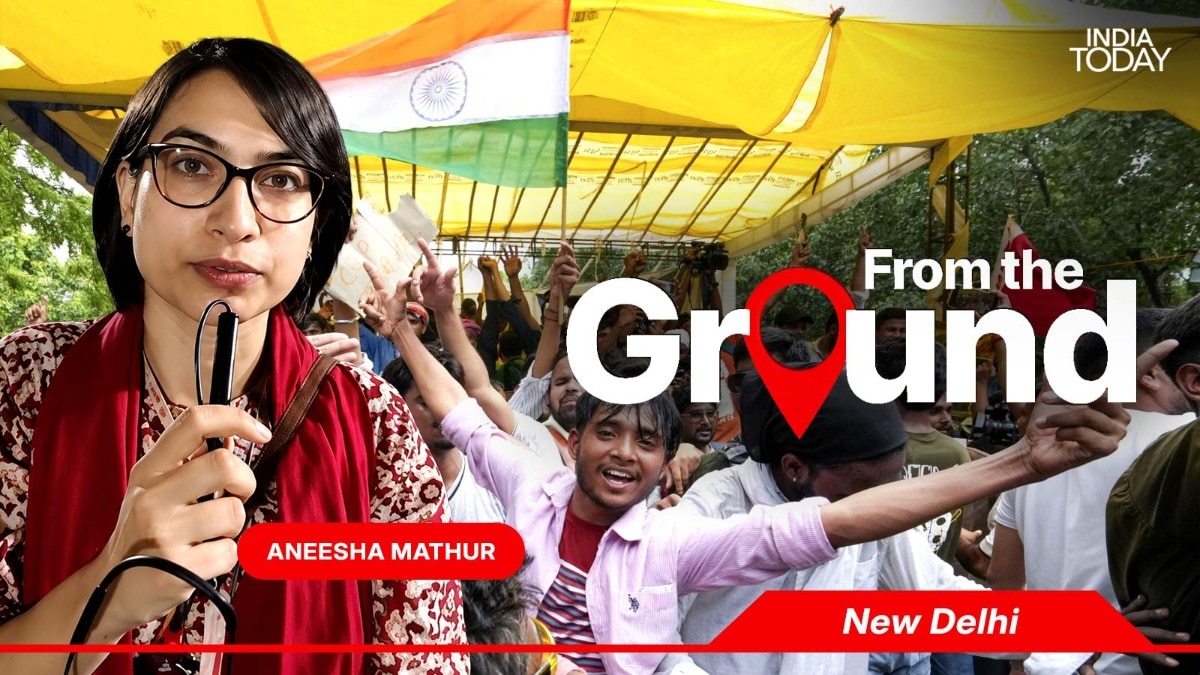
As a Delhi-centric reporter, I have covered several protests over the years, from the land acquisition protests in Noida in 2008 to the emotional outpouring of the Nirbhaya protests in 2012, political rallies, the 'Not In My Name' movement and the highly charged tribal sit-ins against the Manipur violence. I have seen many iterations of protest, but there is something different about a Gen Z protest. Read Full Story I have spent only one night at Jantar Mantar during what has now been almost a month of what we in the media have been calling the Gen Z protest over the NEET paper leak issue. Coincidentally, it turned out to be the night of July 23, when Sonam Wangchuk finally broke his fast around 11 pm on the 26th day. The most striking difference between these protesters and any other protest I have seen is the sheer irreverent seriousness of it all. In a political protest, or even one centred on a grave social issue such as sexual violence or religious violence, you usually see solemn, agitated faces, political naarebaazi and a palpable sense of urgency. These kids had none of that. Yes, they are deadly serious about what they want and are willing to sit there for as long as it takes to get it, but with a decided "why so serious?" attitude. The posters offer the first glimpse of it. The usual political placards saying "Istifa do" or "Nyay karo" are largely missing. Instead, I saw young people carrying memes as posters. "Nolan is showing The Odyssey, this b** is showing audacity" is one that I suspect will stay with me for a while. Loudspeakers blasted music from the stage as though it were a rave rather than a protest. I entered the site to find the crowd dancing and chanting to "Hum Indiawaale" from Happy New Year, followed by "Chak De India". Handheld fans and posters were raised in the air as everyone danced and jumped with abandon. The buzz reminded me of a college fest. As a woman reporter, one thing I always have at the back of my mind is keeping myself safe in a crowd. Here, that warning light in the back of my head simply didn't go off.
Right at the entrance, where the police had set up barricades and door-frame metal detectors, a human chain of volunteers took over. People entering passed through one scanner, while those exiting were directed through another. The volunteers manning the entrance were polite but firm. The entry to the stage was right next to this barricade, making them doubly strict about anyone lingering there to take photographs. "Please keep the line moving. Keep some distance from each other," shouted a young man perched on top of a barricade as though it were a horse. And the crowd itself was astonishingly well behaved. There was a long line, an actual line, of people waiting to get in. No pushing, no shoving, no attempts to jump the queue. These protesters were perfectly happy to stand patiently while making videos and taking selfies with their posters. I actually got a few disapproving looks when I walked towards the entrance instead of joining the queue. It was the volunteer sitting atop the barricade who stopped me. "Ma'am, ye exit wala hai. Entry idhar hai. Exit wale se mat aaiye, crowd block ho jata hai." I entered the Jantar Mantar area around 11.30 pm on Thursday. My office car dropped me comfortably at Ashok Circle, near Kerala House. A large bus had been parked as a barricade to block Jantar Mantar Road, leaving just enough space for a car to pass through the yellow barricades if the police permitted it. Even at that hour, there was a river of humanity streaming through the gap towards the protest site -- youngsters, families and groups of friends. Then came a narrowing of the road through another set of barricades. This is where the television cameras and media crews stood, slightly removed from the crowd but watching everything unfold. Next to them were RAF vehicles and Delhi Police's mobile surveillance Ikshana unit, the one whose AI facial recognition technology has now become the centre of a major controversy. Just ahead lay the entrance to the main stage area. The back of the large stage and the barricades protecting it formed a wall. This line of barricades was where the queue to enter the main protest site began, winding its way between the two barricade walls.
 The BriefWire