Chinese AI models split Silicon Valley, Nvidia and others want open access while Anthropic pushes for ban
Chinese AI models are creating some serious tension inside Silicon Valley. For the past few years, American AI companies have been enjoying a comfortable lead
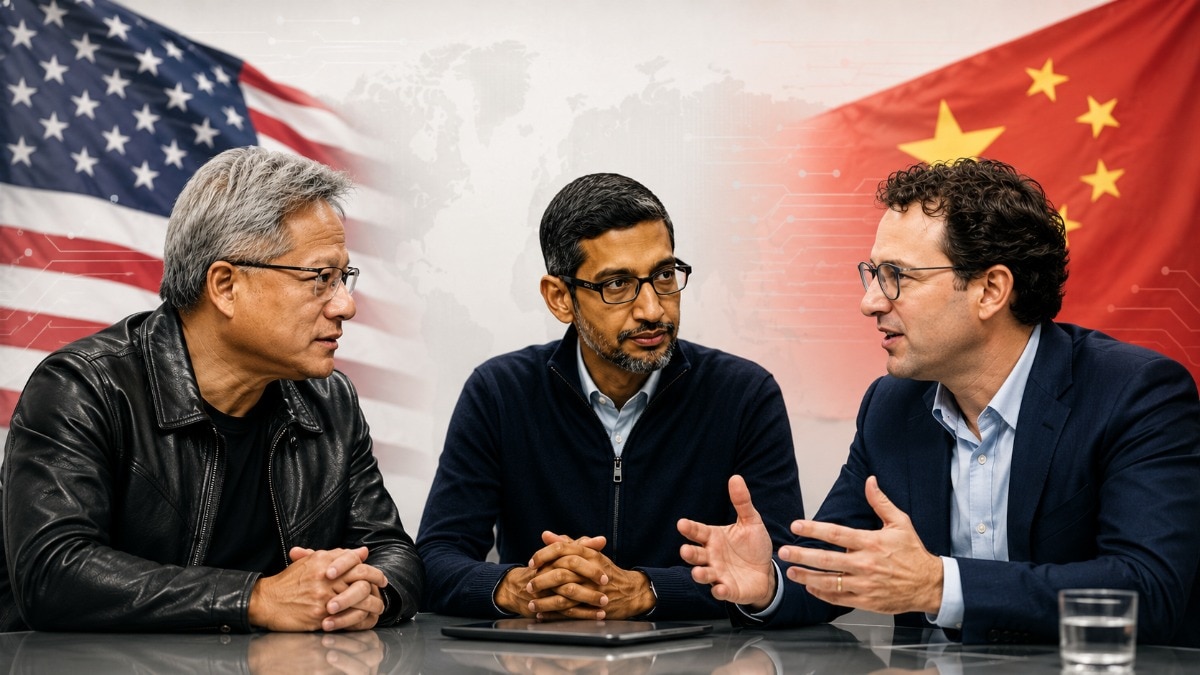
Chinese AI models are creating some serious tension inside Silicon Valley. For the past few years, American AI companies have been enjoying a comfortable lead in the AI race, believing China would eventually catch up, just not anytime soon. But that confidence is now beginning to crack. China has been on a roll, releasing one powerful AI model after another, from DeepSeek to Zai's GLM 5.2 and, most recently, Moonshot AI's open-weight model Kimi K3. And these back-to-back launches are now concerning the US and leaving the tech industry in splits. Read Full Story On one side companies like Anthropic want Washington to restrict Chinese AI before it threatens America's technological leadership and national security. On the other hand, companies like Nvidia, Google, Microsoft believes the US should not ban but respond by building better AI. But why this fear? You see, Chinese models like Kimi K3 are not just cheaper AI models. They are also matching or even beating capabilities of leading American AI models like Anthropic's Claude or OpenAI’s ChatGPT in benchmarks. More importantly, most of them are open weight models. Meaning, these Chinese models allow developers to download, customise and run them on their own infrastructure, making them affordable and convenient for startups and businesses who may not be able to afford token-based proprietary US models. And it is precisely these freely available Chinese open-weight AI models which are bringing concerns. Anthropic says China is stealing from American models. It argues that the fact Chinese AI firms have managed to catch up with the US is not because of their innovation or research but because of allegedly stealing from closed models.
The maker of Claude AI alleges that China has illicitly distilled American frontier AI models, essentially using their outputs to build competing systems. “We have identified industrial-scale campaigns by three AI laboratories—DeepSeek, Moonshot, and MiniMa to illicitly extract Claude’s capabilities to improve their own models,” says Anthorpic. “These labs generated over 16 million exchanges with Claude through approximately 24,000 fraudulent accounts, in violation of our terms of service and regional access restrictions.” Anthropic wants ban on Chinese models So Anthropic wants the US to treat frontier AI model weights as critical national security assets and impose aggressive federal regulations on API access and legally penalize foreign firms caught siphoning American AI data. According to a New York Times report, Anthropic and OpenAI have also been lobbying the Trump administration behind closed doors to place tighter restrictions on Chinese open-weight AI models, citing concerns around intellectual property theft and national security. And the Trump administration is indeed taking it seriously. Treasury Secretary Scott Bessent recently said the administration is considering sanctions against Chinese companies found to have stolen American AI intellectual property, adding that "open source is not open season on American IP." White House science adviser Michael Kratsios echoed those concerns, condemning what he described as "large-scale, covert industrial distillation" of US AI technology. "The US administration's remarks came after Anthropic alleged that Moonshot AI's Kimi K3 was built from data distilled from Anthropic's Claude AI, though these claims remain independently unverified." Silicon Valley says a ban will harm US innovation But much of Silicon Valley doesn't agree with the ban.
 The BriefWire