Son told to vacate house, elderly father gets relief
The father and the son should stay peacefully at their residence. The son should stop abusing, threatening, and show immense respect to his father. The
The father and the son should stay peacefully at their residence. The son should stop abusing, threatening, and show immense respect to his father. The son should vacate the ground floor of the house at Baramunda village for safe living of his father and handover the same to his father by August 22, 2025, positively and report compliance. The property dispute matter is purely civil in nature, and an appeal case has been filed in the court of sub-collector, Bhubaneswar, vide No.188/2024, which is subjudice. Odisha High Court's order and analysis The Maintenance and Welfare of Parents and Senior Citizens Act, 2007, is a beneficial law Philomina Vs. The Appellate Tribunal, Thiruvananthapuram, reported in 2021 (2) Civ.C.C. 806 (Kerala), held that the provisions of the Maintenance & Welfare of Parents and Citizens Act, 2007, are to give social justice to parents and senior citizens. Rajani B. Somkuwar Vs. Sarita Somkuwar and Another reported in 2020 (2) CCC 100 (Bombay) held that, if children cannot take care of their parents and allow them to live in peace, they at least ought not to make their life a living hell. In a case between Urmila Dixit Vs. Sunil Sharan Dixit & Others reported in 2025 (3) Civ.L.J. 341 (SC) held that the Maintenance and Welfare of Parents and Senior Citizens Act, 2007, and rules thereof being beneficial statutes, the same must receive liberal construction in consonance with objects to be served by it.
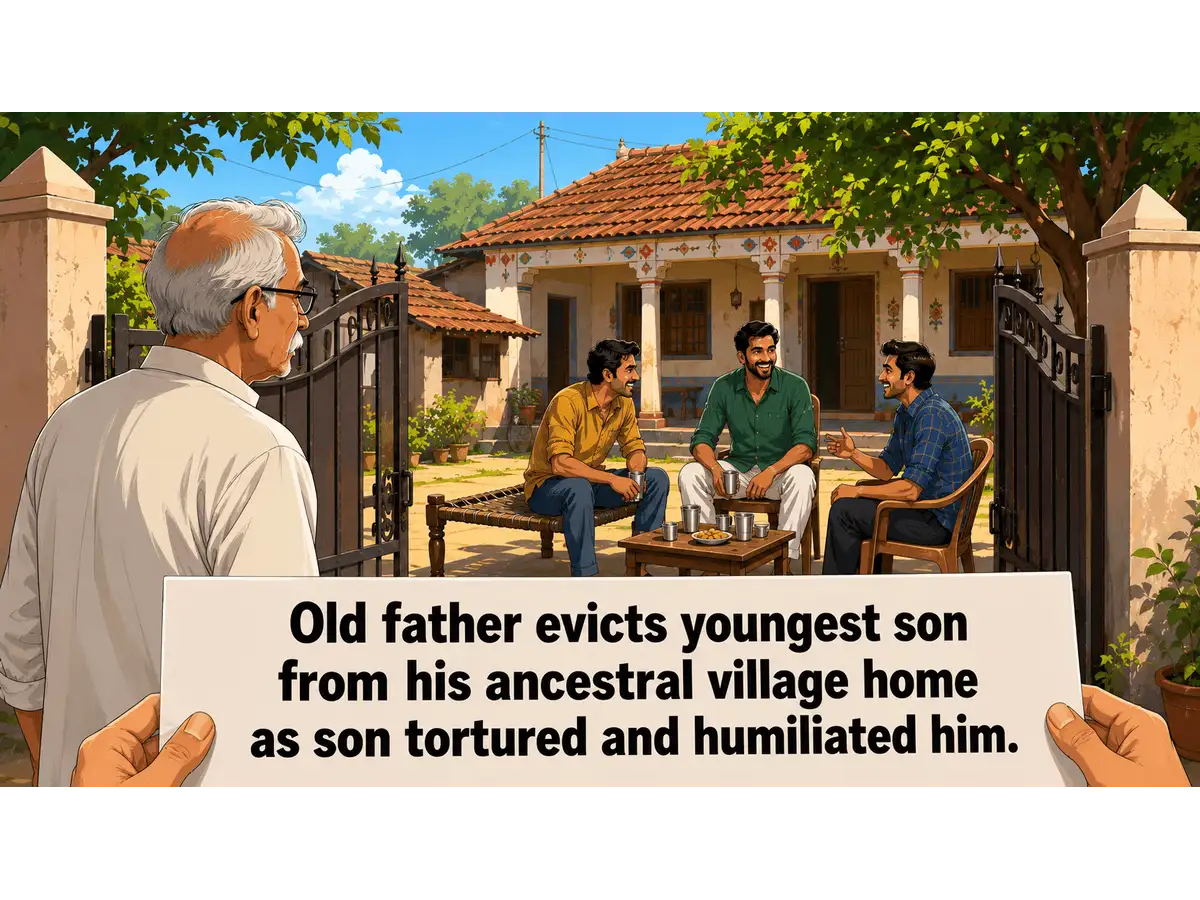
The court should adopt a purpose-oriented approach. Literal construction be avoided. It is the duty of the Court to discern the intention of the legislature, while enacting it. Beneficial statutes should be given purposive construction, which should be in line with their object. Land property case is separate from this As per the discussions and observations made above, both the writ petitions vide WPC Nos.23193 and 24893 of 2025 filed by the son (Sekhar) and father (Mr Sahoo) are liable to be dismissed. In result, both the writ petitions filed by the respective parties against each other are dismissed on contest. As such, both the writ petitions are disposed of finally. When 86-year-old Mr Sahoo purchased land in his youngest son's name and allowed him to live with him in the family's ancestral house in Baramunda, Bhubaneswar (Odisha), he never imagined that his son would torture and humiliate him. The situation, he claimed, became so unbearable that he was forced to leave his ancestral house and take shelter in his middle son's house in Pokhariput.Mr Sahoo, a retired government serviceman, has three sons. A few years ago, his elder son and middle son moved out of the ancestral house at Baramunda and began living separately with their respective families. Mr Sahoo continued to live in the house with his youngest son, Sekhar.Sahoo alleged that Sekhar forced him to leave his ancestral house with repeated torture and humiliation. After he moved out, Sekhar took exclusive possession of the Baramunda house.
 The BriefWire