How global media covered CJP protests that led to Pradhan's resignation
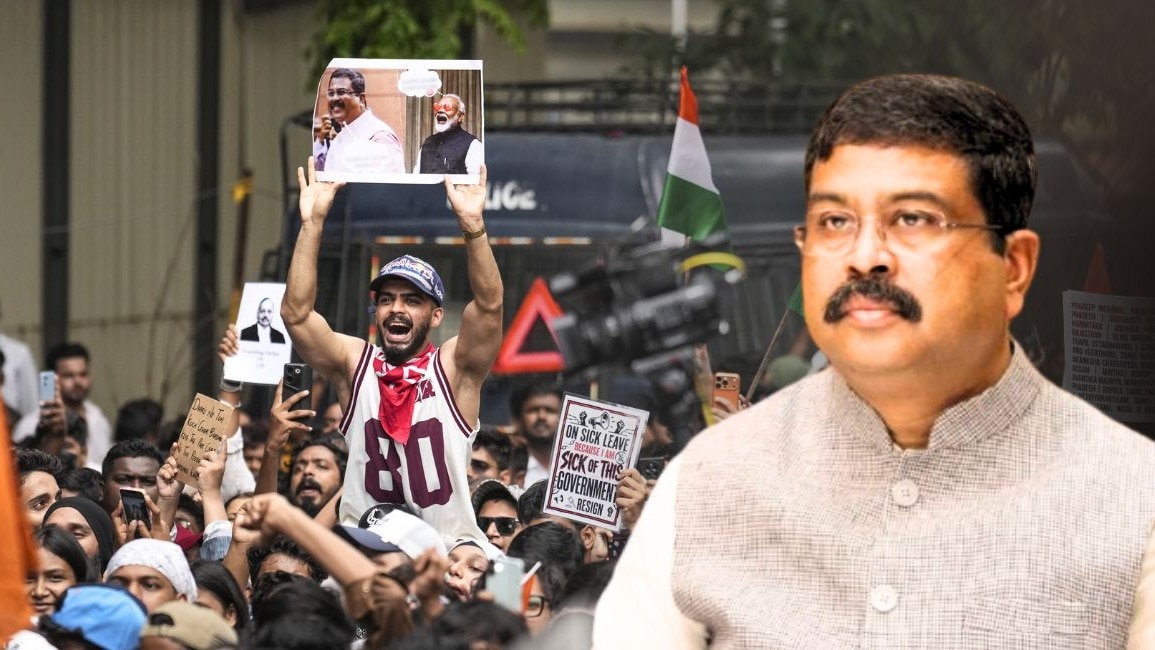
What began as a protest over irregularities in India’s education system, particularly the 2026 NEET-UG paper leak, quickly escalated into a major international story. Images
What began as a protest over irregularities in India’s education system, particularly the 2026 NEET-UG paper leak, quickly escalated into a major international story. Images of baton charges, tear gas, candlelight marches and thousands of young protesters camping on Delhi’s streets travelled widely across global media. As the Cockroach Janta Party's (CJP) Gen Z-led movement grew, international media increasingly covered it as a broader story about governance, youth aspirations and political accountability in India. Read Full Story The resignation of Union Education Minister Dharmendra Pradhan further intensified that framing, with coverage largely treating it as a significant political development for the BJP-led NDA government in its third term. Here’s how some of the world’s biggest news organisations reported the protests. REUTERS: MAJOR TEST FOR MODI GOVT Reuters described the protests and Pradhan’s resignation as a major political challenge for Prime Minister Narendra Modi in his third term. The global news agency described Pradhan's resignation as "a surprise", noting that Prime Minister Narendra Modi has a reputation for refusing to yield to public pressure. Its reporting highlighted the political implications of the unrest, noting the importance of young voters for the BJP and the scale of mobilisation by students over alleged exam irregularities and wider concerns about unemployment and limited opportunities.
CNN: RARE CHALLENGE FOR MODI GOVT CNN called Pradhan’s resignation a “rare and growing” challenge for Prime Minister Modi, noting that he is not typically seen as a leader who responds directly to street protests. The network linked the demonstrations to broader concerns about governance and accountability, alongside India’s youth unemployment problem, arguing that the protests reflected deeper economic anxieties among young graduates beyond the immediate issue of exam leaks. BBC: ONE OF LARGEST STUDENT-LED MOVEMENTS The BBC described the CJP agitation as one of India’s largest student-led movements in recent years, placing it within the country’s broader history of mass protests. It drew parallels with the Nav Nirman movement of the 1970s, noting that while some student uprisings have historically influenced political change, others have faded. The BBC also said the CJP protests stood out for their scale and for the way they brought together students with broader concerns about governance and education policy. "Whether that frustration can be sustained as a political movement, however, is another question," it noted. THE GUARDIAN: FOCUS ON CELEBRITY SILENCE The Guardian focused less on political implications and more on cultural reaction, highlighting frustration among protesters over the silence of India’s major celebrities.
 The BriefWire