Big victory for cockroaches as Dharmendra Pradhan resigns. What next for CJP?
The marble corridors of Lutyens' Delhi do not often yield to street protests. Governments negotiate, outlast, absorb and, more often than not, simply wait for
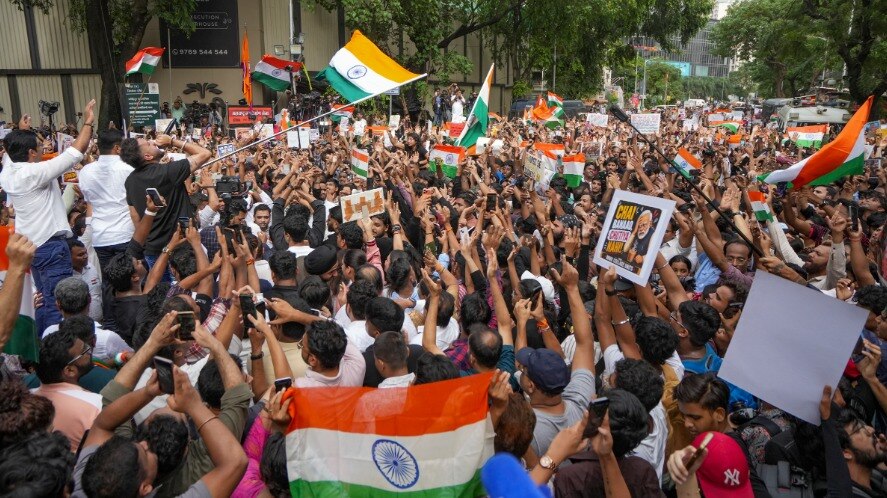
The marble corridors of Lutyens' Delhi do not often yield to street protests. Governments negotiate, outlast, absorb and, more often than not, simply wait for public outrage to exhaust itself. On Saturday, however, that script changed. Union Education Minister Dharmendra Pradhan resigned after weeks of mounting pressure over the NEET-UG paper leak, bringing to a close one of the most consequential youth-led agitations India has witnessed in recent years. Read Full Story At Jantar Mantar, where students, unemployed graduates and young professionals have occupied the protest site since June 6 under the banner of the Cockroach Janta Party (CJP), the resignation was greeted with celebration. "This is democracy. He has resigned. We have two more demands. We won't go like this," CJP founder Abhijeet Dipke said in a message shortly after the resignation became public. (Photo: PTI) He reiterated that the movement would continue until families of students who allegedly died by suicide during the examination crisis receive Rs 1 crore in compensation, no punitive action is taken against student protesters, and the Rapid Action Force and Delhi Police publicly apologise for the July 20 crackdown. The updated "Demand Rooster" circulating across the movement's social media pages reflects that thinking. Only the first demand—Pradhan's resignation—has been marked complete. Everything else remains pending. But beyond the immediate demands lies a far bigger question, one that now hangs over Jantar Mantar, political circles and even the movement's own volunteers: What next? Having demonstrated that a decentralised Gen Z movement can force powerful ministers to resign, does the Cockroach Janta Party remain an issue-based campaign centred on examination reforms, or does it evolve into a broader platform for a generation increasingly anxious about jobs, opportunity and the future? For CJP, that question could determine whether it is remembered as the group that forced the resignation of a Union minister or as the beginning of a much larger youth movement. BEYOND THE NEET CRISIS The temptation is to view the CJP as a movement born out of the NEET paper leak. That would be an incomplete reading.
Weeks before the examination crisis erupted, a courtroom remark by Chief Justice Surya Kant—widely interpreted as likening unemployed youth to "cockroaches", though he later clarified that he was referring to those entering professions through fake degrees—had already struck a nerve among young Indians. The word was swiftly reclaimed online. What began as an expression of outrage evolved into a symbol of defiance, with thousands of young people embracing the "cockroach" label as a rejection of what they saw as a system that had repeatedly failed them. The response itself reflected the character of the generation leading it. Unlike earlier student movements that relied on campus unions or political organisations, CJP was born in the digital public square. Instagram reels replaced pamphlets, Telegram channels became coordination rooms, WhatsApp groups mobilised volunteers and livestreams carried speeches far beyond protest sites. A meme became a movement long before it became a street protest. The NEET paper leak then gave that movement a cause around which it could organise. Every year, millions of young Indians spend months—often years—preparing for entrance examinations and government recruitment tests that they see as their best chance of economic mobility. NEET alone attracts around 2.5 million candidates annually. The Staff Selection Commission processes millions of applications across recruitment cycles, railway recruitment drives routinely receive tens of millions of applications, and state public service commissions, police recruitment boards and teacher eligibility examinations add millions more. The anxiety extends well beyond examinations. A cancelled test is not merely an administrative inconvenience; for many aspirants it means another year of coaching fees, another year without an income, another year of dependence on ageing parents and another year watching opportunities slip away. That is why CJP's support base quickly expanded beyond medical students. At Jantar Mantar, NEET aspirants stood alongside UPSC candidates, SSC hopefuls, engineering graduates and unemployed youth who had little connection to medical admissions but saw their own frustrations reflected in the movement. JOBS COULD BE NEXT If CJP is looking for its next cause, it does not have to search very far.
 The BriefWire