RAF Finds Use Of 'Excessive Force' By Personnel In Delhi Protest, Says Actions 'Can't Be Justified'
Exclusive: RAF Finds Use Of 'Excessive Force' By Personnel In Delhi Protest, Says Actions 'Can't Be Justified' Reported By, Edited By Last Updated: July 25
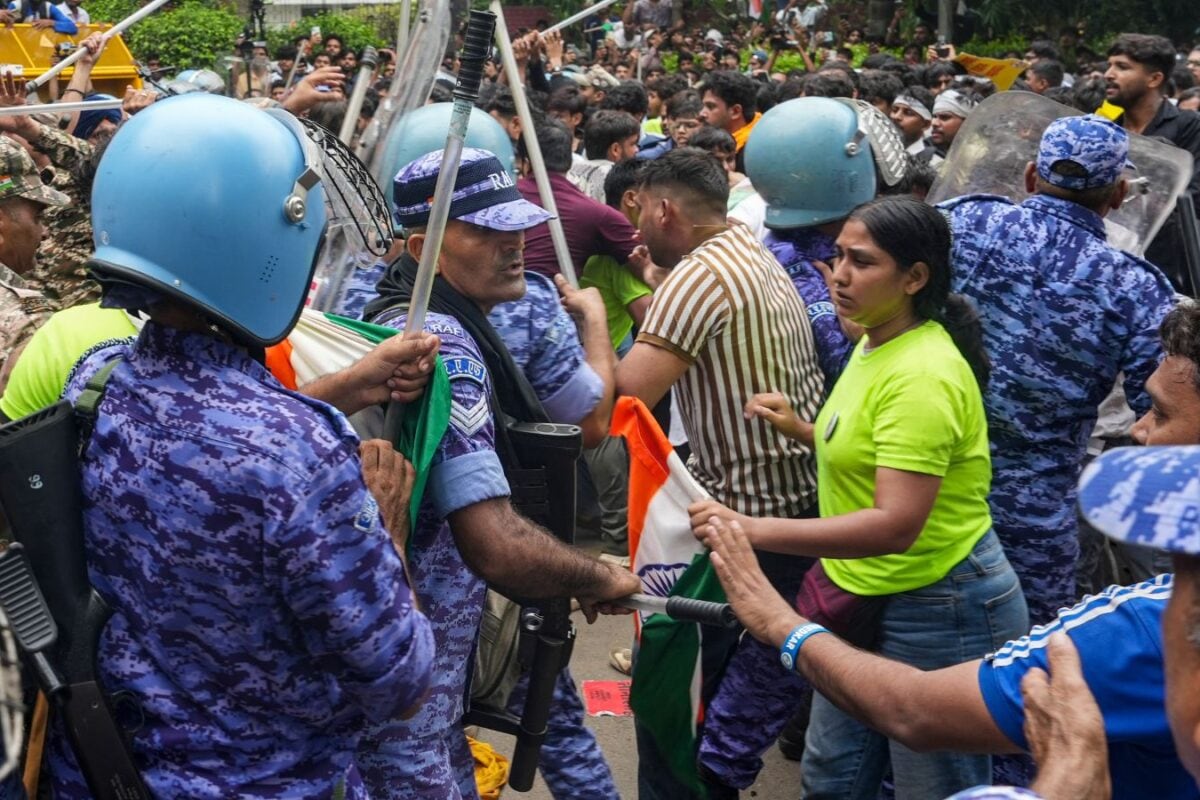
Exclusive: RAF Finds Use Of 'Excessive Force' By Personnel In Delhi Protest, Says Actions 'Can't Be Justified' Reported By, Edited By Last Updated: July 25, 2026, 10:54 IST The review also introduced a series of measures aimed at improving accountability and operational oversight. Rapid Read Security personnel confront protesters during a march from Jantar Mantar towards Parliament. (PTI) The Rapid Action Force (RAF) has found instances of excessive use of force by its personnel during the July 20 protest at Delhi’s Jantar Mantar, with its top leadership observing that some actions captured on social media were inconsistent with the force’s professional ethos and “cannot be justified under any circumstances." The observations are part of the proceedings of an internal review meeting chaired by Inspector General Seema Dhundia on July 22, following an internal assessment of the RAF’s deployment during the protest, sources said. During the review, the Inspector General reiterated that “Sensitive Policing" remains the cornerstone of the RAF’s crowd-control philosophy and directed all units to adhere strictly to the principle in future operations.
News18 sent a query to DG CRPF and PRO remain unanswered about following SOP and the use of pellet guns. Videos Under Scrutiny According to the meeting proceedings, the headquarters examined videos circulated on social media that allegedly showed RAF personnel using force even after individuals had disengaged from the protest. The review noted instances where personnel were seen using force against people who had already moved away from the crowd, deliberately pushing individuals to the ground, and striking persons standing outside police barricades. The Inspector General observed that such conduct was incompatible with the RAF’s established culture, operational doctrine and public image, stating that it “cannot be justified under any circumstances." Force Must Remain Restrained Reiterating the RAF’s operational doctrine, the Inspector General directed that force should be employed only to the extent necessary and in a manner that is fair, judicious, restrained and sensitive. All Commandants have been instructed to ensure that personnel receive comprehensive briefings before deployment so they clearly understand that the RAF’s identity is built on disciplined and restrained crowd management rather than excessive use of force.
The meeting also reminded officers that the prescribed Force Gradient and use-of-force protocols must be followed during every crowd-control operation, including issuing warnings before resorting to force and employing only authorised measures in a graduated manner. Accountability Measures Tightened The review also introduced a series of measures aimed at improving accountability and operational oversight. RAF officers and personnel have been prohibited from sharing official information, documents, WhatsApp messages or orders with the media or unauthorised persons. The Inspector General warned that any leak would be treated as serious misconduct and attract strict departmental disciplinary action. To strengthen transparency during future deployments, the RAF has made the use of Body Worn Cameras mandatory for every operation. Units have also been directed to deploy dedicated photographers and videographers to document major incidents, attacks on personnel, stone-pelting, crowd behaviour and the force’s response, with the recordings to be preserved as evidence. The headquarters has further directed stronger intelligence monitoring, timely operational reporting from deployed companies and regular inspections by senior officers. The review also stressed improving the welfare of deployed personnel by ensuring adequate accommodation, food, rest and other essential facilities, particularly for women personnel, while restricting unnecessary administrative movement outside camps during sensitive deployments.
 The BriefWire