Pakistan's Biggest Military Overhaul In Decades Puts Nuclear Command Under Asim Munir | Exclusive Details
Pakistan's Biggest Military Overhaul In Decades Puts Nuclear Command Under Asim Munir | Exclusive Details Reported By, Last Updated: July 25, 2026, 06:21 IST The
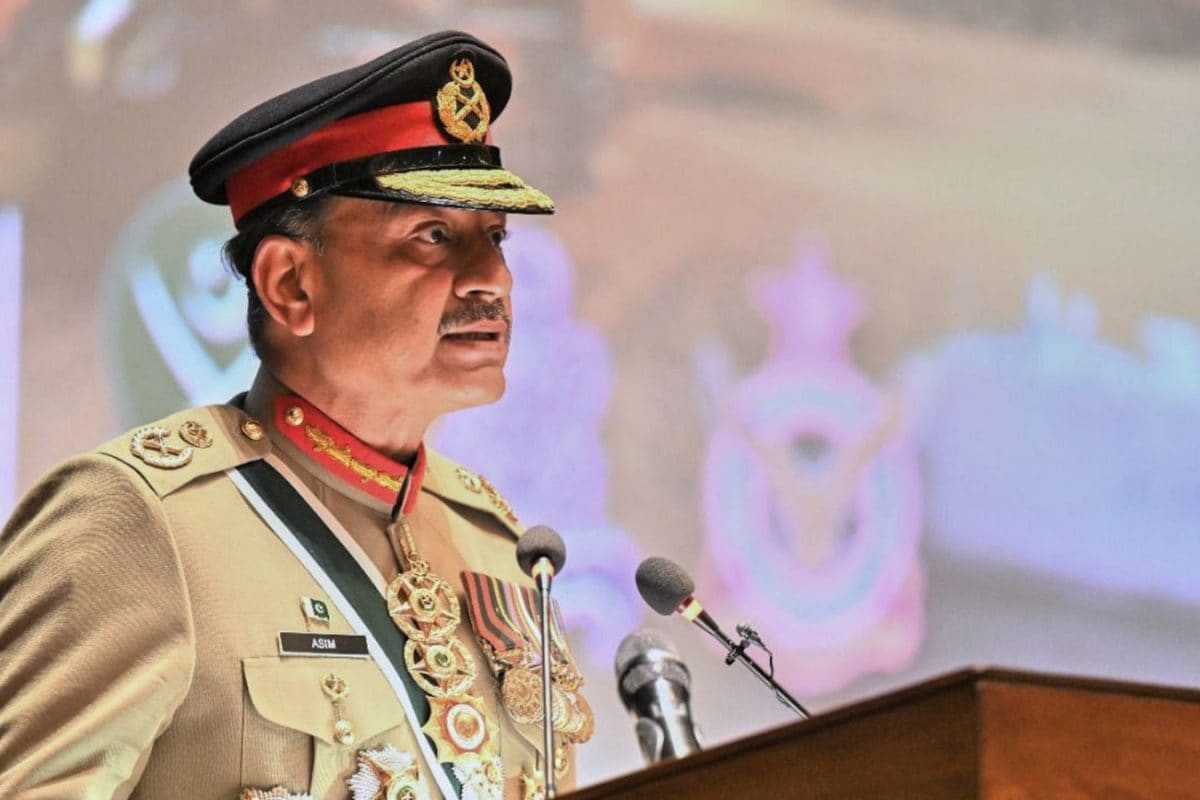
Pakistan's Biggest Military Overhaul In Decades Puts Nuclear Command Under Asim Munir | Exclusive Details Reported By, Last Updated: July 25, 2026, 06:21 IST The operational blueprint of the Strategic Command (NSC) closely mirrors the force structure of China’s People's Liberation Army This high-level consolidation of authority has altered conventional career progression within the Pakistan Armed Forces. (File image: ISPR/AP) Pakistan has initiated a structural overhaul of its defence framework, establishing the Strategic Command (NSC) under recent legislative amendments. The newly formed entity assumes operational oversight of the nation’s strategic assets and nuclear arsenal, centralising authority under a unified military hierarchy. This structural shift effectively bypasses the traditional civilian-led Command Authority (NCA) framework, leaving prime ministerial oversight strictly informational rather than operational.
The reorganisation is driven by Field Marshal Syed Asim Munir in his dual-hatted role as Chief of Defence Forces (CDF) and Chief of the Army Staff (COAS). Under this re-architected framework, Lieutenant General Syed Aamer Raza—formerly the Chief of the General Staff—has been elevated to four-star General and appointed as the inaugural Commander of the Strategic Command. Strategic Realignment & Chinese Influence The operational blueprint of the NSC closely mirrors the force structure of China’s People’s Liberation Army, specifically leaning on the operational concepts of the PLA Rocket Force. Supported by the Strategic Plans Division (SPD), the NSC consolidates the management of nuclear stockpiles, delivery systems, and missile development under a single centralised command.
Key Takeaway: The restructuring aims to establish a joint operational command—spanning the Army, Navy, Air Force, Rocket Force, and Strategic Command—to enhance strategic deterrence along Pakistan’s eastern border while deepening defence-industrial and technological integration with Beijing. Internal Military Impact This high-level consolidation of authority has altered conventional career progression within the Pakistan Armed Forces Board Freeze: Promotion boards across senior officer cadres have remained deferred for over 15 months amid the systemic restructuring of service commands. Suspended Conferences: The Pakistan Army has paused routine Formation Commanders’ Conferences since 2024, reflecting a centralisation of decision-making within the senior leadership. Command Shakeup: The realignment streamlines operational control under the Office of the Chief of Defence Forces, diminishing the traditional autonomy held by senior regional Corps Commanders.
 The BriefWire