Niger still seeks stability, after 3 years of military rule
The military government in Niger had promised social, security and economic improvements when it took power in 2023. Three years down the line, there are
The military government in Niger had promised social, security and economic improvements when it took power in 2023. Three years down the line, there are mixed reviews on its performance. The military seized power in Niger on July 26, 2023. General Abdourahamane Tchiani, who became head of state, justified the coup by citing the poor security situation, which he said persisted despite international support. In the weeks that followed, the military government announced a transitional period that was to last a maximum of three years. However, the political promises made upon taking office have not been fulfilled. The transitional government continues to hold all the reins, and the security situation in the Sahel country remains fragile. In the Tillabery region in southwestern Niger, attacks by jihadists are on the rise. Thousands of people have been forced to flee their villages, plunging the region into a severe humanitarian crisis. Niger's military government has struggled to end an Islamist insurgency despite promises to do so Image: Ludovic Marin/AFP/Getty Images "Today, attacks on the armed forces and the civilian population are significantly more frequent and violent than they were three years ago," Maiga, a resident of the city of Tera, which has a population of 30,000, told DW. Maiga wished to remain anonymous for security reasons. "Life used to be better despite the insecurity; the weekly markets operated normally and supplies arrived regularly," he said, adding that at the moment entire villages had fled and schools are closed. The independent conflict monitor ACLED has also said the the security situation has deteriorated since the 2023 coup.
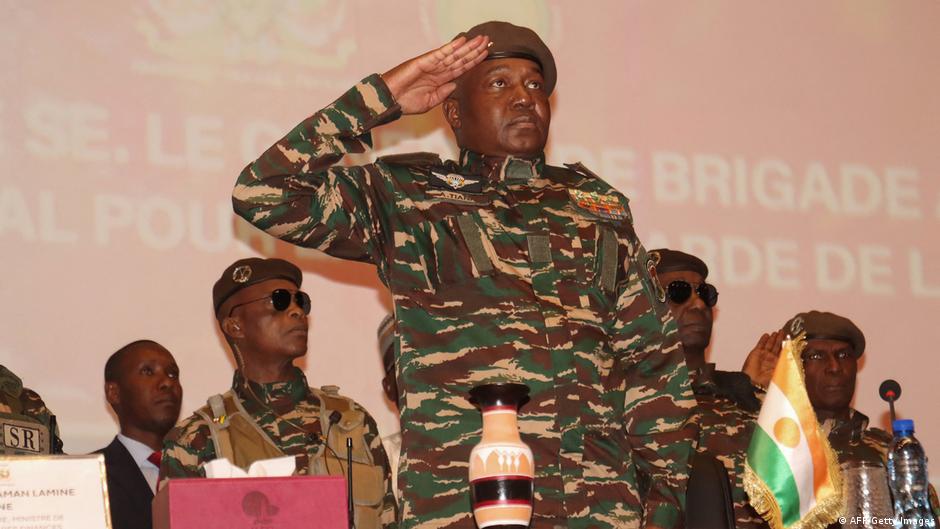
According to the organization, the Tillaberi region remains the main hot spot for clashes between two rival Islamist groups, Jama'at Nusrat al-Islam wal-Muslimin and the so-called Islamic State in the Sahel Province (formerly ISGS). This rivalry has resulted in numerous casualties among soldiers and civilians. In 2025, nearly 1,200 deaths were recorded in the region. For Heni Nsaibia, a staff member at ACLED, these figures attest to the scale of the security crisis affecting Niger. The most recent major attack, on July 17, claimed the lives of at least 16 soldiers, according to Niger's state media, ANP. Fifteen terrorists were killed in that attack, ANP said. "The situation in Niger has worsened, particularly in the Tillaberi region, where the death toll is the highest in the central Sahel," Nsaibia told DW. Insecurity taking a toll on civilians "We live in makeshift shelters and are defenseless against the elements; we take on small odd jobs to survive," a woman told DW. "I used to be able to live with dignity from my work, but right now it's very difficult; even [portable] drinking water is a problem for us," added a local herder. Young Nigeriens are torn between disappointment and optimism: In the youth assemblies, known as "Fadas," the topic continues to spark discussion. Some — like Fadila — believe that the situation is gradually stabilizing after the turmoil of the first few years. There was much optimism in Niger after the military took over power three years ago Image: AFP/Getty Images "For a while, it wasn't easy at all: Salaries weren't paid on time, food supplies… that wasn't easy.
 The BriefWire