Baseless: Government slams Pakistani media reports blaming India for floods
India on Friday firmly rejected Pakistan's allegations that it deliberately caused flooding across the border, calling the claims "baseless and contrary to the facts." New
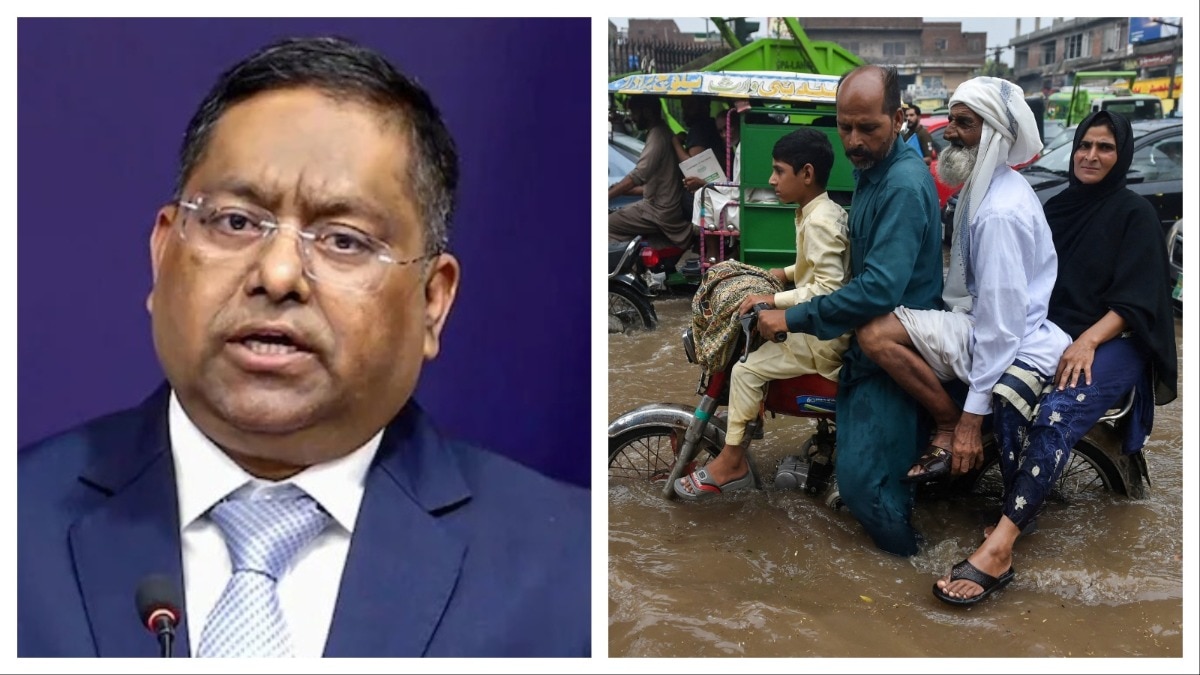
India on Friday firmly rejected Pakistan's allegations that it deliberately caused flooding across the border, calling the claims "baseless and contrary to the facts." New Delhi asserted that the recent rise in water levels in the Chenab river was entirely due to heavy monsoon rainfall in Jammu and adjoining catchment areas, while also reiterating that it would continue sharing high-flood data with Pakistan on humanitarian grounds whenever required. Read Full Story The remarks came amid heightened tensions between the two countries over flood management, the Indus Waters Treaty (IWT), and recent exchanges at multilateral forums. Addressing a media briefing, Ministry of External Affairs (MEA) spokesperson Randhir Jaiswal dismissed reports in the Pakistani media that accused India of deliberately releasing water into Pakistan. "We have seen Pakistani media reports alleging that India is deliberately causing flooding in Pakistan and such allegations are baseless and contrary to the facts,” he said. “The recent increase in flows in the River Chenab is a direct consequence of intense monsoon rainfall over Jammu and adjoining catchment areas during 20–23 July 2026," he added.
Jaiswal said India's assessment was supported by Pakistan's own Flood Forecasting Division in Lahore. Referring to an advisory issued on July 22, he noted that Pakistani authorities themselves had attributed the high water levels in the Chenab to heavy rainfall in the upper catchment and had projected that the flows at Marala would gradually recede as rainfall reduced. "The rise in river flows is, therefore, a natural hydrological response to heavy monsoon rainfall and not the result of any deliberate action by India. Attempts to portray a weather-driven flood event as an upstream intervention are factually incorrect, technically untenable, and contradicted by Pakistan's own official flood advisories," Jaiswal said. The MEA also rejected allegations that India failed to provide advance flood warnings. According to Jaiswal, the river discharge during the period did not reach levels that warranted issuance of special flood alerts, adding that the observed flows were consistent with normal monsoon conditions recognised by Pakistan's own flood forecasting authorities. INDUS WATER TREATY DISPUTE The latest exchange comes a day after Pakistan raised the Indus Waters Treaty and the Kashmir issue during an ASEAN Regional Forum meeting in Manila.
Pakistan's Deputy Prime Minister and Foreign Minister Ishaq Dar argued that the suspension of the water-sharing treaty should be addressed through dialogue and in accordance with international law. Responding to those remarks, India strongly criticised Islamabad for using a multilateral platform to raise bilateral issues and accused it of spreading misinformation while attempting to divert attention from its own record on terrorism. Reaffirming India's position, the MEA said the Union Territories of Jammu and Kashmir and Ladakh "have been, are and will always remain integral and inalienable parts of India" and asserted that Pakistan had no standing to comment on the matter. New Delhi also maintained that the Indus Waters Treaty would remain in abeyance. India suspended the decades-old agreement after the April 2025 Pahalgam terror attack that killed 26 civilians, describing the move as part of a broader response to Pakistan's continued support for cross-border terrorism. The MEA further criticised Pakistan over what it described as officially backed disinformation campaigns, including the use of terms such as "Fitna al-Hindustan", saying such narratives were intended to deflect attention from Pakistan's internal challenges and its record of providing safe haven to terrorist networks.
 The BriefWire