Nepal's Big Admission? Why Balen Shah's 'Encroachment' Remark Has Triggered A Row Back Home
Nepal's Big Admission? Why Balen Shah's 'Encroachment' Remark Has Triggered A Row Back Home Written By, Last Updated: June 01, 2026, 13:07 IST Nepal’s prime
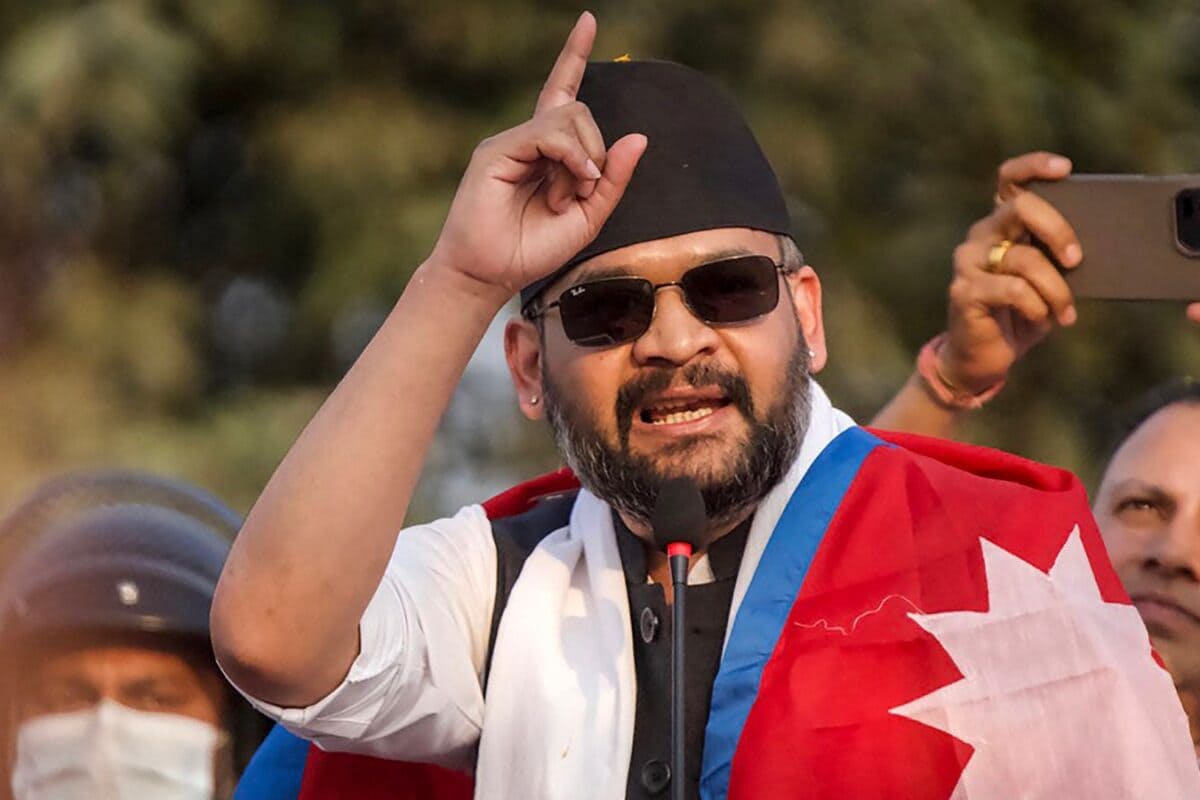
Nepal's Big Admission? Why Balen Shah's 'Encroachment' Remark Has Triggered A Row Back Home Written By, Last Updated: June 01, 2026, 13:07 IST Nepal’s prime minister said both India and Nepal had “encroached” on each other's territories, bringing fresh focus to one of South Asia’s oldest unresolved border disputes Rapid Read Nepal’s Prime Minister Balen Shah said the issue was more complex and should be resolved through dialogue, historical documents and technical surveys. (AFP) Nepal Prime Minister Balendra Shah, popularly known as Balen Shah, stirred a political storm in Kathmandu when he told Parliament that India and Nepal had “both encroached" on each other’s territories, bringing fresh focus to one of South Asia’s oldest unresolved border disputes. Shah’s comments were unusual, as Nepali leaders have traditionally framed the dispute as one of Indian encroachment onto Nepali territory. But Shah said the issue was more complex and should be resolved through dialogue, historical documents and technical surveys. He also suggested bringing in Britain, which drew the original boundary in the colonial era, into the discussions. Addressing Parliament for the first time since becoming the Himalayan country’s youngest prime minister earlier this year, Shah said: “You will be surprised to know a fact that I have learnt recently, only after becoming Prime Minister. India has not only encroached Nepali territory, but Nepal has also encroached Indian territory in many places." The comments triggered an immediate backlash in Parliament, with opposition lawmakers Basana Thapa and Ramesh Malla demanding that the statement be removed from the official record. They urged Shah to either present proof or withdraw the allegation. foreign minister Pradip Gyawali reportedly joined the chorus, seeking an apology.
As the controversy snowballed, Nepal’s Foreign Ministry clarified that Shah was referring to unresolved boundary areas, cross-border occupation and disputed zones rather than formally conceding Nepali territorial claims. But what exactly is the dispute? The Core of the Disagreement The India-Nepal border is about 1850 km long and largely settled. The main contest is over three Himalayan regions – Kalapani, Lipulekh Pass and Limpiyadhura. These areas are located in the western part of the India-Nepal border, near the states of Uttarakhand and the Tibet Autonomous Region of China. The dispute is not just about a few square kilometres of mountainous terrain. The region is of strategic importance because it is located close to the India-China-Nepal tri-junction and has important trade and pilgrimage routes, including the route used by Indian pilgrims going to Kailash Mansarovar in Tibet. How Did the Dispute Begin? The roots of the dispute go back to the 1816 Treaty of Sugauli signed after the Anglo-Nepalese War. The treaty stated that the Kali (Mahakali) River would form the western boundary between Nepal and British India. The problem, however, is that the treaty never clearly identified the exact source of the river. That ambiguity created two competing interpretations. What Nepal Says Nepal has claimed that the source of the Kali River is at Limpiyadhura. If Limpiyadhura is accepted as the source of the river, then Kalapani and Lipulekh are east of the river and hence belong to Nepal as per the 1816 treaty. Kathmandu says several historical maps from the 19th century support this interpretation. Nepal had officially revised its political map in 2020 to show Kalapani, Lipulekh and Limpiyadhura within its territory.
The revised map was later printed on official documents and even appeared on Nepali currency notes, adding to frictions with India. Nepal has repeatedly protested Indian infrastructure projects, trade arrangements and pilgrimage routes through Lipulekh, saying these activities are on Nepali territory. What India Says India rejects Nepal’s claim on Kalapani and Lipulekh, stating that both are in Uttarakhand New Delhi contends the river starts near Kalapani, not Limpiyadhura, which means the border line is east of the disputed territories, making them Indian. India also refers to the long-standing administrative control, security deployments and governance structures in the area. The Indian government has always maintained that the dispute should be resolved through bilateral talks and opposed attempts to internationalise the issue. Why Did the Row Explode in 2020? Although the dispute has existed for decades, it escalated sharply in 2020. India’s opening of a strategic road linking Dharchula with the Lipulekh Pass, a route used for the Kailash Mansarovar pilgrimage and for military logistics near the border with China, was the trigger as Nepal objected that the road passed through its territory. Kathmandu retaliated by issuing a new official map including the Kalapani, Lipulekh and Limpiyadhura and subsequently amended its Constitution to approve it. India dismissed the move as a unilateral one without any historical basis. The controversy erupted again in 2026 when Nepal opposed the revival of the Kailash Mansarovar Yatra through Lipulekh and when India and China discussed re-initiating border trade through the pass. Nepal said decisions were being taken about the area without its participation. Why Is Lipulekh So Important? Lipulekh is not merely a border point. For India, it is a strategic route near the sensitive India-China frontier, an important access point for the Kailash Mansarovar pilgrimage, and a logistics corridor in the Himalayas.
For Nepal, agreeing to Indian control over Lipulekh will undermine its claim over the larger Kalapani-Limpiyadhura area and create a precedent that can affect territorial sovereignty. For China, the pass is part of wider Himalayan trade and connectivity networks and that is why developments concerning Lipulekh often take on a larger geopolitical dimension. What Happens Next? In Nepal, the issue frequently becomes a rallying point for nationalism, particularly during elections or periods of domestic political instability. Political parties across the spectrum have used the Kalapani issue to project themselves as defenders of sovereignty. Balen Shah’s comments have brought the issue back into public focus, but they have also highlighted a reality often overlooked in political rhetoric: the dispute is rooted in historical ambiguities dating back more than two centuries, and neither side has shown willingness to abandon its core territorial claims. For now, Kalapani, Lipulekh and Limpiyadhura remain among the most sensitive fault lines in India-Nepal relations. News18 Newsletter Handpicked stories, in your inbox A newsletter with the best of our journalism submit First Published: June 01, 2026, 12:58 IST News explainers Nepal's Big Admission? Why Balen Shah's 'Encroachment' Remark Has Triggered A Row Back Home Disclaimer: Comments reflect users’ views, not News18’s. Please keep discussions respectful and constructive. Abusive, defamatory, or illegal comments will be removed. News18 may disable any comment at its discretion. By posting, you agree to our Terms of Use and Privacy Policy Loading comments...
 The BriefWire