Beyond Mayawati: Why Uttar Pradesh's 4 Crore Dalit Voters Could Decide The 2027 Election
Beyond Mayawati: Why Uttar Pradesh's 4 Crore Dalit Voters Could Decide The 2027 Election Reported By, Edited By Last Updated: June 01, 2026, 13:15 IST
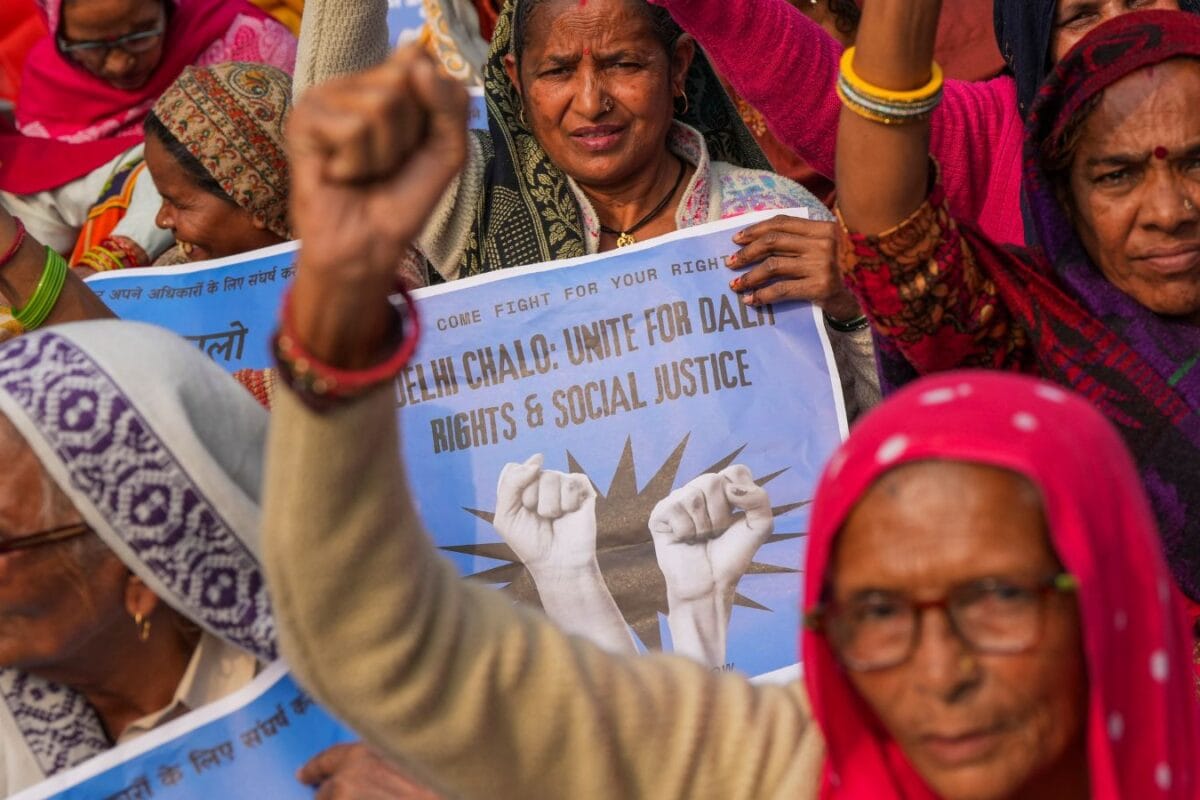
Beyond Mayawati: Why Uttar Pradesh's 4 Crore Dalit Voters Could Decide The 2027 Election Reported By, Edited By Last Updated: June 01, 2026, 13:15 IST With Scheduled Castes constituting nearly 21% of UP’s population---over four crore Dalits & 85 reserved assembly seats of the state’s 403---no major party can afford to ignore them Rapid Read According to Census data, Scheduled Castes significantly influence results in over 150 constituencies across western, central and eastern UP. (PTI) As Uttar Pradesh enters election mode ahead of the 2027 assembly polls, one political reality has become increasingly clear—the battle for Dalit votes, particularly non-Jatav Dalits who constitute nearly 21 per cent of Uttar Pradesh’s population, is set to play a crucial role when it comes to finalising the political future of the country’s most populous state. According to UP’s political experts, the upcoming 2027 polls are best described as the ‘battle for the Dalit vote’. With Scheduled Castes constituting nearly 21 per cent of Uttar Pradesh’s population—translating to over four crore Dalits and 85 reserved assembly seats of the state’s 403—no major political party can afford to ignore the community. While the Bahujan Samaj Party (BSP) once exercised near-complete dominance over Dalit politics under Mayawati, the last decade has witnessed a major churn. The Bharatiya Janata Party successfully made deep inroads into non-Jatav Dalit communities after 2014, while the Samajwadi Party (SP) is now aggressively attempting to rebuild a backward-Dalit-minority coalition through its PDA — Pichhda, Dalit, Alpsankhyak — formula. As a result, an intense social and political contest is playing out far beyond rallies and slogans, inside UP’s villages, Dalit bastis, beneficiary networks, caste organisations and WhatsApp groups. Political analyst Prof Shashikant Pandey, head of the department of political science at Dr Bhimrao Ambedkar University, Lucknow, says the 2027 election may witness one of the sharpest caste realignments in recent UP politics. “Dalit politics in UP is no longer confined to BSP versus others. The BJP has expanded welfare-based political integration, while the Samajwadi Party is trying to revive social justice politics through the PDA narrative. The competition is now over dignity, welfare, representation and identity simultaneously," Pandey said. BJP’s aggressive outreach towards Dalits intensified further after the 2024 Lok Sabha elections, where the party suffered major setbacks in UP. The BJP tally in the state dropped from 62 seats in 2019 to 33 seats in 2024, while the SP-led INDIA bloc surged significantly. Analysts attributed a large part of this shift to the consolidation of Dalits, backward castes and Muslims behind the opposition alliance.
What Happened In 2024? The BJP’s biggest political concern after the 2024 Lok Sabha elections was the visible shift among sections of Dalit voters, especially non-Jatav Scheduled Castes, towards the SP-Congress-led INDIA bloc. While the BJP had successfully consolidated large sections of non-Jatav Dalits after 2014 through welfare schemes, Hindutva mobilisation and targeted caste outreach, the 2024 election revealed signs of erosion in that support base. The shift became particularly visible in reserved constituencies. Of UP’s 17 Scheduled Caste-reserved Lok Sabha seats, BJP, which had swept all such seats in 2014 and won 14 in 2019, was reduced to just eight seats in 2024. Political observers described this as one of the clearest indicators of social coalition fatigue within the BJP’s traditional support structure. Analysts attributed the dent to multiple factors, including fears surrounding reservation and the Constitution after the BJP’s “400 paar" campaign, unemployment concerns among Dalit youth, local anti-incumbency, and the Samajwadi Party’s aggressive PDA outreach strategy. “The BJP’s dominance weakened because a section of non-Yadav OBCs and non-Jatav Scheduled Castes shifted towards the opposition alliance," said Pandey. “The SP successfully converted social justice discourse into electoral mobilisation during the Lok Sabha elections." Political observers also point out that Akhilesh Yadav’s strategy of giving greater representation to backward castes and Dalits in ticket distribution helped the SP expand beyond its traditional Muslim-Yadav base. Another significant development was the decline of the BSP as a dominant electoral force. With the BSP failing to win a single Lok Sabha seat in Uttar Pradesh, a section of its traditional Dalit support base — particularly younger and non-Jatav voters — appeared more willing to experiment politically. Chandrashekhar Azad’s emergence in western Uttar Pradesh also added a fresh dimension to Dalit politics and youth mobilisation. This time, BJP is attempting to quickly regain lost ground. Of late, the party has increased Dalit representation discussions within both government and organisation structures. Recent reports of cabinet expansion, elevation of Dalit faces and organisational restructuring have gained momentum as the BJP attempts to counter the PDA plank politically and symbolically. The Yogi Adityanath government has also appointed several Dalit ministers, including Baby Rani Maurya, Asim Arun, Gulab Devi and Dinesh Khatik. Yet, party insiders admit that representation alone may not automatically convert into electoral traction, especially among younger Dalit voters and non-Jatav communities. While describing BJP’s political strategy to woo the Dalit vote bank, political analysts said it rests on two pillars—welfare delivery and Hindutva agenda.
Over the last decade, the party has aggressively pushed schemes such as free ration distribution, PM Awas Yojana, toilets, Ayushman Bharat and direct benefit transfers among economically weaker sections. Simultaneously, the BJP has sought to integrate Dalit communities within a larger Hindu political identity through symbolic outreach, Ambedkar commemorations, “Samrasta Bhoj" programmes and the celebration of sub-caste icons such as Maharishi Valmiki and Sant Ravidas. “The BJP’s success among non-Jatav Dalits came because it moved beyond traditional upper-caste politics and built a welfare-plus-recognition model, giving recognition to communities like Pasi, Valmiki, Kori and Khatik," said a Lucknow-based political commentator. Non-Jatav Dalits today constitute a crucial floating political bloc in Uttar Pradesh. While Jatavs, who form the largest Dalit sub-caste, continue to maintain emotional loyalty towards Mayawati and the BSP to a significant extent, several other Dalit groups have shown electoral flexibility. According to Census data, Scheduled Castes significantly influence results in over 150 constituencies across western, central and eastern UP. The data further states that Jatavs account for more than half of Uttar Pradesh’s Dalit population, followed by Pasis, Dhobis, Koris, Valmikis and Khatiks. This fragmentation has opened political space for all major parties. The Samajwadi Party, which historically struggled to gain Dalit trust because of its perceived Yadav-centric image and old caste tensions during the Mulayam Singh Yadav era, is now attempting a reset through Akhilesh Yadav’s PDA strategy. The PDA formula — Pichhda, Dalit and Alpsankhyak — emerged as a major political slogan during the 2024 Lok Sabha polls and subsequent by-elections. The SP consciously increased representation for backward castes and Dalits in candidate selection, while also attempting to project itself as the principal challenger to the BJP’s social coalition. In several bypolls and local campaigns, the SP strategically fielded Dalit and Extremely Backward Class candidates to expand beyond its traditional Muslim-Yadav base. The party also amplified issues such as reservation, caste census, unemployment and alleged social discrimination to connect with marginalised communities. Pandey believes the SP’s challenge lies in converting temporary anti-BJP sentiment into long-term social trust. “The PDA strategy has given the Samajwadi Party momentum, especially after the Lok Sabha elections. But sustaining Dalit support requires consistent grassroots engagement. Dalit voters today are more politically aware and transactional than before. Symbolism alone is insufficient," he said. Interestingly, even as BJP and SP intensify their outreach, the BSP continues to retain silent influence in several Dalit pockets. Though electorally weakened, the BSP still possesses booth-level networks, emotional resonance among older Dalits and the enduring legacy of Kanshi Ram and Mayawati.
Political observers argue that BSP’s core vote share may have shrunk, but it has not disappeared entirely. In many villages across western and central Uttar Pradesh, blue flags, Ambedkar processions and local caste organisations continue to sustain a distinct Ambedkarite political identity. Younger Dalit activists are also increasingly using social media platforms to assert political narratives around dignity, representation and constitutional rights. Another major factor shaping Dalit politics is the growing conversation around caste census and reservation protection. Opposition parties have aggressively raised concerns around reservation, privatisation and constitutional safeguards after the 2024 elections, while the BJP has sought to counter these narratives by projecting itself as the true implementer of welfare and social justice schemes. The political battle is therefore no longer merely ideological. It is deeply sociological. In urban settlements and rural bastis alike, conversations now revolve around jobs, government recruitment, welfare access, local caste equations, police behaviour and political respect. Young Dalit voters, especially first-time voters, increasingly consume political messaging through reels, YouTube channels and WhatsApp groups rather than traditional cadre networks. The BJP still retains a formidable organisational advantage and benefits from welfare penetration and Hindutva consolidation. However, the SP’s PDA narrative has clearly unsettled the saffron party enough for it to recalibrate caste representation ahead of 2027. For now, Uttar Pradesh’s Dalit politics stands at a crossroads. The BJP wants to retain Dalits within a larger Hindu welfare coalition. The Samajwadi Party seeks to revive social justice consolidation through PDA politics. The BSP hopes emotional loyalty and silent voters can help it recover lost ground. As the battle for 2027 begins, one thing is certain: who wins Uttar Pradesh may not be decided in just temples or rallies, but inside Dalit households across the state. News18 Newsletter Handpicked stories, in your inbox A newsletter with the best of our journalism submit First Published: June 01, 2026, 13:15 IST News india Beyond Mayawati: Why Uttar Pradesh's 4 Crore Dalit Voters Could Decide The 2027 Election Disclaimer: Comments reflect users’ views, not News18’s. Please keep discussions respectful and constructive. Abusive, defamatory, or illegal comments will be removed. News18 may disable any comment at its discretion. By posting, you agree to our Terms of Use and Privacy Policy Loading comments...
 The BriefWire