Japanese companies making toilets, glass fibre and seasonings, not AI chips, are among the AI boom's biggest winners
Why Japanese companies making toilets, glass fibre and seasonings are winning the AI boom How Toto 's expertise in ceramics found a place in chipmaking
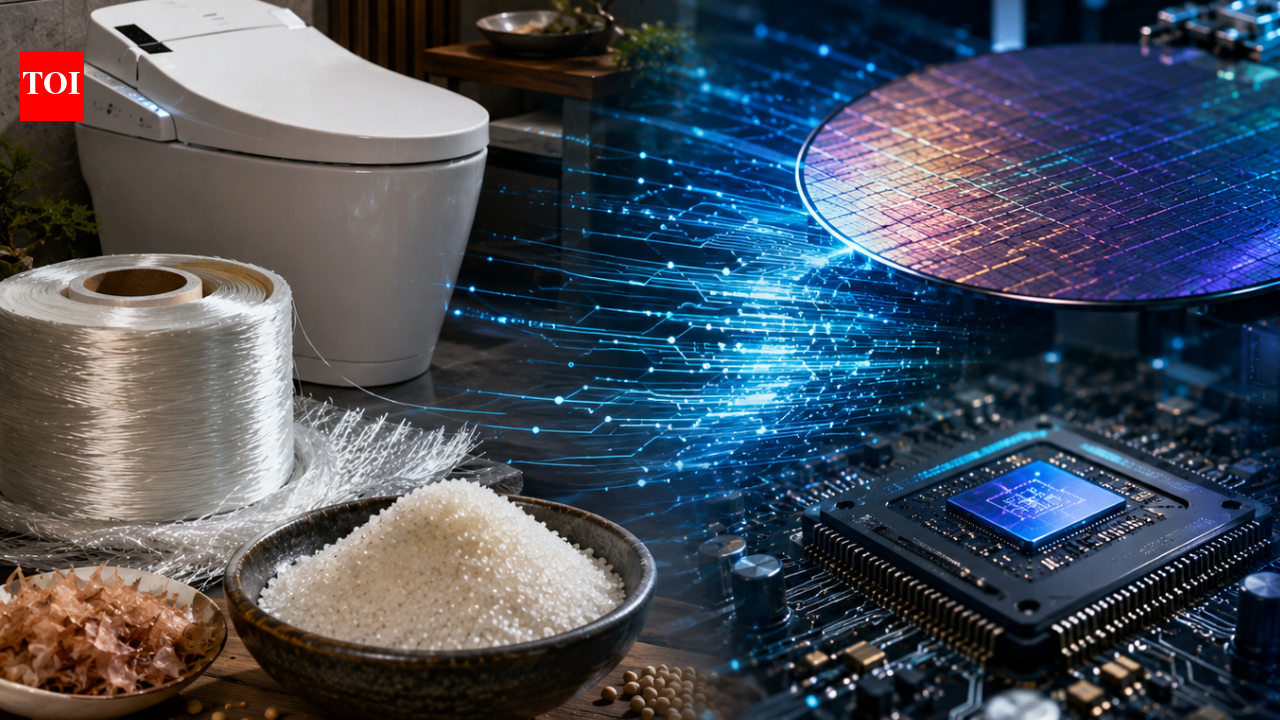
Why Japanese companies making toilets, glass fibre and seasonings are winning the AI boom How Toto 's expertise in ceramics found a place in chipmaking Nittobo 's glass fibre is helping build the AI infrastructure How a seasoning company became indispensable to modern AI chips Why advanced packaging has become as important as advanced chips Investors are discovering AI's hidden winners Japan's decades of materials expertise are paying off Artificial intelligence has fuelled a global race to build faster chips, larger data centres and more powerful computing systems, propelling companies like Nvidia into the spotlight. Yet some of the biggest beneficiaries of the AI revolution are businesses that few people would associate with cutting-edge technology. In Japan, manufacturers known for making toilets, glass fibre and food seasonings have quietly become indispensable to the semiconductor industry. Rather than designing AI chips or developing large language models, they produce specialised materials without which advanced processors could not be manufactured or packaged. As AI investment surges worldwide, these decades-old companies are emerging as some of the industry's most surprising winners.The AI boom is about much more than designing advanced processors. Every AI chip passes through a complex manufacturing process that depends on specialised materials, precision engineering and advanced packaging technologies. This has created opportunities for companies supplying niche products that are difficult to replace.Japan has spent decades developing expertise in advanced ceramics, speciality chemicals, industrial glass and semiconductor materials, making many of its traditional manufacturers critical links in the global chip supply chain.
As demand for AI servers and high-performance semiconductors grows, investors are increasingly recognising these firms as "second-order AI beneficiaries", companies that profit from AI without directly building AI systems.Toto is best known worldwide for its Washlet bidets and premium bathroom products. Few consumers realise the company has also operated an advanced ceramics business since the 1980s. One of its most important semiconductor products is the electrostatic chuck, a highly specialised ceramic plate that holds silicon wafers securely during chip fabrication.These components must withstand extreme heat, powerful electric fields and corrosive chemicals while maintaining microscopic precision. Without electrostatic chucks, manufacturers would struggle to produce the advanced memory chips used in AI servers and high-performance computing systems. The growing importance of these products has prompted investors to look beyond Toto's consumer business and recognise the value of its semiconductor materials division.Founded more than a century ago as a textile manufacturer, Nittobo has evolved into one of Japan's leading producers of specialised glass fibre. Its products are used in semiconductor package substrates, AI servers and other high-performance electronic equipment.As AI processors become more powerful, they generate more heat and require increasingly sophisticated packaging materials. Nittobo's glass fibre improves the strength, dimensional stability and thermal performance of semiconductor substrates, enabling chips to operate more efficiently under demanding conditions. Although invisible to consumers, these materials have become essential as technology companies invest billions of dollars in expanding AI data centres across the world.Ajinomoto is widely recognised as the company behind monosodium glutamate (MSG) and a range of food seasonings, but it also occupies a unique position in the semiconductor industry.
 The BriefWire