Sonam Wangchuk Vs Anna Hazare: How NDA's Calm In 2026 Contrasts UPA's Scramble In 2011
Sonam Wangchuk Vs Anna Hazare: How NDA's Calm In 2026 Contrasts UPA's Scramble In 2011 Written By, Edited By Last Updated: July 24, 2026, 13:55
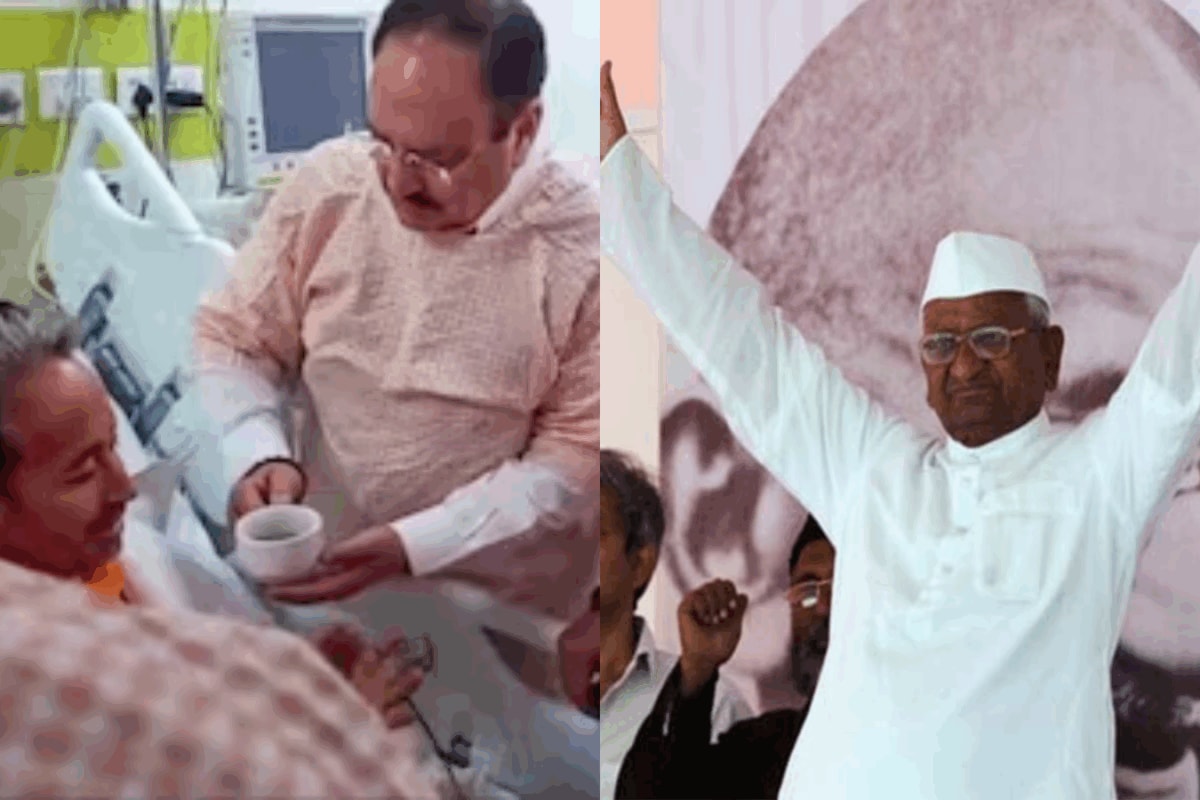
Sonam Wangchuk Vs Anna Hazare: How NDA's Calm In 2026 Contrasts UPA's Scramble In 2011 Written By, Edited By Last Updated: July 24, 2026, 13:55 IST Comparisons between the two hunger strikes are inevitable. Yet, the two governments' approaches to handling them have been markedly different. Rapid Read JP Nadda offers juice to Sonam Wangchuk to end his fast (left), Anna Hazare during the 2011 protest (right). 2011: The Congress-led UPA heaved a sigh of relief when Anna Hazare ended his 15-day fast for the Lokpal Bill by accepting water from then minister Vilasrao Deshmukh. But by then, the movement had already severely dented the government’s credibility. The UPA appeared weak, indecisive and on the defensive – an image that many believe contributed to its defeat in the 2014 Lok Sabha elections. 2026: At Medanta Hospital, Union Ministers JP Nadda and Jitendra Singh offered Sonam Wangchuk a glass of juice as he ended his hunger strike. While the government was conscious of the political fallout and the growing student mobilisation, it appeared far more composed than the UPA had in 2011. Comparisons between the two hunger strikes are inevitable. Yet, the two governments’ approaches to handling them have been markedly different.
In 2011, the UPA looked visibly unsure and jittery. Five senior ministers – including Pranab Mukherjee, P Chidambaram, Kapil Sibal and Pawan Bansal – were deployed to negotiate with the India Against Corruption (IAC) movement. Images of senior ministers rushing to the airport to receive the IAC delegation, which included Arvind Kejriwal, Manish Sisodia and Baba Ramdev, reinforced the perception of a government under pressure. Kapil Sibal’s meeting with Baba Ramdev at a five-star hotel, where even rasgullas were reportedly ordered in the hope of striking a deal, further added to those optics. The talks ultimately failed and the sweets were returned, becoming symbolic of an unsuccessful attempt at reconciliation. The movement eventually ended, but not before inflicting lasting political damage on the UPA. It also helped create the space for the rise of the Aam Aadmi Party, which went on to become a major political challenger to the Congress. The present government appears to have consciously avoided repeating those mistakes. First, it handled the situation in stages. Sonam Wangchuk’s transfer from Safdarjung Hospital to Medanta took place following a court directive, allowing the government to avoid the impression that it was acting under pressure. Second, the choice of interlocutors was carefully calibrated.
 The BriefWire