'We Are Becoming Machines': Why Supreme Court Is Worried About India's Vanishing Joint Families
'We Are Becoming Machines': Why Supreme Court Is Worried About India's Vanishing Joint Families Published By, Last Updated: July 24, 2026, 13:23 IST While hearing
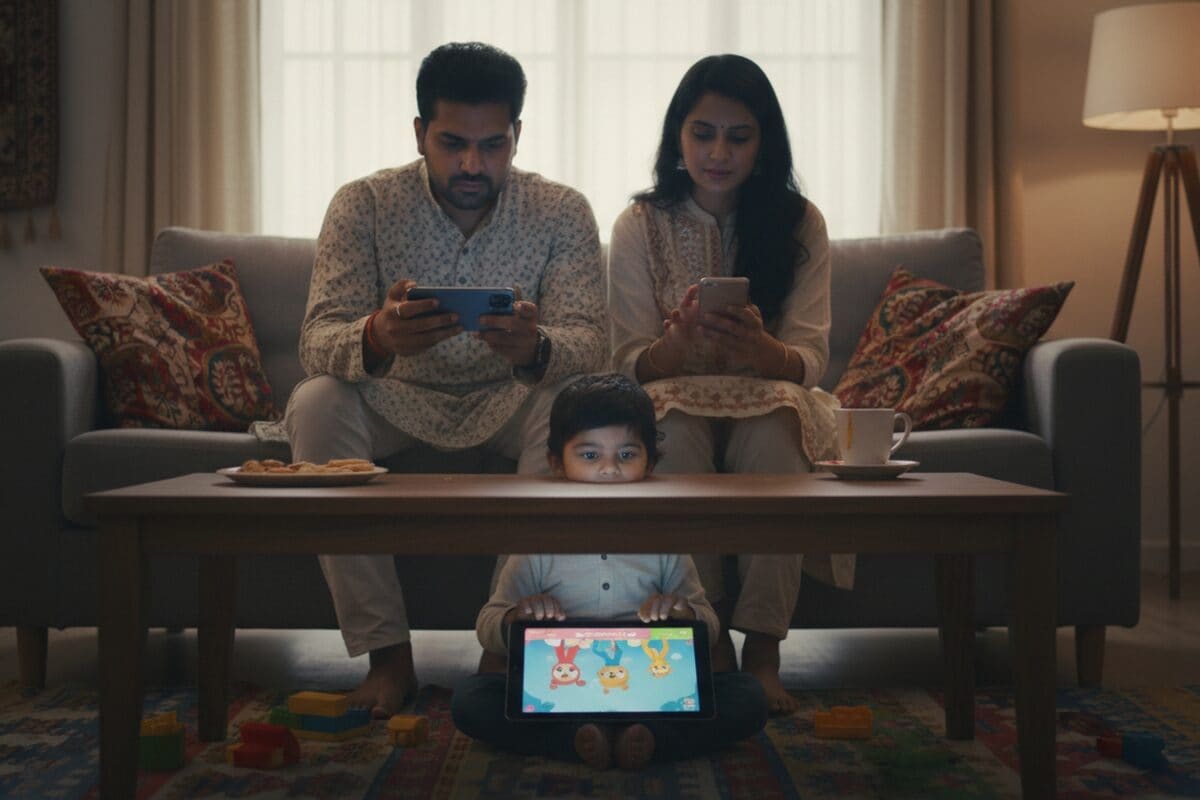
'We Are Becoming Machines': Why Supreme Court Is Worried About India's Vanishing Joint Families Published By, Last Updated: July 24, 2026, 13:23 IST While hearing the Sonam Raghuvanshi case, Justice Sundresh said he was recently at a restaurant and observed parents giving their child a phone to keep him occupied while eating. Rapid Read News18 The Supreme Court has once again expressed concern over what it sees as a gradual weakening of India’s traditional family structure, warning that the disappearance of joint families and growing dependence on gadgets for parenting could have far-reaching social consequences. The observations came while the court was hearing the appeal in the high-profile Raja Raghuvanshi murder case, in which Sonam Raghuvanshi is accused of plotting her husband’s killing during their honeymoon. While discussing the broader social context surrounding family relationships, the bench lamented the steady decline of the joint family system and the changing nature of parent-child interactions. The bench comprising Justice MM Sundresh and Justice PB Varale said that the case was a reflection of a changing society. The court remarked that the joint family system had historically ensured that children grew up surrounded by grandparents, uncles, aunts and cousins, allowing them to naturally understand family bonds, affection and shared responsibilities.
It contrasted this with many modern nuclear households where, according to the judges, working parents often struggle to spend quality time with their children and increasingly rely on mobile phones and other digital devices to keep them occupied. Justice Sundresh said that he was recently at a restaurant and observed a family giving their child a phone to keep him occupied while eating. “If gadgets take the place of parents, it is a disaster. This will happen even more in the future. The joint family is an asset, and people do not understand this. Happiness comes not from material things, but from human bonds and relationships. We are becoming like machines," he said. When SC Flagged Similar Concerns In 2025 This is not the first time the Supreme Court has voiced concern over changing family dynamics. In March 2025, while deciding a dispute between elderly parents and their son over eviction from a self-acquired property, the court observed that India was moving towards a “one person, one family" concept. Referring to the Indian ideal of Vasudhaiva Kutumbakam – the belief that the world is one family – the bench said the country was now struggling to preserve unity even within immediate families, calling it an erosion of the very idea of family.
 The BriefWire