How government scrambled in 24 hours to douse student anger
Within a span of just 30 days, what started as a protest by the Cockroach Janta Party (CJP) over exam paper leaks quickly snowballed into
Within a span of just 30 days, what started as a protest by the Cockroach Janta Party (CJP) over exam paper leaks quickly snowballed into an agitation against the education system as a whole. Throughout, the government maintained a studied silence. The crackdown on student protesters during their march to Parliament only gave the agitation fresh impetus, spilling over to other metros. The speed and scale of the unrest caught the government off guard. It sparked a 24-hour scramble on Thursday to douse the student anger. Read Full Story Over the week, the opposition took the accountability battle all the way to the Prime Minister himself. The unprecedented sit-in outside PM Narendra Modi's residence only added to the pressure. On Thursday, it was the Prime Minister who led the outreach to the protesting students. In an early-morning post, PM Modi announced that the government would set up fast-track courts to ensure strict punishment for those involved in paper leaks. "Nothing is more important than the welfare and future of our youth," PM Modi tweeted. However, there was no mention of the CJP protests or its allegation of police brutality during the July 20 'Sansad Chalo' march. Neither was there any word on Education Minister Dharmendra Pradhan as well. Within hours, the Delhi High Court designated a special fast-track court to exclusively try offences related to paper leaks. It showed the government's seriousness. HOW GOVT MOVED TO DEFUSE STUDENT ANGER But it did little to quell the anger at Jantar Mantar. The Cockroach Party reiterated that their first demand remained the resignation of Dharmendra Pradhan.
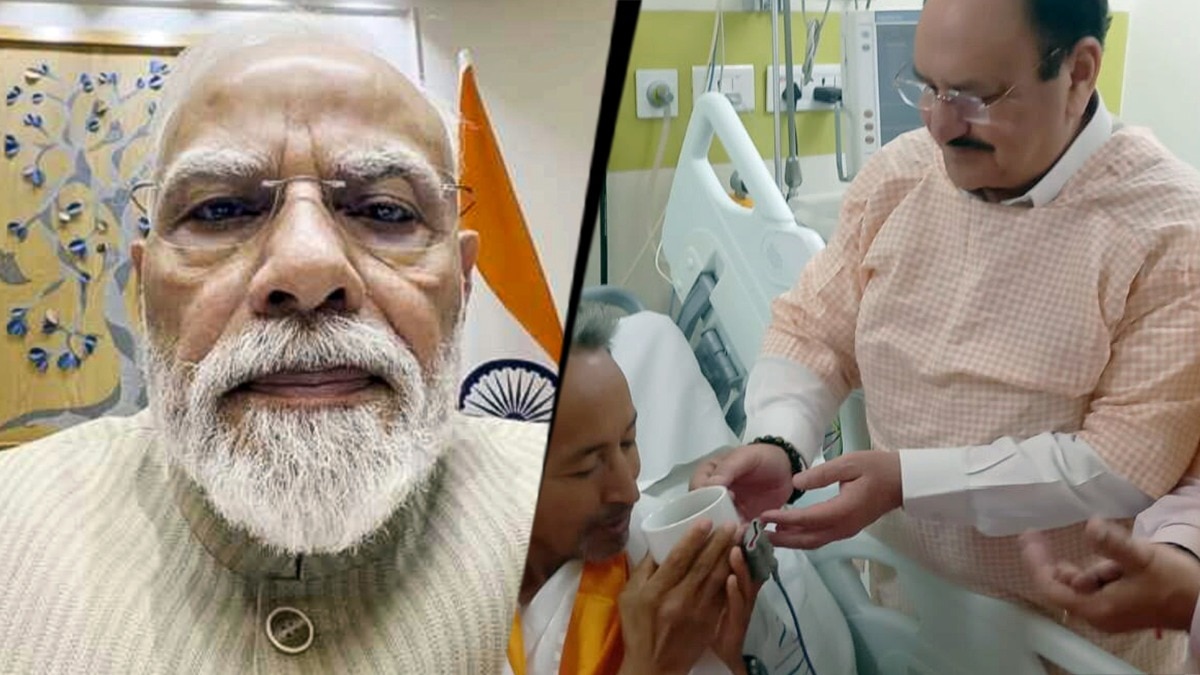
Meanwhile, the protest site continued to witness a steady stream of new arrivals. The protest had turned organic, drawing in people from all strata and age groups who came of their own volition, not on rented buses. Most were students and young jobseekers, cutting across religious lines. For the government, the stakes went beyond politics. The protests had started affecting normal life in the heart of Delhi, which houses several offices. Throughout the week, several metro stations (17 to be precise) were shut due to security concerns. It affected thousands of commuters for whom the metro is the lifeline. As the protests swelled, the government's top ministers went into a huddle. Rarely has the Modi government seen such a broad-based movement that is vastly different from the farmers' protest or the anti-CAA agitation. Union Home Minister Amit Shah, Health Minister JP Nadda and MoS in the Prime Minister's Office (PMO) Dr Jitendra Singh held a high-level meeting that lasted for nearly four hours. It was decided in the meeting that the government would take a positive approach towards the demands raised by activist Sonam Wangchuk, who has been on a hunger strike for the past 25 days demanding educational reforms. It was also decided that the government would engage with the CJP delegation for talks on Friday. The government wanted to be seen as responsive rather than confrontational. Time was running out as the CJP, bolstered by the solidarity protests in other states, called for a nationwide agitation on Friday. OUTREACH TO STUDENTS In the afternoon, Jitendra Singh, in a video message, reached out to the student protesters.
 The BriefWire