US strikes on southern Iran infrastructure widen war
The latest US strikes on tunnels, bridges, and other infrastructure further inland from the Strait of Hormuz could indicate that Washington is shifting gears in
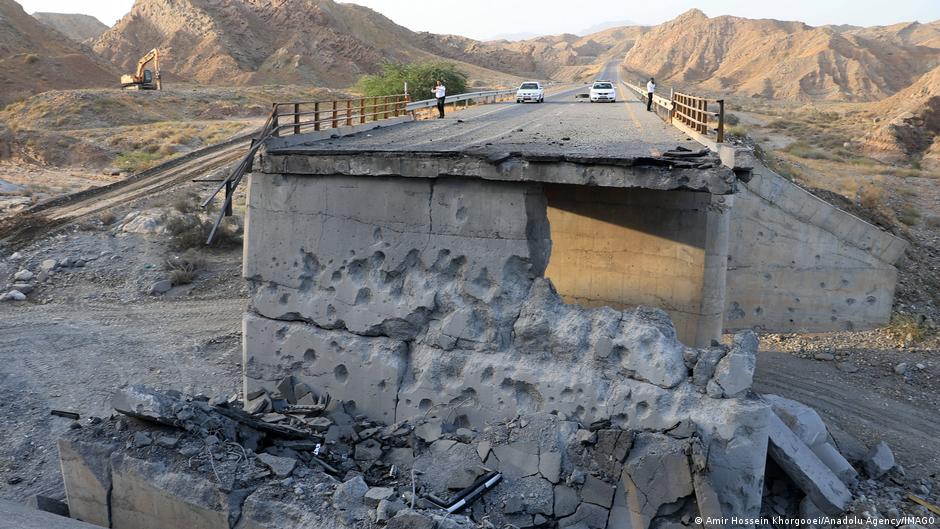
The latest US strikes on tunnels, bridges, and other infrastructure further inland from the Strait of Hormuz could indicate that Washington is shifting gears in Iran. With the US and Iran back at war following a prolonged but shaky truce, the latest US strikes seem to be less focused on Iran's coastal installations and maritime targets in the Strait of Hormuz. Iranian media and local officials have reported strikes on bridges, tunnels, roads, rail infrastructure, power facilities and desalination plants in southern Iran over the past week. Hormozgan province, just north of the Strait of Hormuz, has been hit especially hard. According to Iranian media, six bridges in Khamir county were struck early on Friday, July 17. Hours later, more reports followed of attacks on two tunnels and two more bridges in Hormozgan. At least eight people were reported killed in the bridge strikes. US campaign aimed at mobility and recovery The US military also appears to have conducted the strikes in a very deliberate pattern. In the first wave, bridges west and north of provincial capital Bandar Abbas were hit. In a second wave, another bridge to the east, one to the north and two tunnels north of the city were damaged. Alongside that, part of the railway west of Bandar Abbas was also struck. US renews strikes on Iran as fighting escalates To view this video please enable JavaScript, and consider upgrading to a web browser that supports HTML5 video Shukria Bradoost, an international security analyst at Virginia Tech in the US, told DW that the main US objective remains the same as before.
"The American goal in attacking southern Iran is to reopen the Strait of Hormuz," she said. However, she noted that Washington is trying to do more than remove direct military threats to shipping. The US military is destroying the infrastructure that could help Iran rebuild, reposition or sustain military pressure in the area, she added, noting that this was the reason that bridges, roads and rail lines have become targets. She also warned that Washington could move to take control the strategic Kharg Island, the home of Iran's main oil export terminal, in its push to remove the wider threat to Hormuz. Can US cripple Kharg Island without destroying it? The US has so far refrained from targeting energy facilities on the island, home to Iran's main oil export terminal, said Ahmad Vakhshiteh, director of the Moscow-based Center for Strategic Research on Developing Relations with the Middle East. "Naturally, the island is valuable as long as its oil facilities remain operational and undamaged," he told DW. "But the key question is whether the United States is seeking to seize Kharg militarily or whether, through repeated attacks, it is pursuing what could be described as a political seizure of the island," he said. "In other words, rather than deploying ground forces, it could continue nightly attacks on Kharg and other parts of southern Iran to create a public perception that southern Iran has fallen or that its energy infrastructure can no longer operate," Vakhshiteh added, saying that this could then increase public pressure on the Iranian leaders.
 The BriefWire