Spain's solar eclipse trilogy: Spectacle starting August 12
From August 2026 to January 2028, amateur and pro skywatchers are in for a series of rare solar spectacles over Spain and North Africa. Astronomers
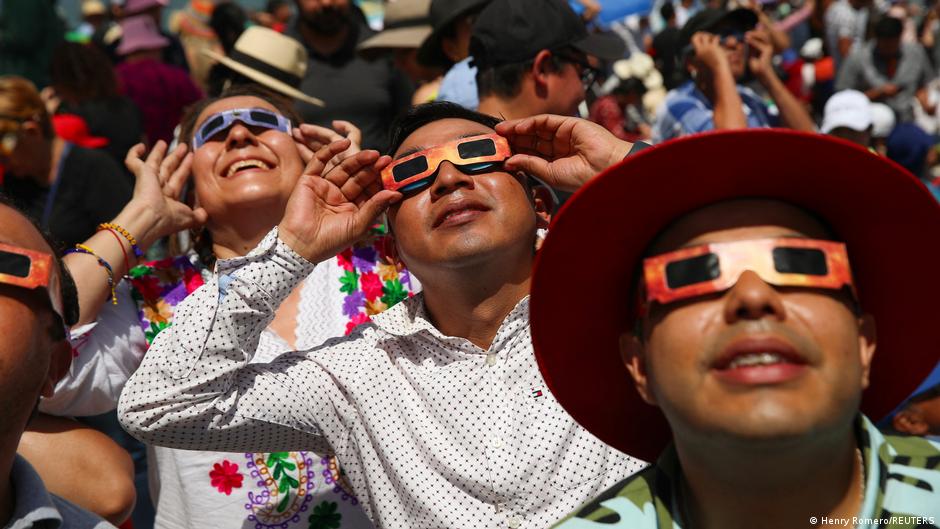
From August 2026 to January 2028, amateur and pro skywatchers are in for a series of rare solar spectacles over Spain and North Africa. Astronomers expect the events to attract millions from around the world. When Josep Masalles was 17 years old, he was captivated by a partial eclipse of the sun over Barcelona, where he lives in northeastern Spain. It sparked a lifelong fascination that has taken him around the world. In the 53 years that have followed, Masalles has witnessed 43 eclipses, including 22 total solar eclipses. "The beauty of an eclipse is incomparable," explained Masalles when we spoke at the headquarters of the Barcelona Astronomical Society, or ASTER, where he is president. "For me, it has also meant a way to travel, to see other societies and cultures, and to meet other astronomers." Masalles, along with other astronomers, is now preparing for a rare trio of solar eclipses over Spain and North Africa — Morocco, Algeria, Tunisia, Egypt — between August 2026 and January 2028. What you can expect from the trio of solar eclipses On August 12, a total eclipse will pass from Galicia in the northwest of Spain to the Balearic Islands in the east, as well as Greenland and the western edge of Iceland. A second total eclipse will follow on August 2, 2027, visible from the tip of southern Spain, North Africa, and parts of the Middle East. And in January 2028, an annular eclipse will pass from southwest to northeast Spain. During an annular eclipse, the moon is too far from the Earth to fully cover the sun — so, it is not a total eclipse — but it does produce a visible "ring of fire" around the sun.
There are two to three solar eclipses every year. But most happen over the ocean or sparsely populated parts of the Earth. Total solar eclipses tend only to occur every 18 months. A total solar eclipse happens when the moon completely blocks the sun's light, casting a region of our planet into darkness. For Spain to see three solar eclipses, including two total solar eclipses, within roughly a year-and-a-half is exceptional, said Sandra Benitez Herrera, Head of Science Communication and Education at the European Space Agency (ESA). "This is actually very, very unusual," said Benitez Herrera. "The configuration of the Sun-Earth-Moon system and the inclination of the orbits has allowed for Spain to have this trio." A total eclipse hasn't been seen from the Iberian Peninsula since 1912, and after 2027 the next one to pass over any part of Europe won't be until 2053. At the moment of "totality" — when the moon fully eclipses the sun — the sky darkens, and the outer layers of the sun's atmosphere — known as the corona — become visible to the naked eye. Totality usually only lasts a few minutes, but a solar eclipse "leaves no one indifferent," said Masalles. "In the face of that beauty, of the grandeur of the universe, it's also a feeling of how small the planet is and how vast the universe is," he said. A total solar eclipse is a 'magical moment' Total eclipses let scientists study the sun's corona — its atmosphere — and its effect on the Earth. It's a field called space weather and has become increasingly important, the more we depend on satellites for communication, financial transactions, and Earth Observation to monitor climate change.
 The BriefWire