Stop ghosting us: At CJP protest, students say internet ban has left them in limbo
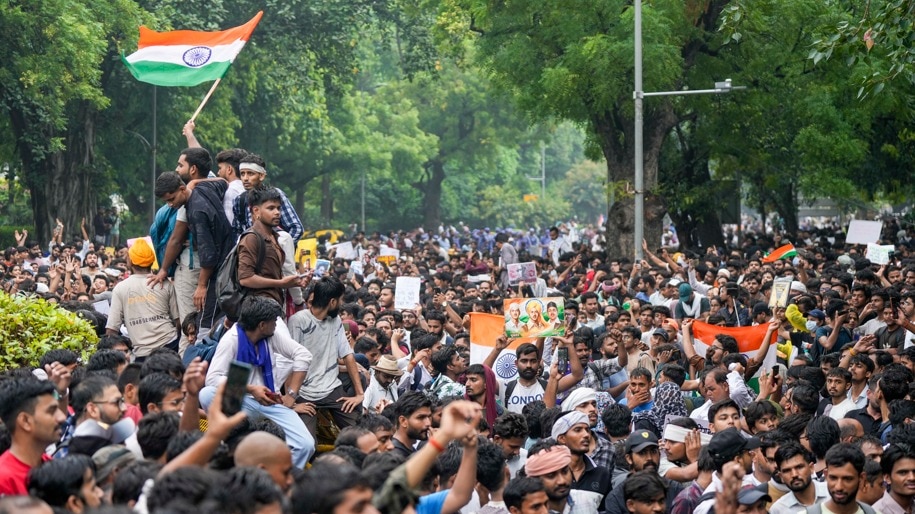
Every protest has its soundtrack. At the ongoing CJP student protest in Delhi, it is the familiar rhythm of slogans, speeches and applause. But in
Every protest has its soundtrack. At the ongoing CJP student protest in Delhi, it is the familiar rhythm of slogans, speeches and applause. But in between those sounds, there is a silence, one that students say has been imposed on them. With internet services suspended around the protest site and several nearby Metro stations shut, many students claim they are struggling to stay connected with their families, locate fellow protesters, coordinate movement and even verify information coming from the stage. Read Full Story For some, the internet shutdown is not just an inconvenience. They describe it as another barrier in an already difficult protest. 'WE CAN'T EVEN TELL OUR PARENTS WHERE WE ARE' Twenty-year-old Yashika Arya, attending the protest for the third time, says the internet shutdown became painfully evident during the July 20 Parliament march. "We were at the protest when the internet suddenly stopped working. No updates about what was happening could reach anyone. We couldn't even tell our parents where we were or what was happening to us," she says, adding that the communication blackout leaves protesters vulnerable. "If something happens to us tomorrow, we won't even be able to tell anyone where we are." Yashika also claims that protesters have faced lathi charges, abusive remarks, and intimidation. "The internet shutdown means we can't even protect ourselves by informing people about what's happening. If someone gets separated in the crowd, finding them becomes incredibly difficult," she says.
"Some students in my group had absolutely no network on their phones. If you get lost in a crowd, nobody knows where you are." Despite everything, she says she feels safer among fellow protesters than elsewhere. "I feel safer with the people protesting here than I do around the Delhi Police." Yashika also says women participating in the protest have received rape and acid attack threats online. "People troll us on social media, abuse us and even threaten us with rape and acid attacks. But here, among the protesters, I still feel safe," she says. 'IF SOMEONE GETS LOST, THERE IS NO WAY TO REACH THEM' Nineteen-year-old Harshita says this is her third day at the protest. She is not an official volunteer but found herself helping distribute food after noticing the rush. "I'm not a food distribution volunteer. I just saw that people needed help distributing food, so I started helping," she says. What frustrated her most, she says, was trying to communicate without internet. "The internet is completely shut down. Yesterday and the day before, even the mobile network was jammed. If someone gets separated from the group, you can't hear them properly over a call in such a huge crowd, text messages don't go through, and there's no way to contact anyone." The Delhi Metro closures have made reaching the protest difficult. "All the Metro stations within about two kilometres are closed.
 The BriefWire