US citizens are ramping up pressure on data centers
Rapid data center construction across the US fueled by AI comes with serious threats to the environment, public health and energy supply. Local opposition has
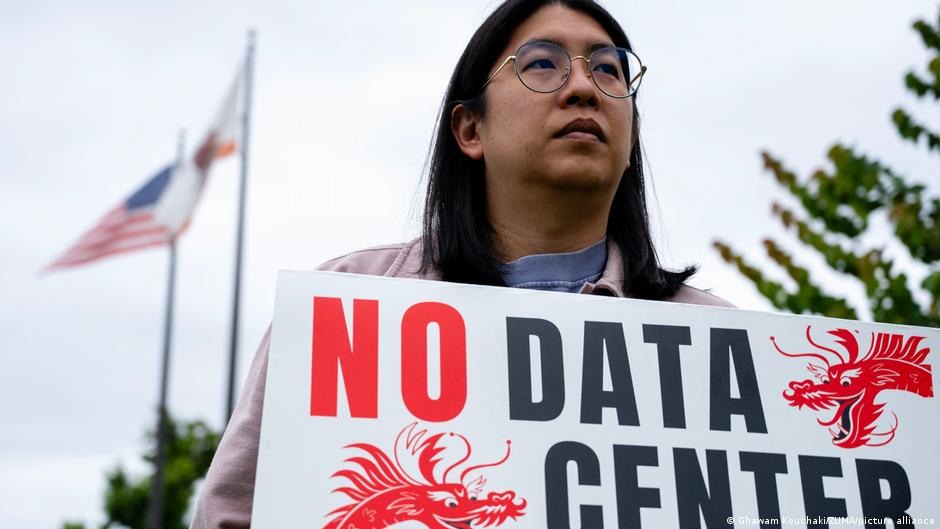
Rapid data center construction across the US fueled by AI comes with serious threats to the environment, public health and energy supply. Local opposition has blocked or delayed dozens of projects. When construction on a major Amazon data center in the small rural county of Frederick, in Maryland, got underway, community activist Elizabeth Bauer found her peace with it. But when it expanded by about 1,000 acres beyond its original plans to dig into green space and farmland without addressing the community's concerns, she took a stand. Together with other locals she is protesting the proximity of the construction site to residential areas, which she says is causing dust and pollution that is exacerbating asthma among the population. Protesters in Frederick demand that farmland is used for farming, not to host data centers Image: Elizabeth Bauer "I'm okay with data centers in the right place. I'm not okay with them taking prime farmland," Bauer said. Protest against data centers is getting louder Bipartisan backlash against data centers has gotten louder in the US, with nationwide demonstrations calling on politicians to take action. The US District of Columbia, Maryland, and Virginia region has been a flashpoint over data centers. Virgina alone has currently around 640 data centers listed. These conflicts are not only related to the construction phase, but longer-term impacts. Data centers require vast amounts of energy to operate — as much electricity as 100,000 households according to the EPA. But those under construction could consume 20 times as much, largely due to the increased demand for data storage and processing capabilities needed to support AI development and use. Overall, data centers account for 4.4% of US power, but a study by investment banking firm Goldman Sachs projects an increase of up to 8.5% by the end of 2027. Data centers devour power and water The battle in Frederick reflects the tensions across the US, which is already home to 4,600 data centers — around 1,000 more than the next ten countries combined.
Almost 40% of citizens live within a five-mile radius of at least one, and that number is likely to rise given that more than 1,500 more sites are under construction. Nowhere in the world is the concentration higher than in North Virginia, where they account for 70% of the world's internet traffic. This is all happening against a backdrop of discontent, with a recent Gallup poll suggesting that 71% of the population opposes data center development in their communities. Data centers can use up to five million gallons of water each day (as much as a city of 50,000). Yet, it is not uncommon for them to be built in areas under water duress. According to the US drought monitor, Frederick County is experiencing a severe drought. Francesca Dominici, a professor of biostatistics at Harvard's School of Public health, says tech companies also regularly disregard the concern. "They're not looking at the water issues at all," she said. "They prioritize where they can get the land cheaper, where they can get the local politician to give the approval faster." Higher fuel bills and air pollution States with high concentrations of data centers have seen a 267% increase in electricity prices over the last five years. Residents at a town hall meeting, here in Kenmore, New York, protesting against data center plans Image: Craig Ruttle/Sipa USA/picture alliance "Electric utilities are building massive amounts of new transmission lines to serve data centers," said Hannah Wiseman, a professor in environmental law at Penn State University. "But the costs of those transmission lines are being socialized among the rate payers." There are also concerns that data centers could overburden the grid meaning they have to resort to backup diesel generators. In the case of the Frederick community, the planned center would have 99 diesel generators, which comes with health risks. "Exposure to fine particulate matter, even at a low level, [means] increased risk of birth defect, respiratory, cardiovascular, neurocognitive and early deaths," said Harvard's Dominici, adding that they also threaten local wildlife and minimize plant growth and yield.
 The BriefWire